|
| Jason Momoa as Arthur Curry in AQUAMAN (Warner Bros. (c), still photo by Mark Rogers) ★ ★ ☆ ☆ ☆
Jason Momoa’s effortless charisma and a rich score from Rupert Gregson-Williams are all that prevent the DC universe’s latest voyage from totally capsizing. In all fairness, neither Aquaman or its leading man can be blamed for the reverse-engineered structure of Warner’s answer to the MCU - our protagonist has already appeared in two previous instalments before this; his actual origins story. Nor can they be blamed for the simple fact that digital technology - as powerful as it is - simply isn’t able to convincingly deliver the vast underwater world demanded by the premise. In a comic book? Yup. In animated form? Fine. In a 143-minute ‘live action’ film? Give it five years and a breakthrough in swimming simulations, then we’ll talk.
In the meantime, however, this overstuffed adventure will have to tide fans over. Despite saving the surface world in Justice League, Arthur Curry (Momoa) refuses to accept his Atlantean heritage. His mother, Atlanna (a quite literally washed-up Nicole Kidman), fell for human lighthouse keeper, Tom (Temuera Morrison, rather shoddily de-aged). But beneath the ocean waves, Arthur’s half brother, Orm (Patrick Wilson), rules with an iron fist, planning to wreak havoc on the human world for their crimes against the environment. With the help of sea sorceress, Mera (Amber Heard, in a wig that the cast of RuPaul’s Drag Race might generously deem “a bit much”), Arthur sets out to reclaim the all-powerful trident of Atlan and reclaim his soggy throne.
Director James Wan upturns the tech toybox to play out his kid-in-the-bathtub fantasy, but an enormous visual effects budget is all for naught when spread so unevenly. Giant seahorses, crab monsters and sharks with “frickin’ laser beams attached to their heads” are impressively rendered, but the compositing of human characters leaves much to be desired. There’s a difference between pushing the boundaries and simply pretending they don’t exist: watching the climactic showdown (two armies of pixelated humans astride copy-pasted monsters smashing into one another), I finally understood how audiences of 2002 felt, experiencing George Lucas’ unchecked digital ambition unfold. With the exception of one impressively physical fistfight in the bowels of a submarine, derring-do here is an entirely weightless, witless affair.
But that’s where similarities to the Star Wars prequels end. In 2018, such displays of extravagance are the norm, no longer the stuff of a single visionary auteur fusing Greek tragedy with the cutting edge of filmmaking. Plus, while clunky expositional dialogue wasn’t exactly thin-on-the-ground in Lucas’ trilogy, Aquaman positively drowns in its own storytelling. Besides Arthur’s main quest for the trident, we also have Orm’s uprising, numerous flashbacks to our muscleman’s childhood, and a second, altogether more entertaining villain in the shape of Black Manta (Yahya Abdul-Mateen II), a pirate with a score to settle (and the laser-spitting helmet to prove it).
So, let’s take stock: a hairy hero’s quest to show his worth by reclaiming an ancient weapon, a lush fantastical world, a super-powered royal family, a sibling rivalry that threatens to lay waste to the outside world, and a secondary antagonist with a penchant for face-based plasma: yep, it’s Kenneth Branagh’s Thor...with drumming octopuses!
|
Showing posts with label superhero. Show all posts
Showing posts with label superhero. Show all posts
Thursday, 13 December 2018

Wednesday, 3 October 2018


★ ☆ ☆ ☆ ☆
Here is Sony Pictures' second attempt to build a Marvel universe to rival Disney's (stop laughing, they're deadly serious). Venom - seemingly dumped on our world from a rip in the space-time continuum splicing the year 2005 with the present day - sits comfortably alongside the likes of Elektra, Ghost Rider and Daredevil. Grimdark pretentions? Check. Positioning of protagonist as edgy antihero? Check. Ludicrous rubber costumes? I wish.
Star of the show here is the eponymous blob, a parasitical alien which attaches to a living host and imbues them with superhuman abilities. Venom finds a vehicle in smug, down-on-his-luck journalist, Eddie Brock (a spectacularly miscast Tom Hardy). "You look like shit!" exclaims the owner of Brock's local corner shop, as he swaggers cooly past with hair perfectly styled, sporting just the right kind of stubble and trendier clothes than anyone else within fifty miles.
He's on the trail of billionaire Carlton Drake (Riz Ahmed), a cardboard cutout superviallain obsessed with human-symbiote experimentation. Brock's investigation (assisted by an upsettingly underused Jenny Slate) exposes him to one of the parasites. Hence, Venom - a giant, foul-mouthed monster with a penchant for biting people's heads off - is born.
But before the beast is unleashed, we must suffer an hour of 'Superhero Origin Stories for Dummies', replete with a plodding romance subplot (Hardy and a bored, bewigged Michelle Williams conjure no chemistry), unintelligible action sequences and broiling inner turmoil. At least, that's what one assumes Hardy is going for with his Jim Carrey-esque line in spittle and shrieking.
When the latter half finally sees Venom emerge, things fail to improve. An age rating promising gory ultra-violence is all bark and no bite, with most antagonists dispatched in a blur of swinging tentacles and nondescript crunching sounds. The genuinely enticing body-horror aspects of the comic book source are buried, and the Bronson star's clear commitment to depraved lunacy proves all for naught.
It's difficult to see loyal fans of the Venom character - still searching for salvation after Spider-Man 3 - getting back on board (incidentally, the producer who insisted upon Venom's involvement in said misfire, Avi Arad, returns to supervise this outing). As a disposable piece of popcorn fodder, it's merely hopeless. As the basis of a major cinematic enterprise, it's poison.
Thursday, 17 May 2018
★ ★ ½ ☆ ☆
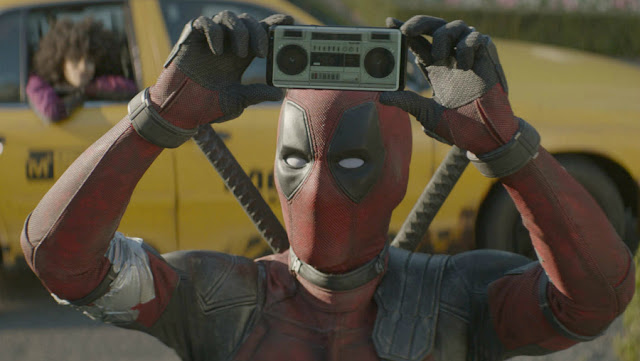
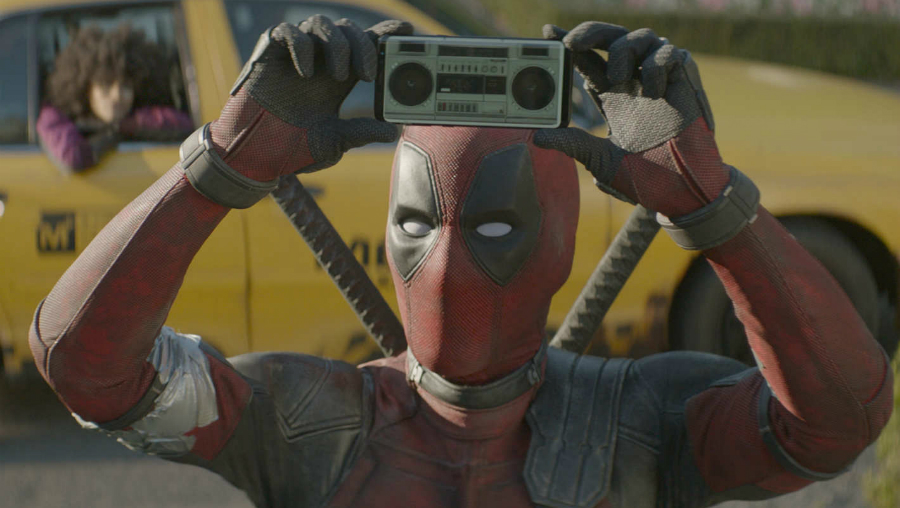
Leftover goodwill from 2016’s surprise smash hit doesn’t go the distance in this formulaic and overcranked sequel, which sees Ryan Reynolds slip back into the red onesie. Wade Wilson/Deadpool is mired in a depressive downturn after his wife, Vanessa (Morena Baccarin, who somehow has even less to do this time around), is murdered. His attempts to make amends for his mistakes by joining the X-Men are swiftly shot down when his a botched mission lands him in jail beside Russell (Julian Dennison), a teenage mutant with a highly combustible nature. They’re soon on the run from Josh Brolin’s Cable, a time-travelling cyborg with little patience for the titular twerp’s smart mouth.
Sadly, it’s an attribute with which I entirely sympathise. I was never the world’s biggest fan of the first film, but was found myself won over - almost reluctantly - by its irreverence towards the wider superhero movie landscape. Plus, the years spent in development hell and a need for justice after Fox’s criminal representation of Deadpool in X-Men Origins: Wolverine gave it a strangely underdog status. Now, removed from it’s lowly spot on the studio ladder and armed with a budget more in-keeping with your average blockbuster, the fourth-wall breaks, extreme violence and juvenile humour seem far less subversive than before.
There are still plenty of jokes that land (I missed the second big laugh of the film as my eyes were still watering from a sharp inhalation of drink at the opening visual gag), but if you’re not one for dick jokes or endless pop culture references, you’re in a for a rough ride. A grotesque and potentially brilliant Basic Instinct nod is ruined by a character saying out-loud “Basic Instinct!”.
There’s also a streak of self-fellating hypocrisy to some of the comedy which didn’t sit well with me. One aside sees The Merc With The Mouth mockingly refer to Deadpool creator Rob Liefield’s inability to draw feet, yet the artist receives a ‘special thanks to’ credit. Also, for the plentiful supply of jokes aimed at white men getting away with sexual assault, accused abuser T.J. Miller returns as Weasel. The producers claimed “We’re in the final editing” when the accusations emerged, but in an age where Ridley Scott can re-shoot half a movie in the wake of such allegations, that sort of excuse won’t fly.
David Leitch (John Wick, Atomic Blonde) replaces Tim Miller behind the camera this time, and his snappy, brutal approach to combat feels too...much. Action in a Deadpool film should be light and wacky, but the prison break sequence involving Cable and a horde of armoured guards is the wrong kind of bone-crunching. The creaky visual effects have been given a massive overhaul, but a smattering of the set pieces still remain dutifully small of scale, or openly reject the opportunity for mass carnage (see a hilariously anticlimactic skydiving sequence).
But for all its mockery of everything from shared universes to rival comic giant, DC, Deadpool 2 inexorably stumbles in the same potholes as those it purports to subvert. The villain is a grimdark bore. There’s an overblown vehicle chase. Emotional beats fall flat or are immediately interrupted by snark. And, of course, there’s a Stan Lee cameo.
And yet, Reynold’s clear affection for the character and crusade to please the comic fans for better or worse is undeniably admirable. He’s enjoying himself, and he wants you to share that joy. It’s great that Julian Dennison has landed such a spotlight so soon after his breakthrough appearance in Hunt for the Wilderpeople. It’s great that Negasonic Teenage Warhead (Brianna Hilderbrand) gets to have a girlfriend. It’s great that Zazie Beetz’ Domino (a new ally blessed with a superhuman lucky streak) gets to be a confident action heroine with visible, unmocked armpit hair. There are so many small victories against the usual pitfalls of major comic book fodder, but Deadpool 2’s adherence to a plethora of similar tropes and a suffocatingly smug sense of humour threaten to turn them pyrrhic. “Maximum effort”? Not quite.
Wednesday, 5 July 2017


★ ★ ★ ½ ☆
“Not another Spider-Man reboot!” I hear you moan, as the third iteration of the wall-crawler in a decade (now played by young British star, Tom Holland) gains his first lone outing. I totally sympathise. The apprehension that the character has been wrung dry by Sony/Marvel in such a short time is understandable, but surprisingly baseless here. If anything, the previous versions have been a blessing: audiences are now so familiar with Peter Parker’s origins that Marvel Studios, having wrapped the character in the warm embrace of their Cinematic Universe (hence the dual-interpretation of Homecoming), take the chance to cover new ground.
We catch up with Spidey fresh from his tussle with the Avengers in Captain America: Civil War, but now facing possibly a greater challenge: sophomore year of high school. Fawning over fellow whizz-kid, Liz (Laura Harrier) and feeling rejected by Tony Stark (a short appearance by Robert Downey Jr.), our teen in tights finds it hard enough balancing heroism with hormones. The arrival of Michael Keaton’s Vulture (a disgruntled hoarder of the tech left behind after various super-sized scuffles) serves only to tear Peter’s allegiances between his worried Aunt May (Marisa Tomei), his schoolfriends and his promise to Stark yet further.
Homecoming drops the rather operatic tone of the Raimi movies (and whatever mode of address the Marc Webb duo was going for), adopting something more homogenous within the wider MCU (read: breezy, quippy, plenty of explosions). Those labelling it a John Hughes-style teen movie are probably still arguing that The Winter Soldier was a Cold War thriller. Nevertheless, the smaller stakes and tighter focus allow this to stand out, if briefly. There’s a smidgeon too much banging and clattering towards the end (what else is new?), but that’s redeemed by a pursuit of character development and moral lessons over empty spectacle.
We’re not talking the usual city-levelling humdrum so blindingly avoided by Civil War, but something comprehensible, comedic and (most importantly) personal. Holland’s Spider-Man is one more likely to knock over a mailbox than a multi-storey, who apologises for the slightest calamity and is genuinely doing what he does to make people’s lives better. Stark’s plea for Peter to remain a “friendly, neighbourhood Spider-Man” is one we sympathise with not because we want him to lie low, but because we’d hate for him to get hurt. My point of comparison for Holland as the web-head is neither Tobey Maguire’s dorky bumbling, nor Andrew Garfield’s misjudged angst, but Gal Gadot’s endearing sincerity as Wonder Woman.
The remaining cast are an amiably diverse bunch (considering the population density and cultural mix of contemporary New York, a sea of white is neither progressive nor factually accurate), including a great turn from Jacob Batalon as Peter’s roommate, Ned, and a short but winning role for Zendaya as snarky classmate Michelle. Keaton – batting aside the countless Birdman jokes with enormous CG wing-blades – is gamely gravelly.
Michael Giacchino’s score isn’t much to write home about, a hugely entertaining revamp of Paul Webster and Robert Harris’ Spider-Man cartoon theme being the rare exception. Once he’s done with War for the Planet of the Apes, can we collectively ask Hollywood to give him a break? I’m a huge fan of his music, but with 11 scores under his belt in less than three years, I worry they’re overworking him. His compositions are the only element of Homecoming that raise the law of diminishing returns, lacking the sheer epic quality of Elfman or the late James Horner’s emotional wallop.
Much like Deadpool for 20th Century Fox, this solo jaunt amounts to little more than a breath-freshener for the MCU. It’s a much-needed step back from overwhelming ensemble casts and endless digital vistas, delivering a story that revels in simplicity, morality and comedy. Now, if you’ll join me for a musical finale, to the tune of the original Spider-Man theme. Altogether, now…
Spider-Man
Homecoming
Does whatever a soft reboot should
Tells a tale, small of scale
Lots of laughs, lots of heart
Enjoy! It's a whole bunch o' fuuuuun
(Sorry)
Friday, 2 June 2017


★ ★ ★ ★ ☆
Wonder’s the word, alright. Patty Jenkins brings a pop-culture
icon to the screen in grin-broadening fashion with this electrifying and
earnest superhero film that aims to expand the DC cinematic universe.
Thankfully, Wonder Woman’s part in
building the latter is small, taking a step away from the stodgy
forward-planning of films past to
tell a singular, self-contained story (imagine that!). Its larger and more
important contribution to the world is to finally deliver a female-led,
female-directed megabudget film that puts to rest both the nightmare of Catwoman or Elektra, and the pig-headed
mindset that audiences don’t want to see films made by, for, and starring
women.
Gal Gadot (returning from her brief appearance in Batman V Superman) plays our heroine,
Diana, an Amazonian warrior of the all-female utopia, Themyscira. Their peace
is shattered when pilot Steve Trevor (Chris Pine) takes a tailspin into their
paradise, explaining that the wider world is engulfed in the Great War. Believing
the God Aires has poisoned the minds of humanity into committing such
atrocities, Diana decides to leave her home, despite the express wishes of her
mother, Hippolyta (a fiercely tiaraed Connie Nielsen). Nevertheless, she
persists, taking command of her people’s most powerful weapons and following
Steve back to the pointedly termed “world of men”.
Her values are soon challenged by the prejudices and
practices of 20th century London, as well as the sinister plotting
of German General Ludendorff (Danny Huston, wearing his best sneer) and his
scientist accomplice, Dr. Maru (Elena Anaya). They plan to unleash a new form
of gas to scupper the oncoming armistice, so – after some smartly funny
fish-out-of-water escapades in London – Diana, Steve and his hand-picked gang
set off to the Western front. At this point, the film threatens to stick Diana
in the backseat while Steve and the trio (engagingly played by Ewen Bremner,
Eugene Brave Rock and Saïd Taghmaoui) momentarily take centre stage. This is one of few
points where the pace limps somewhat, but how refreshing that it’s in service
of character building rather than crash-bang-wallop.
Other pitfalls (due to genre and period) can’t quite be
avoided. The special effects occasionally overwhelm and comparisons to Captain America: The First Avenger are
in abundance, but they’re momentary setbacks that can’t harm the film’s
feminist message. No matter how broad the strokes, the statement feels genuine
and direct, and the moment when Diana climbs into No Man’s Land is unspeakably
powerful. It’s a set piece that feels long overdue, delivering on a spectacular
and emotional level that no amount of trailer footage can spoil. If Gadot
batting away bullets can bring a tear to my eye, I can only imagine what it’ll
mean to an entire generation of young girls.
Jenkins proves a confident action director in these sparse
but thrilling sequences of derring-do, shedding the gawping male gaze and murky
composition of her contemporaries. Cinematographer Matthew Jensen streamlines
the Snyder aesthetic into something appropriate (it’s several shades brighter,
but doesn’t let up on the speed-ramps and slow-mo), and composer Rupert
Gregson-Williams proves me right about that signature guitar riff: it's a
killer cue, and works incredibly well when embraced by a full score.
Tom Holkenborg’s leitmotif is the only hanger-on from the
wider cinematic universe: the film spends less than a minute tying itself to the
DC web, managing subplots you can count on one hand and connect without the
assistance of Wikipedia. Given time to develop a single central character as
opposed to the lead, their partner, their nemeses and – lest we forget –
Granny’s Peach Tea, Wonder Woman builds
to a satisfying series of emotional payoffs that are all to do with rooting for
real heroes, not a brooding bulk or
snarky pretty boy (Pine easily deflects any Kirk comparisons).
For Diana is not one of the boys, nor is she a damsel. Her quest
for peace is taken utterly on her own terms and speaks to something often
spoken but rarely felt in this genre: optimism. Not the staunchly-defended
principles of Captain America or Batman’s misguided faith in his corrupt city,
but a genuine belief that people are innately good, that lives are worth saving
for more than the purposes of reparation or showboating. Batman V Superman failed to deliver on the promise of Clark’s smile
at the end of Man of Steel, but Wonder Woman takes up the charge with
conviction. When tragedy strikes, Diana is visibly shaken. When her powers
manifest, she learns to command them without aid or exposition. When faced with
the awful truth of humanity, she lassos the last vestige of goodness available
and digs in her heels.
This refusal to go all self-referential or edgy seemed to
draw out a smattering of sighs and snickers from the audience, but none from
me. The unabashed display of hope and courage brought me back to watching my
Dad’s DVD of Superman: The Movie as a
child, and Gal Gadot’s performance succeeds entirely on her ability to convey
that yearning, that desperation, even, to do the right thing. I don’t believe
this to be some overcooked attempt on the behalf of Jenkins, Snyder and co. to
counteract criticisms of the series’ dire grittiness, but because the movie
honestly means to be so. It left me
beaming, occasionally through watery eyes, but never through derision. My
prayer that the DCEU (or, Goddess forbid, the genre as a whole) learns the
right lesson from Wonder Woman may go
unanswered, but it’s one as genuine as Diana’s desire for justice. I’m with
her.
Tuesday, 7 March 2017


★ ★ ★ ★ ☆
Hugh Jackman lays claim to the Wolverine character once and
for all in this dark and edgy superhero spin-off. In a future where the other
X-Men have long-since disappeared, Logan/Wolverine lives as a chauffeur across
the Mexican border by night and cares for the mentally-damaged Charles Xavier
(Patrick Stewart) by day. Their isolated existence is shattered when a desperate
woman entrusts Logan with helping a young girl, Laura (newcomer Dafne Keen) escape
sinister forces. What follows is less a special effects blockbuster than a gritty,
bloody road movie, as the increasingly fraught Wolverine is forced to face
uncomfortable truths about his legacy.
Most of us take Hugh Jackman’s most famous role for granted,
but his six foot-plus, ever-vested physique and inescapable charisma have been
a constant sticking point for fans of the original comic version: a stocky,
lycra-suited potty-mouth. Logan is
the first film to really take these differences into account, and even make
amends: whilst Wolverine vehemently denies any truth to be found in Laura’s
collection of X-Men comics, there’s easily enough money in his swear box to fix
several church roofs. It helps that Jackman’s own dedication to portraying the
character has never once wavered, and continues to enthral. As sad at it is to
see him finally let Logan go, it’s a fantastically well-pitched goodbye.
In the aftermath of Deadpool,
the “we need more R-rated superhero movies” declaration has been bandied about
a lot with very little thought, but director James Mangold (paying reparations
for his comparatively tame and uninteresting The Wolverine) actually
uses it appropriately. The first spoken word of the film is a sharply-uttered
f-bomb; a display of aged irritation, not an immature opportunity to curse. A
15 certificate does allow the film to breathe with the foulest of mouths, but
also to consider themes of aging and death without alienating a younger
audience. It’s difficult to imagine subtle details such as Wolverine’s arthritic
claws, limp, permanent scars and dusty grey hair making it into the final cut
of a glossy Bryan Singer or Matthew Vaughn production.
Oh, and it’s very, very violent. Wolvie’s rages have been
the bloodiest staple of the franchise from the beginning, but here they finally
mean something again. Every chest cavity ruptured, every decapitation, every
maimed limb may as well add five years to Logan’s already extended life-span.
For the first time, you look past the physical regeneration to the mental degradation.
George Stevens’ Shane is unsubtly
alluded to throughout – “There’s no living with the killing” – but it’s a
well-intentioned nod that brings some levity, just as the gore is shocking but
not without some sense of entertainment (particularly during an early display
of Laura’s own powers).
Keen will certainly be one to watch. At first she appears to
be contributing a very run-of-the-mill silent, staring child performance, but
when the plot kicks into high-gear, the intensity she displays is truly
remarkable. Stephen Merchant brings the weirdness of the older X-Men films as an albino mutant-finder,
Caliban. References to Merchant’s “goggle-eyed” appearance might have begun as
a long-running gag on the XFM show he used to host with Ricky Gervais, but his particular
features and sarcastic intonations are a great fit, providing stark contrast to
Logan’s introspective glowering and Xavier’s incoherent, rambling regrets.
That the film is so deliberately vague with regard to Xavier’s
troubled recent history pays dividends: there’s little explanation about
what happened to the other mutants, what state the wider world is in (our only
indication here is empty backdrops and stricter border controls), or what the ‘Westchester
Incident’ refers to. All we really know is that Xavier’s degenerating telepathic
mind is now considered a weapon of mass destruction, which is itself enough to
spark our intrigue and fear.
My social media feed this week has been full of people
ranking Logan alongside previous X-Men films, but it seems weird to do so
considering just how different it is. Subplots are almost exposition-free,
visual effects are used sparingly, and even the cinematography and production
design feel less machine-tooled. It’s a grimy, hyper-violent thriller; a toeing
of the genre line (far more so than Deadpool’s
already outdated in-jokes) that stands alone, and ends on the most perfect note imaginable.
Saturday, 4 February 2017


★ ★ ★ ★ ☆
Back in the early noughties, Warner Bros. took a mighty risk
on an up-and-coming director, Christopher Nolan, gifting him the reins of their
most lucrative property. Three films – bringing with them a decade of financial
and critical success – defined a comic book legend for a whole new generation:
tormented, elemental, and believable. Now another Chris (McKay, he of Robot Chicken fame) takes the directing
seat and immediately shines a spotlight on the rubber nipples, pointing out the
ridiculousness of trying to take a grown man and his cosplay obsession
seriously.
In this spin-off of sorts to 2014’s anarchically enjoyable The LEGO Movie, the focus is purely on
Will Arnett’s clueless crusader and his suits, villains, vehicles, puns, and –
as noted by Ralph Fiennes’ Alfred - “even that weird stuff from 1966”. Barbara
Gordon (Rosario Dawson) takes control of the Gotham Police force and suggests
an allegiance with Batman, thereby threatening the winged wonder’s lifestyle of
singlehandedly taking down criminals by day and guffawing at the dénouement of Jerry Maguire by night. Begrudgingly accepting
help from newly-adopted Dick Grayson (an ingeniously cast Michael Cera), Batman
sets out to prove his worth as a lone wolf with calamitous, hilarious results.
Moving at the same break-neck speed as its predecessor, LEGO Batman bobs and weaves through explosions
of comedy. A burning heart of child-like joy, an outer debris field of pop
culture content and smoky wisps of LEGO-obsessive in-jokes (the Gotham City
cinema advertises 'Two Shades of Bley') ensure not a single funny bone is left
un-tickled. It's not merely pointing and laughing at Batman; the screenwriters clearly
love the character and his stories, and so the barely-contained affection they
have for other fans shines just as brightly.
Arnett’s gravelly delivery never stops being hilarious and Cera
is the finest he’s been since Scott
Pilgrim, but our hearts belong entirely to Ralph Fiennes as Alfred and his very British expletives, always one
step away from lumping "Master Bruce" with an ASBO. Meanwhile, Zach Galifianakis
as the overly-attached Joker is a more interesting portrayal of the clown
prince of crime than Jared Leto and his method-acting hokum will ever be. Plus he’s
actually, y’know, funny!
The colourfully jovial attitude of the 60's TV show, a
bombastic score worthy of the Nolan movies (Hans Zimmer’s frequent collaborator
Lorne Balfe is an inspired choice of composer) and justice for some left behind
by the Schumacher films seal the deal (Billy Dee Williams reprises his role as
Harvey Two-Face after nearly thirty years). It's everything that 2016’s grossly
misjudged adaptation of The Killing Joke
wasn't: smart, beautifully animated and unquestionably cinematic, with a keenly
unique eye for the Batman-Joker relationship. Additionally, it doesn't make
Barbara Gordon surplus to seedy requirement, but instead an
equal, nay, superior force to the mammalian mansplainer.
Drawbacks? Well, the central message intended to give the
kids pause for thought is nothing particularly new. In fact, it borrows heavily
from The LEGO Movie's
"Everything is cool when you're part of a team" mantra...but frankly,
when's that ever been a bad thing? It’s a family film in message and content, it’s
‘U’ certificate signified by my favourite of all BBFC guidance notes; “Contains
rude humour”.
If there is any downside, it has to be that there aren’t any
Batman jokes to make anymore. Seriously. YouTube’s How it Should Have Ended series may as well announce redundancy now
that an entire avenue of superhero parody has now been swiftly neutralised with
the stroke of a well-aimed Batarang. Trying to grab hold of every joke is like
attempting to snatch bullets from the air, which seems entirely appropriate as
a fault when that's a job more suited to Superman. When ‘too much comedy’ is
the worst criticism I can level, there’s no choice but to concede defeat, don the
plastic cowl, do a bit of Bat-beat-boxing and lay down the ‘THWACK!’ on some
Daleks.
…oh, sorry, did I forget to mention there are Daleks in it?
Wednesday, 2 November 2016


★ ★ ★ ½ ☆
The best moment in Marvel’s latest cinematic universe building
block comes when an egotistical white man gets punched. For a series that
replicates this beat time and again (see any movie featuring Tony Stark, Scott
Lang, Thor, or their respective villains), it’s no mean feat to make the act
feel special again.
In the case of Doctor
Strange, said wallop arrives when Stephen Strange (Benedict Cumberbatch,
playing a neurosurgeon who loses the use of his hands in a car accident)
haughtily discards the very idea of spiritual healing. Tired of Strange’s
close-mindedness, The Ancient One (Tilda Swinton) delivers a hefty thwack to
his chest, whereupon his astral form is catapulted from its physical body,
before being hurtled across the dimensions. It’s a brilliant juncture that
rewards threefold: as deftly-executed punchline for the scene, an epiphany for
the reluctant hero, and an eye-widening joyride for the audience, demonstrating
the psychedelic visuals to come.
By this point in the movie, we’ve briefly dipped our toes
into the special effects during a brawl between Swinton’s guru and Mads
Mikkelsen as grimacing zealot Kaecilius, but Strange’s first encounter with the
mirror dimension is a headfirst dive into kaleidoscopic abandon. Entire solar
systems fold in on themselves, human faces contort and replicate infinitely,
and when the sequence comes back to Earth with a bump, we’re left gasping for
more just as much as the dumbfounded Strange.
The Ancient One informs us that these effects are confined
strictly to the mirror dimension, with no effect on our reality. So when this
maelstrom of magic returns for later action set pieces, the key question is “Why
should we care?” The city-levelling CGI clouds witnessed in at least half a
dozen other Marvel films may have become repetitive, but at least we understood
there was a human cost. Here, the finale deliberately creates a similar setup –
broiling clouds of digital distortion included – but subverts our expectations
by immediately making the climax all about the characters – more specifically
their brains, not brawn. Plus, it’s the closest a Hollywood production has ever
come to resembling a YouTube Poop (parody content where videos are warped,
repeated, reversed, or otherwise altered for comedic or entertainment effect),
and I make this comparison as a massive compliment to the creative minds at
play.
This isn’t to uphold the mind-bending visuals as the only, nor
even the largest source of comedy. The script is witty enough that our
suspension of disbelief can survive numerous silly names (Dormammu, Mordo, etc)
and a whole heap of mystical jargon, while Cumberbatch, Swinton, Chiwetel
Ejiofor and co all pick up the Marvel mix of serious and snarky very well.
Cumberbatch in particular manages to avoid accusations of overexposure by
playing a character that actually gets to emote for once. The cold disinterest
of Sherlock or the calculated shyness of Alan Turing are involving facades, but
not particularly sympathetic. Strange is a barking, whimpering misanthrope who
learns to have a laugh every now and again at himself, rather than others. He
also gets ten kinds of stuffing knocked out of him by the Cape of Levitation in
his efforts to be worthy, which is endlessly amusing (putting in my early bid for it
to win Best Supporting Actor).
Pitfalls appear every once in a while: Rachel McAdams does
very well in a reverse-but-not-really love interest role, until the narrative
sees fit to drop her from the final act. It’s also a shade too long (but then,
what superhero film couldn’t do with losing a good ten minutes of exposition?),
and it uses none of its time to give Scott Derrickson any chance to develop a
signature directorial style. His previous horror works (Sinister, The Exorcism of Emily Rose, Deliver Us From Evil to name a
few) bear little idiosyncrasy, so perhaps this is Marvel taking a chance on a ‘clean
slate’ as it were, removed from the pop-culture infusion of the Russo Brothers,
or the vintage aesthetic of Joe Johnston.
For all the usual MCU potholes it sometimes stumbles into, Doctor Strange is smart, funny,
inventive, and hugely enjoyable. It’s the first of the series since Iron Man to feel like a genuine
standalone; a story that can be enjoyed by newcomers as much as die-hard fans. The
latter will stay seated for end credits stings regardless, but the Michael
Giacchino score makes waiting less of a chore and more of a toe-tapping
cooldown for everyone else.
Tuesday, 16 August 2016


★ ★ ☆ ☆ ☆
This third instalment in DC’s ongoing attempt to establish a
cinematic universe takes a break from the usual heroics to give the bad guys a
moment in the sun. Having realised that the next Superman may be less-than friendly, shady government executive Amanda Waller (Viola Davis), delves into a
portfolio featuring the worst of the worst in order to face the next big threat
with her own powerful (and, more importantly, deniable) assets. The diverse group
Waller hopes to recruit includes The Joker’s psychotic accomplice and girlfriend,
Harley Quinn (Margot Robbie), expert hitman Deadshot (Will Smith), fire-commanding
crime lord El Diablo (Jay Hernandez) and a selection of other scumbags, led by
Colonel Rick Flag (Joel Kinnaman).
With the promise of commuted prison sentences, Waller soon
demands ‘Task Force X’ to deal with Cara Delevigne’s Enchantress, her brother
(a CGI creation who wouldn’t look out of place in Gods of Egypt) and the beam of energy they’ve shot into the atmosphere
for ill-defined maniacal reasons, ala the sky laser-wielding villains of
Avengers, Fantastic Four, and even Transformers: Dark of the Moon. Still, sporting
unique quirks and a slightly more malleable attitude to world-saving than their
usually righteous enemies, the Suicide Squad arrive with a promise to inject a
dose of fun into the DC-verse.
I can already hear readers rushing to their keyboards to
tell me that comparisons to Marvel’s surprise smash-hit superhero comedy are
invalid, but hear me out. ‘Suicide Squad’ is a nasty name attributed to a bunch
of people made to do good, whilst ‘Guardians of the Galaxy’ is a grandiose
moniker for, essentially, a band of idiots and miscreants. The two groups are
warped reflections of each other, sideshows to the mainstream appeal of The
Avengers or Batman and Superman.
In filmic terms, both are properties arriving on the scene
with a different set of expectations, but ultimately a very similar structure:
a bunch of losers are begrudgingly drafted into battling a generic mystical bad
guy to the sound of classic pop hits, with a far more influential villain looming
in the background. What makes one a success and the other not is that Guardians of the Galaxy was always
intended to be an irreverent knock-about, whilst Suicide Squad has been surgically altered and reconstructed after
an unprecedented fan reaction to the initial trailer as well as critical exasperation
towards the dour tone of Batman v
Superman. The intention to change a gritty ensemble piece showcasing the
true dark side of superhero movies (seemingly a natural fit for Fury director, David Ayer) into a tongue-in-cheek
pallet-cleanser after Zack Snyder’s grungy effort is not an entirely misguided
one, but it’s almost totally fumbled.
Before even setting foot in the cinema, no doubt your eyes
will have been seared by a selection of gumball-coloured posters and a
smattering of toe-tapping trailers awash with cheeky winks and sly one-liners, breaking
through the crash-bang-wallop of standard marketing procedure. And, for a brief
moment, the film itself appears to be holding true to this promise: the opening
movement sees Waller (given an impressively hawk-like presence by Davis)
deliver a brief introduction to the motley crew one-by-one, each character
assigned a cheat-sheet adorned with neat little Easter eggs and a pop song to
match. Unfortunately, around the time Killer Croc (a mutated cannibal who
devolves into an exasperating black American stereotype towards the climax) is introduced,
this becomes less finger-clicking and more eye-rolling; like when your brother
gets control of the car stereo and plays 30 seconds of a song before getting
bored and pressing ‘skip’.
There’s rarely even a method to this madness: a chunk of
Black Sabbath’s Paranoid heralds a
scene of Harley Quinn being extracted from her cell, because she’s…um, paranoid…I
guess? Come to think of it, Harley’s actual condition is never explained beyond
a slavish devotion to her ‘Mister J.’, and there’s nothing to indicate exactly
what makes her a ‘metahuman’, either. Then again, the same could be said of Jai
Courtney’s weirdly entertaining Captain Boomerang, and, to a far larger extent,
Adam Beach’s ludicrously unnecessary Slipknot: brought into play literally five
seconds before the squad set off, he’s introduced by an off-screen ADR line
from Flag stating ‘he can climb anything!’, and whose defining moment is
punching a woman in the face because ‘she had a mouth on her’.
When the film realises you’re already tiring of these
people, it cuts back to an enlarged cameo by Jared Leto’s much touted
interpretation of The Joker. Our reward for sitting through months of
method-acting publicity tripe is little over three minutes of screen-time,
during which Leto rasps and cackles and wobbles around eccentrically…but never
actually cracks a joke or contributes anything substantial to the plot. The
comedy (the definition of which I brandish slightly looser than the entire squad’s
morals combined) is left largely to Robbie, Smith and Courtney, in short
inserts clearly added in reshoots (keep an eye on Joel Kinnaman’s changing hair
length).
Smith’s natural charisma breaks the shackles of Deadshot’s predictable,
seen-it-all-before redemption arc, and Robbie sinks effortlessly into the skin of Harley. She delivers a near-perfect
cinematic representation of the much-loved comic character, but this winning
portrayal is often undermined by the films treatment of her. A short scene
detailing her capture has Ben Affleck’s Batman giving her tongue-heavy mouth-to-mouth
before pinning her down by the throat, and the camera constantly hangs at just
the right level to make her hot pants-clad bottom the centre of the frame. This
return to sexualised costumes and Affleck’s Clooney-esque delivery of “It’s
over, Deadshot!” almost undoes 20 years’ worth of progress since the bums and
puns age of Joel Schumacher’s Batman and
Robin.
Ayer totally, unapologetically calls Suicide Squad “an anarchic, punk rock art movie”. Anyone privy to the
cynically constructed final product will be knocked unconscious by the massive
irony, before briefly realising that the only daring move the film makes is to make
Harley order a tortured and guilt-sodden El Diablo to “Own that
shit!", in reference to a horrific act of slaughter he once committed against innocent people.
Thursday, 11 February 2016


★ ★ ★ ☆ ☆
Marvel’s smart-mouthed, smut-minded, sword wielding
anti-superhero Deadpool finally escapes the bowels of development hell and
streaks into cinemas. Ex-special forces operative turned mercenary Wade Wilson
is left with accelerated healing when a last-ditch attempt to cure his terminal
cancer goes awry. Deemed by his best buddy Weasel (T.J. Miller, in his least irritating
screen role to date) as ‘haunting’ in his facial disfigurement, Wilson engages
a hunt for Ajax (Ed Skrein), who he believes can cure him and thereby fix his
relationship with fiancée Vanessa (Morena Baccarin, sadly left behind by the
latter stages of the story).
In a well-intentioned effort at reconciliation for Deadpool’s
poor treatment in X-Men Origins:
Wolverine, Ryan Reynolds once again nabs the leading role and delivers what
fans have wanted from the start: a portrayal that is true to the original comic
panels. “Maximum effort” is Wilson’s whispered promise before diving into
battle, a more meaningful fourth wall break than those that follow. Reynolds makes
a great attempt at living up to a script that both encourages and subverts his
natural charisma with boyish boisterousness. Only someone who truly wants the audience
to have a ball could make the sight of our spandex-clad sicko turning baddies
into human satays (cackling like a child knocking over a marble run) contagiously
funny.
For the trademark humour of our titular ‘merc with the mouth’
is a crisp asset: writers Rhett Reese and Paul Wernick clearly have great
reverence for the comic book, and the lewder elements of the Deadpool character
provide the loudest of many laughs (the jabs at fellow X-Men Colossus and
Negasonic Teenage Warhead in hot pursuit). I lambasted last month’s Dirty Grandpa for an adherence to the
very criteria I’m now praising Deadpool
for, but there’s one crucial difference: Dan Mazer’s grubby comedy was pure
filth and nothing else, whilst Miller’s ode to a Marvel latchkey has the good
grace to throw a variety of quips at the wall (both decent and dirty), admirable
even when they don’t quite stick.
Extensive time spent gathering dust has done its damage to
the script: genre-savvy winks to and knowing stabs at the superhero genre as a
whole land fairly wide of the mark. Gags aimed toward post-credit sequences and
studio character ownership would appear bitingly bold had the entire internet
not spent the last half-decade scratching that particular itch. Nowhere is the discord
more jarring than the climactic dust up; a bombastic bout of the sort we’ve
seen a hundred times before, that a much sharper film (and Deadpool himself)
would happily mock a thousand times more.
Amounting to little more than a breath-freshener for the
superhero genre, Deadpool is an inconsequential
flash in the pan. Less Guardians of the
Galaxy and more Kingsman, for
better and for worse.