Chris At The Pictures: animation
Showing posts with label animation. Show all posts

Friday, 6 April 2018

'Isle of Dogs' - Review

4/06/2018 06:06:00 pm 1
'Isle of Dogs' - Review

★ ★ ★ ☆ ☆

Wes Anderson’s latest is a colourful canine adventure that moves with the vigour of a wagging tail but bristles with fleas both literal and political. In this stop-motion expedition, Koyu Rankin voices Atari, the young ward of Mayor Kobayashi (Kunichi Nomura), dictator of the future Japanese archipelago. Kobayashi has exiled the city’s dog population to nearby Trash Island, due to an outbreak of canine fever, but Atari sets off to rescue his dog, Spots (Liev Schreiber). On an odyssey through the land of muck and mongrels, he is accompanied by a small pack of lost dogs (Ed Norton, Bill Murray, Bob Balaban, Jeff Goldblum). They’re led by the moody stray, Chief (Bryan Cranston). Meanwhile, an underground student resistance is working within the city to bring down Kobayashi and expose his decree as a sham.

I have to admit here that my Wes Anderson exposure is nominal: I found The Grand Budapest Hotel endearing, but felt that Fantastic Mr. Fox was an exhausting and massively irksome misunderstanding of the source material. Isle of Dogs falls somewhere in the middle: it’s visually impeccable in that classic Anderson manner (more striking here than perhaps ever before, in sharp juxtaposition with the grim environments), but the red-wine-and-bolognese witticisms and surprisingly bloody violence means that the stuff of children’s storybooks is once again rendered inaccessible to their readers.

Shot by Tristan Oliver, - a veteran of both Anderson’s previous foray into stop-motion and the works of Aardman - the images are impossibly fluid. Wallace and Gromit seems to have been a particular influence in the production design, too: it’s impossible to see a stop-motion dog silently roll their eyes with exasperation and think of anything else, and the robo-hounds deployed by Mayor Kobayashi smack more than a little of Preston from A Close Shave. Besides the stop-motion, there’s occasional use of 2D cartoons for computer displays and CCTV monitors, which liven the frame during the grimy grey finale at the farthest point of trash island. Our cohorts on this journey are the usual crowd (save Bryan Cranston, the entire pack have worked with Anderson on  multiple occasions), and are reliably charming. The problem was never going to be their individual voice performances (as if Jeff Goldblum as a gossip-loving mutt could ever be anything other than a joy), but the very fact they’re speaking American English. 

This wouldn’t be a problem, except for the fact that there are no subtitles for the Japanese characters, who can only be understood through a translator for the Mayor’s speeches (Frances McDormand) or through the interpretation of American foreign exchange student, Tracy (Greta Gerwig). Having the Japanese legends narrated by white actors only enforces this feeling of cultural tourism. As if to double down, a rant by Atari is faded to background noise as Goldblum despairs “I wish somebody spoke his language!” The dogs are meant to be our central, relatable characters in the story (which would be perfectly fine) but the only humans presented as scary or ‘other’ are the Japanese. 

Don’t get me wrong: I found a lot to enjoy in Isle of Dogs, and many others will fall for its particular brand of scruffy liveliness. With a cast and crew this likeable and skilled, it’s very hard not to exclaim sheer admiration of its craft. But when you develop a story that is so steeped in the trappings of another culture, only to deny that culture a real voice except through a white saviour character and foreign tools, loving animation and cute performances are little compensation.

Monday, 16 October 2017

'Loving Vincent' - Review

10/16/2017 10:23:00 pm 0
'Loving Vincent' - Review

★ ★ ★ ★ ☆

The father of modern art lives and loves again in this startling visual experiment – the first and only hand-painted motion picture – that continues a golden age of cinematic animation. Directors Dorota Kobiela and Hugh Welchman lead this British-Polish co-production, with Douglas Booth and Saoirse Ronan heading up a perfect cast of performers through ninety minutes of painted poetry, detailing the aftermath of Vincent Van Gogh’s death in 1890.

With twelve individual paintings accounting for every second of footage, it’s incredibly easy to find oneself overwhelmed by the sheer audacity and scale of the project, allowing the story it depicts to become eclipsed by pure awe. It’s a testament to the screenwriters that Loving Vincent’s narrative is as compelling as its colours. Booth (playing Armand Roulin, an acquaintance of the troubled artist) travels to the small French town of Auvers-sur-Oise, ostensibly to deliver a letter to Van Gogh’s brother, Theo. His quest soon becomes an investigation; to divine the reasoning behind the Dutchman’s unexpected suicide.

While the visual canvas of the film is sweeping, majestic and writ large with the brightest tones, the storytelling is intimate, built on small but effective interplays. It’s a portrait of an artist not lectured by scholars or listed in biographical facts but whispered, reminisced and dramatized in memories and anecdotes from the subjects of his many paintings. Standout vignettes include the uppity sniffs sent Roulin’s way by Helen McCrory’s churchgoing matriarch, Chris O'Dowd as a sage postmaster and the earnest regret of Van Gogh’s doctor, Gachet (Jerome Flynn). Like our bemused protagonist, the plot stumbles hither-and-thither (sometimes losing sight of the finer details in pursuit of pithiness), but this lack of coherent structure is redeemed by a mature reliance on gentle humour and subtle heartbreak over melodrama broader than a brushstroke.

I’ve tried typing a description of how this film looks about fifty times, but the only real way to understand is to see it for yourself. See the colours ooze and meld, notice the blink-and-you’ll-miss-it inclusions of Van Gogh’s masterworks, be stricken by the tiniest hint of moisture in Saoirse Ronan’s eyes that remains every bit as disarming through smudged oils as it is through the sharpest of digital lenses. Like all true art, its afterglow will leave you struggling to re-adjust your senses, baffled by the dull tones of reality.

Monday, 7 August 2017

'The Emoji Movie' - Review

8/07/2017 01:44:00 pm
'The Emoji Movie' - Review

In the closing moments of Pascal Laugier’s Martyrs, our heroine, Anna, is close to death. Flayed alive in pursuit of the sight of God, she is presented to her captor, Mademoiselle. She leans in close to Anna, who whispers illegibly. Shortly afterwards, the matriarch commits suicide. Critics and fans have spent almost a decade wondering what Anna could have possibly said to drive her captor to self-destruction. With the release of The Emoji Movie, we finally know: “Do the Emoji Pop!”

Saturday, 4 February 2017

'The LEGO Batman Movie' - Review

2/04/2017 11:17:00 pm
'The LEGO Batman Movie' - Review

★ ★ ★ ★ 

Back in the early noughties, Warner Bros. took a mighty risk on an up-and-coming director, Christopher Nolan, gifting him the reins of their most lucrative property. Three films – bringing with them a decade of financial and critical success – defined a comic book legend for a whole new generation: tormented, elemental, and believable. Now another Chris (McKay, he of Robot Chicken fame) takes the directing seat and immediately shines a spotlight on the rubber nipples, pointing out the ridiculousness of trying to take a grown man and his cosplay obsession seriously.

In this spin-off of sorts to 2014’s anarchically enjoyable The LEGO Movie, the focus is purely on Will Arnett’s clueless crusader and his suits, villains, vehicles, puns, and – as noted by Ralph Fiennes’ Alfred - “even that weird stuff from 1966”. Barbara Gordon (Rosario Dawson) takes control of the Gotham Police force and suggests an allegiance with Batman, thereby threatening the winged wonder’s lifestyle of singlehandedly taking down criminals by day and guffawing at the dénouement of Jerry Maguire by night. Begrudgingly accepting help from newly-adopted Dick Grayson (an ingeniously cast Michael Cera), Batman sets out to prove his worth as a lone wolf with calamitous, hilarious results.

Moving at the same break-neck speed as its predecessor, LEGO Batman bobs and weaves through explosions of comedy. A burning heart of child-like joy, an outer debris field of pop culture content and smoky wisps of LEGO-obsessive in-jokes (the Gotham City cinema advertises 'Two Shades of Bley') ensure not a single funny bone is left un-tickled. It's not merely pointing and laughing at Batman; the screenwriters clearly love the character and his stories, and so the barely-contained affection they have for other fans shines just as brightly.

Arnett’s gravelly delivery never stops being hilarious and Cera is the finest he’s been since Scott Pilgrim, but our hearts belong entirely to Ralph Fiennes as Alfred and his very British expletives, always one step away from lumping "Master Bruce" with an ASBO. Meanwhile, Zach Galifianakis as the overly-attached Joker is a more interesting portrayal of the clown prince of crime than Jared Leto and his method-acting hokum will ever be. Plus he’s actually, y’know, funny!

The colourfully jovial attitude of the 60's TV show, a bombastic score worthy of the Nolan movies (Hans Zimmer’s frequent collaborator Lorne Balfe is an inspired choice of composer) and justice for some left behind by the Schumacher films seal the deal (Billy Dee Williams reprises his role as Harvey Two-Face after nearly thirty years). It's everything that 2016’s grossly misjudged adaptation of The Killing Joke wasn't: smart, beautifully animated and unquestionably cinematic, with a keenly unique eye for the Batman-Joker relationship. Additionally, it doesn't make Barbara Gordon surplus to seedy requirement, but instead an equal, nay, superior force to the mammalian mansplainer.

Drawbacks? Well, the central message intended to give the kids pause for thought is nothing particularly new. In fact, it borrows heavily from The LEGO Movie's "Everything is cool when you're part of a team" mantra...but frankly, when's that ever been a bad thing? It’s a family film in message and content, it’s ‘U’ certificate signified by my favourite of all BBFC guidance notes; “Contains rude humour”.

If there is any downside, it has to be that there aren’t any Batman jokes to make anymore. Seriously. YouTube’s How it Should Have Ended series may as well announce redundancy now that an entire avenue of superhero parody has now been swiftly neutralised with the stroke of a well-aimed Batarang. Trying to grab hold of every joke is like attempting to snatch bullets from the air, which seems entirely appropriate as a fault when that's a job more suited to Superman. When ‘too much comedy’ is the worst criticism I can level, there’s no choice but to concede defeat, don the plastic cowl, do a bit of Bat-beat-boxing and lay down the ‘THWACK!’ on some Daleks.


…oh, sorry, did I forget to mention there are Daleks in it?

Wednesday, 14 September 2016

'Kubo and the Two Strings' - Review

9/14/2016 07:04:00 pm
'Kubo and the Two Strings' - Review
★ ★ ★ ★ ½ 


There’s a moment in Peter Jackson’s sublime adaptation of J. R. R. Tolkein’s The Two Towers in which our hero, Frodo Baggins, appears devoid of all hope. “What are we holding onto?”, he asks his loyal companion, Samwise Gamgee. Turning away from the devastation of conflict and the fires of hatred, Sam replies “That there’s good in this world, Mr. Frodo, and it’s worth fighting for”. This unshakeable belief in the goodness of others is the essential spirit of Kubo and the Two Strings, the magnificent new film from Laika.

Our hero is the eponymous Kubo (Art Parkinson); a one-eyed, fatherless boy who spends his days caring for his heartbroken mother and (in an ingenious metaphor for the art of animation itself) astonishing the people of his village by transforming sheets of paper into fantastical legends with a pluck of his guitar strings. When twin evil aunts (sporting V for Vendetta-style masks and voiced by Rooney Mara) attempt to draw him into the clutches of his grandfather (Ralph Fiennes), Kubo’s mother imparts the last of her own magic onto her son. Cast out into the wilderness, Kubo is joined by a wary protector, Monkey (Charlize Theron) and soon after by Beetle (Matthew McConaughey), a forgetful samurai trapped in an insect body. The three embark on a quest to find three mystical objects (the sword unbreakable, the breastplate impenetrable, and the helmet invulnerable), all of which will help Kubo defeat his grandfather.

As if there was the tiniest doubt, the animation is flawless, an exquisite meld of painstakingly handcrafted stop-motion and tasteful computer enhancements. First-time director Travis Knight (previously an animation supervisor for the studio) makes sure his peers’ work is cut out for them, and that aspiring animators (a parish to which yours truly previously belonged) have something truly remarkable to aspire to. An animation is only ever as good as the cast who breathe life into it, and the voiceover work here is an endearing effort by all, particularly Theron as the sardonic ape guardian. McConaughey’s Beetle is also charming, and Fiennes – of course – makes top villain material.

What seems on the outside to be a fairly predictable, kid-friendly adventure story is revealed to be anything but. The first five minutes are near-silent; depicting our young hero’s daily attempts to connect with his distant, non-responsive mother. After a day spent regaling the town with fabulous stories, Kubo returns to the cave he and his mother call home as the sun sets, and leans in to hug her. It’s the smallest, most recognisable gesture, but immediately opens the mind (not to mention the tear ducts). Laika’s past works (including kiddie horror Paranorman and grungy knockabout The Boxtrolls) have rarely tapped into the audience’s emotions as easily as perhaps Pixar might, but with Kubo it’s instantaneous, and – as with the most enduring of stories – has something to offer for everyone. The scary monsters and swooping action sequences will work wonders for children, whilst small notes in the dialogue can be expected to draw knowing glances between adults: “We’re not arguing, we’re just having a grown-up conversation!”

It’s also a very playful film that likes to throw around ideas and concepts about the nature of storytelling. Kubo faces the prospect of concluding his origami swashbucklers with lip-trembling reluctance, but Beetle is quick to re-assure him that stories never really end. It’s a beautifully uplifting and touching moment in a film with about a thousand of them. Laika weave this tale for us, this shining pearl of genuine optimism after a summer chock full of cynical attempts to rehash previous childhood delights, and all they ask in return is that we pay attention. “If you look away, even for an instant, then our hero will surely perish”, warns Kubo’s opening voiceover, and you daren’t blink, lest this pure and delicate wonder be whisked away to a world more deserving of its magic.

Thursday, 24 March 2016

How 'Star Wars: The Clone Wars' Earned a Fan-base

3/24/2016 01:32:00 pm
How 'Star Wars: The Clone Wars' Earned a Fan-base
Note: this piece was written in December 2014 for an Animation module assignment as part of my Film & Philosophy degree.

how 
retained a considerable fan-base despite initial scepticism and cancellation.
 ‘Well, well, what have we here?’ - An introduction:

Star Wars: The Clone Wars is a CGI animated space-fantasy television series produced by Lucasfilm Animation. The animation was created by Lucasfilm Ltd. and Lucasfilm Animation (a studio founded in 2003 specifically for the Clone Wars project) using Autodesk software and was designed to emulate a meld of Asian anime and state-of-the-art 3D animation developed by Pixar and Dreamworks.
The majority of the series was supervised by director Dave Filoni and executive produced by original Star Wars creator George Lucas. The series was designed to fill the narrative gap between two of Lucas’ Star Wars prequels; Episode II – Attack of the Clones and Episode III – Revenge of the Sith, a gap which had already been covered by a TV micro-series (under the almost identical title Star Wars: Clone Wars)in 2003 by Samurai Jack creator Genndy Tartakovsky. Lucas’ reasons for re-booting the story remain unknown, even to Tartakovsky himself (see appendix 1, figure 1). Though the show was primarily targeted for childrens’ television it also had to take into consideration those who enjoyed the pre-existing six films, while introducing a whole new generation to the Star Wars story through a Saturday morning serial (something Lucas himself has often cited as his inspiration for the original film). The series was first announced by Lucas at April 2005’s Star Was Celebration III (a fan convention) and confirmed by Lucasfilm employee Steve Sansweet at Comic-Con the following July.

On May 8 2007, the first teaser poster (see figure 2) and trailer for the series was released on the official Star Wars website and initial response was mixed, with some simply happy with the continuation of the Star Wars story, while many others were sceptical of the 3D animation style and the choice of time-setting (see figure 3) The period setting was a problem for some because it takes place between two of the episodes in the film series which received lukewarm to negative response from critics and fans alike, and because it had already been extensively explored in the aforementioned micro-series, comics and books (see figure 4).

‘I have a bad feeling about this’ - The Theatrical Release:
           
In February 2008, it was announced by Lucasfilm that the TV series would debut with a feature-length episode (comprised of a four-episode story arc) in cinemas worldwide. While fan response was mostly positive, a few were anxious with regards to the media and critical responses given the less than favourable response to the prequel trilogy (see figure 5). 

                The theatrical release of Star Wars: The Clone Wars took place on August 15th 2008 to mostly negative critical response, holding a mere 18% on reviews site Rotten Tomatoes⁷ and 5.7 out of 10 on IMDB⁸. BBC’s Mark Kermode claimed ‘it’s incoherent and all over the place and the animation is poor’⁹, whilst Roger Ebert (a long-time champion of all six Star Wars movies) questioned ‘Has it come to this? Has the magical impact of Star Wars been reduced to the level of a Saturday morning cartoon?’¹⁰. Star Wars based podcast ‘The ForceCast’¹¹ had mixed views, with host Jason Swank claiming ‘It’s…I don’t know if this is a bad thing, but it’s different’, while contributor Jimmy Mac said ‘I just saw it as a sneak peek of the TV show’. In answer to the critical response, Mac claimed it ‘has been…unfairly comparing it to the original films’. 

‘A disturbance in the Force’ - The Television Series:

                The first season of The Clone Wars began on October 3rd, 2008 and garnered more positive reviews from fans and critics alike than the film. The former praised the development of lesser-known characters from the prequel films such as the formerly faceless clone troopers, while the latter was impressed with the series’ dedication to finding new things to explore in an era of Star Wars that was despised by, perhaps not a majority, but a vocal selection of audiences. Multimedia review site IGN rated the series 7.7¹², writer Eric Goldman stating ‘this is a show still going through growing pains…but can really deliver when firing on all cylinders’. However some criticism remained, ranging from the usual angry forum posts to extravagant parodies such as the animated short ‘How George Lucas Stole the Clone Wars!’¹³

Between 2009 and 2012, the second, third and fourth seasons of the series received increased critical acclaim (see figure 6), the previously cited Eric Goldman becoming increasingly enamoured with the series, reviews of whole seasons quickly becoming weekly dissections of individual episodes, the satisfactory six or seven out of 10 reviews rapidly becoming eights and nines. Fan appreciation was also on the rise, particularly towards the development of the animation (small details like new rendering techniques and moving hair) and of the central characters; Anakin Skywalker, whose portrayal in the prequels had been less-than well-received by many, and his student Ahsoka Tano, a new character introduced by the show, who was subject to most of the scepticism during the initial stages of release. From the lukewarm reaction of the theatrical release, the fan following of the series grew and grew, to the extent that some trailers and clips of the show were shown exclusively to those who attended the ‘Star Wars Celebration’ events in the U.S.A and Europe. In a video recorded from the main stage at ‘Celebration VI’, the assembled audience can be heard screaming, cheering and applauding as the trailer for season five is shown for the first time¹⁶, a far cry from the initial worry and suspicion of 2008.

Disney Strikes Back - Cancellation:

                On October 31st, 2012, it was announced that mass media corporation The Walt Disney Company had bought out Lucasfilm and its subsidiaries for over four billion dollars¹⁷, and was taking control of the rights to the Star Wars franchise. Aside from the production of a seventh film in the live action series, there was no visible impact on other Star Wars projects until January 2013, when the 3D re-releases of the pre-existing films was postponed¹⁸. Then, on March 11th, a week after the conclusion of season 5 (the most praised of the series so far) Lucasfilm announced its plans to ‘wind down’¹⁹ production of upcoming episodes. This prompted everything from disappointment to outrage from fans, and within three days, a ‘Save The Clone Wars’²⁰ campaign began across the internet, with people all over the world sending voice messages, letters and e-mails to Disney, begging them to renew the show or finish production on the last remaining episodes. The podcast Rebel Force Radio²¹ (a reinvention of the aforementioned Forcecast) became a key part of the campaign, and host Jason Swank expressed fears that Disney was attempting to sweep the entire prequel-era ‘under the rug’ by cancelling the show and the re-releases of Episode II and III in 3D. Co-host Jimmy Mac also claimed that ‘this has nothing to do with satisfying the fan-base because there’s not going to be a fitting conclusion…they’re just serving up the leftovers now’. The final hour of the show was entirely left open to voice messages from listeners who wanted their feelings known to the Disney Company, all of which were compiled and sent by Rebel Force Radio to the corporation.

                Though much attention was raised across the internet, Disney continued with their plans to cancel the show, and it wasn’t until February 24th 2014 that the fate of the remaining episodes was revealed: thirteen completed episodes of the sixth season were available through a TV subscription service, Netflix, in the US and Canada, following an official trailer uploaded to YouTube two weeks prior to release²². The fan response across the comment section was unmistakeable: from the milder ’13 episodes for a season is not enough’, to the much angrier ‘Why the HELL would they cancel it…was it worth it?’ it was clear that audiences of the show were unhappy.
              The main reasons for fan resentment – judging by the comments on the YouTube trailer, Netflix review page, the Clone Wars Facebook page²³ and the comments from the Rebel Force Radio special report – seem to be as follows:

·         No connection between the end of the series and Episode III: though the seventh and eighth series were in pre-production, many pleaded for Lucasfilm to finish the final stories that would link the end of the show to the following live-action film.
·         No satisfactory conclusion to some of the character arcs developed within the show – particularly those of Ahsoka Tano, Captain Rex and Darth Maul.
·         The attitude towards viewers of the show: it took a whole year for fans to receive any pay-off, while Disney and Lucasfilm Animation threw all their efforts into creating an entirely new animated show called Star Wars: Rebels²⁴.

                  Each of these reasons bizarrely correlates and contradicts the very problems that some had from the series’ inception and over the course of its development: The 2003 Clone Wars micro-series ended with a storyline that deliberately connected to the events preceding Episode III, and many did not feel that another version was needed until the 2008 series entered its last days. The character of Ahsoka Tano faced most of the scrutiny and backlash during the initial stages of the series, while Captain Rex was similarly rejected due to his resemblance to a key character in the 2002 Clone Wars comic books who was concurrently deemed no longer part of the canon to allow Rex’s development. The resurrection of Darth Maul (one of the few critically praised characters from Star Wars Episode I – The Phantom Menace) in early 2012 also raised controversy considering the fact that he was cut in half in his theatrical debut, and some were convinced that his return was a cash-grab by Lucasfilm for his marketability or a lack of creativity on director Dave Filoni’s part. Those fans who were unhappy at the decision to set an animated show in the prequel era should have found the announcement of the Star Wars: Rebels TV a welcome surprise and fulfilment of their wishes, a sign that Lucasfilm had finally heard their pleas, but the response to images and clips from the Disney series prompted greater scepticism and outrage than The Clone Wars had ever faced (see figure 7). 

So how did the cancellation of The Clone Wars draw out such anger from audiences? How did a show that spent its’ first few years in the spotlight come under so much criticism from reviewers and audiences, only to be acclaimed and defended when abruptly brought to an end? Taking into account the critical panning the theatrical release received to the suspicion and annoyance over the time-setting, character design and general disinterest of Star Wars fans, the cancellation of the show should have raised little more than a few disappointed remarks on a wasted opportunity by Lucasfilm at best, and celebration among critics at worst.

‘Let go of your hate’ - What changed:

The change in fan attitudes towards the series appears to have taken place sometime around the airing of the third season, in early 2011. This was a period of the show when the animation was given a slight makeover to the extent that the second half of season three was given a trailer all to itself ²⁵, as were the new character models of the three main characters; Anakin, Obi-Wan and Ahsoka²⁶. The design of the former two was chosen in order to bring the characters in line with their live-action appearance in Episode III, whilst Ahsoka was made to look slightly older and more mature, to give the impression that her character had developed physically as well as mentally over the course of the series. Ahsoka’s voice actress, Ashely Eckstein, also made an effort to make the character less obnoxious and curious, but more resourceful and battle-hardened to show the effect that the war has had on her.

While the character design may have had a part in winning over fans of the prequels (in that the main characters now looked more recognisable), that would do little to persuade original trilogy 
purists who wanted more ‘classic Star Wars’ moments that the show was worth their time. But other aspects of the show began to find favour with those disgruntled viewers in a variety of ways.

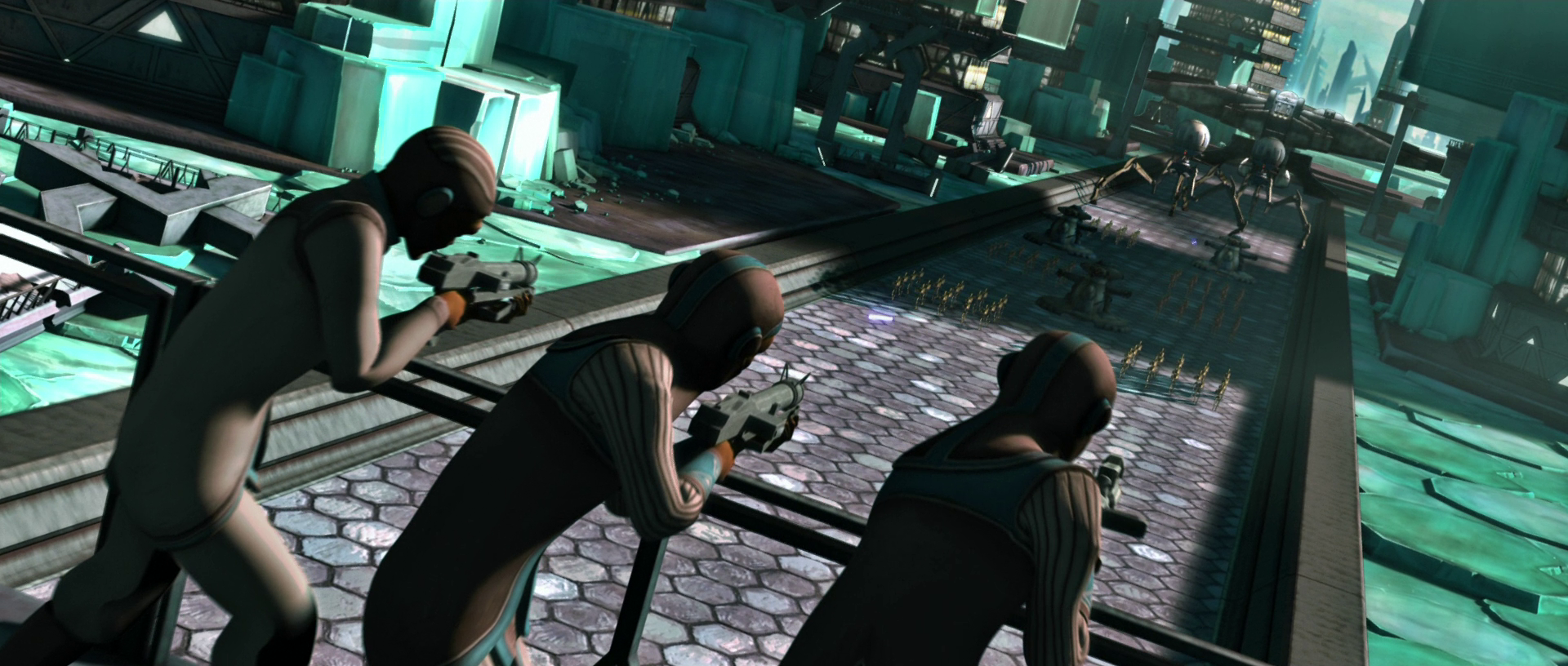
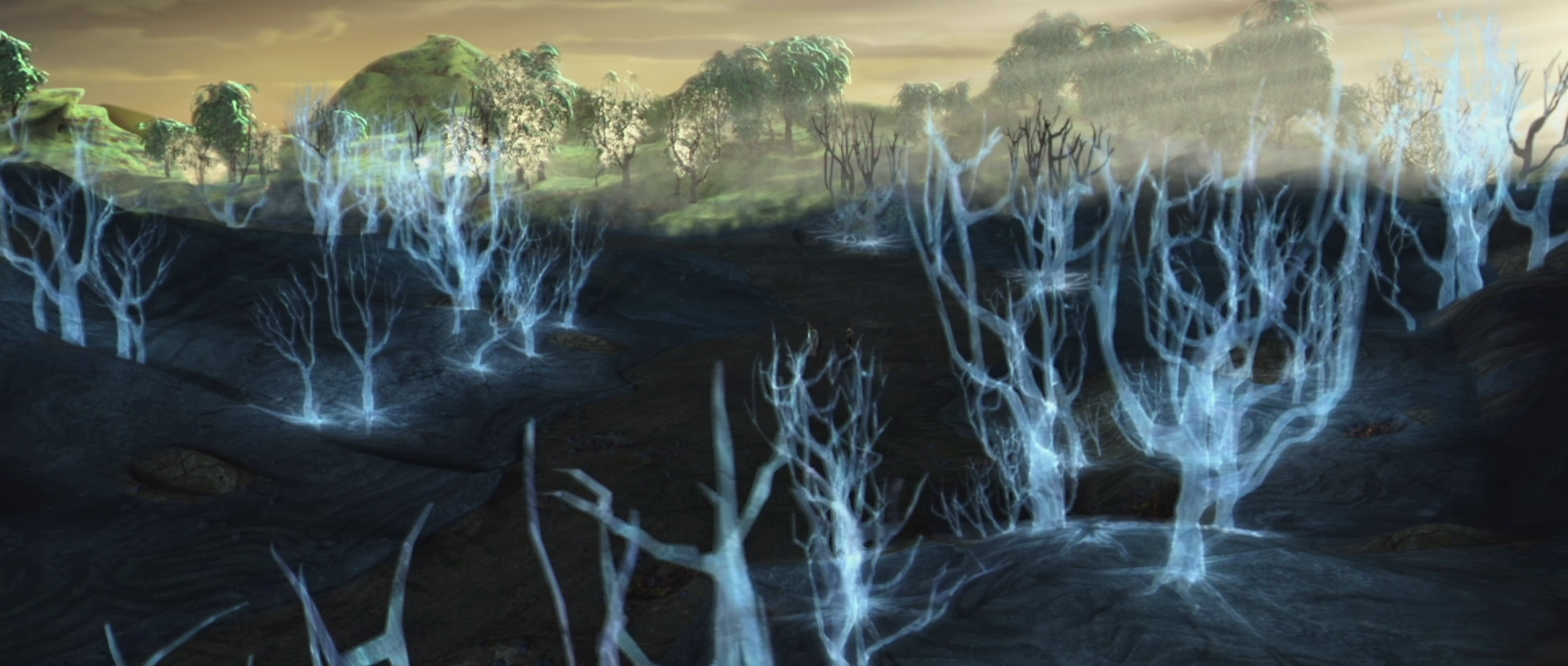
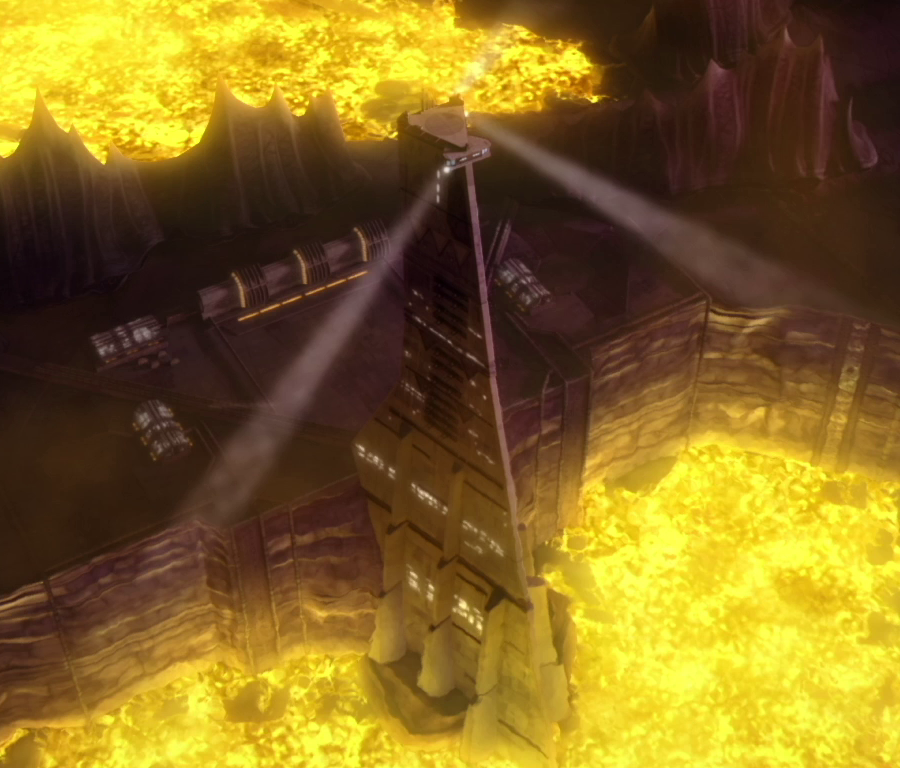
For one, the animation itself, which had been previously criticised for its very ‘solid’ aesthetic – with the characters looking like puppets or unmoving statues – still retained its individual style, but new elements had been added to improve the overall effect: the hair of certain characters now swayed in the wind, and the movement of their mouths had been improved to better match the audio. Explosions were now more vibrant, and the planets now featured much more vibrant landscapes: the copy-pasted interiors of starships, run-of-the-mill space battles and stories which took place in previously seen locations (either from the movie or Episode II and III) that pervaded over much of the first two seasons (see appendix 2, figure 1) were replaced with forests, volcanoes, and unique locations such as Mortis (a planet constantly in flux between night and day – see figure 2) or The Citadel (a prison situated on a planet cut in half – see figure 3). Whilst season one and two introduced a mere seven new locations over forty-four episodes, the latter half of season three alone introduced six. This constant introduction to new environments helped regain that feeling of discovering something new that the original trilogy carried with it, unlike the prequels or earlier episodes in the series, which spent a lot of time revisiting old locations.

The storylines took a darker turn; covering issues of morality, slavery and loyalty in the final episodes of season three and a four-episode arc of season four, which was essentially a Clone Wars re-telling of Apocalypse Now featuring more graphic violence than the show had previously depicted. These episodes were also unafraid to show that the world isn’t always split into good guys and bad guys, which took a lot of faith for something as simple as a Friday night/Saturday morning children’s TV show to tackle. Something else notable about the story arcs is that seasons one and two had been mostly based around large scale ground or space battles, and while the location may have changed, the basic structure remained the same: there’s a problem, there’s a big battle, the ‘good guys’ manage to win somehow, and the ‘bad guys’ run away. By the time season three ended, the stories or story arcs were all unique, and seemed to have direct correlations with the live-action Star Wars films: for example, the Citadel episodes focused on a prison break (rescuing the princess in Episode IV), the Apocalypse Now-type arc was about trying to decide between the lesser of two evils (Anakin’s choice in Episode III) and the Mortis arc had a central conflict between a father and a son (the climax of Episode V). This emphasis on memorable elements from the original trilogy (and to an extent Episode III, the more respected of the prequels among audiences) helped the show recoup the viewers it had lost purely by existing in the same era as the prequel films, featuring locations and characters they simply weren’t interested in. 

‘Yes, yes; to Obi-Wan you listen!’ - Hearing from the fans:

                Even if these assumptions are correct, the fans themselves are the best place to find out what actually changed. Aside from the previously identified Force.net forums and podcasts, the Star Wars threads on popular social media website Reddit³⁰ are an immensely popular place for users to share opinions around the films and the TV series. When asked in a survey what changed for them (see appendix 1, figure 7), the majority of answers seemed to indicate that the darker tone of the later seasons was an attraction for them, with one user even stating ‘It seemed as if the show began to be geared more towards adults and less toward children.’, which is interesting considering that at its heart, The Clone Wars is a children’s television show. Another summarised that ‘season three wasn’t completed before the show started, and they started to take viewer feedback into account as they continued’, which would go some way to explaining why the later seasons were responsible for the shift in fan opinion.

                Where the characters are concerned, a few said that they ‘could barely watch her [Ahsoka] in the beginning’, though they were ready admit ‘[Ahsoka] took over by the end’ and ‘I really fell for Ahsoka’. Many users even admit they ‘cried when I watched her last episode’. Considering how
much the original trilogy purists were won over by elements that seemed familiar to them, a similar number was praising the development of characters introduced in the theatrical release, particularly the clone troopers. ‘By season 4, I was blown away by the character development and knew the Clone Troopers’ names instantly after seeing them’, comments one fan, while another states ‘my favourite character has always been Captain Rex’. Though they all share the same face and the same voice, individual clones became key characters in the series and were given whole story arcs to themselves, such as Fives, a clone first introduced in the first season as a minor character who eventually had his own four-episode story in the ‘Lost Missions’ content. 

                So although it was previously assumed that the shift in fan attitudes was to do with call-backs to the original live-action Star Wars films, it seems more apparent from the discussions between said fans that what sealed the deal for them was the character development, either of newly established players in the series, or the pre-existing prequel characters such as Anakin or Obi-Wan (see figure 7, section 3). But how have these selling points helped the show retain such a considerable fan-base even after cancellation? Though it is clear that some elements of the series had struck a chord with the audience and encouraged them to watch it despite individual concerns and the critical backlash, what was it that kept the spark of interest alight once the show ended?

The Power of the Force – The lasting impact:

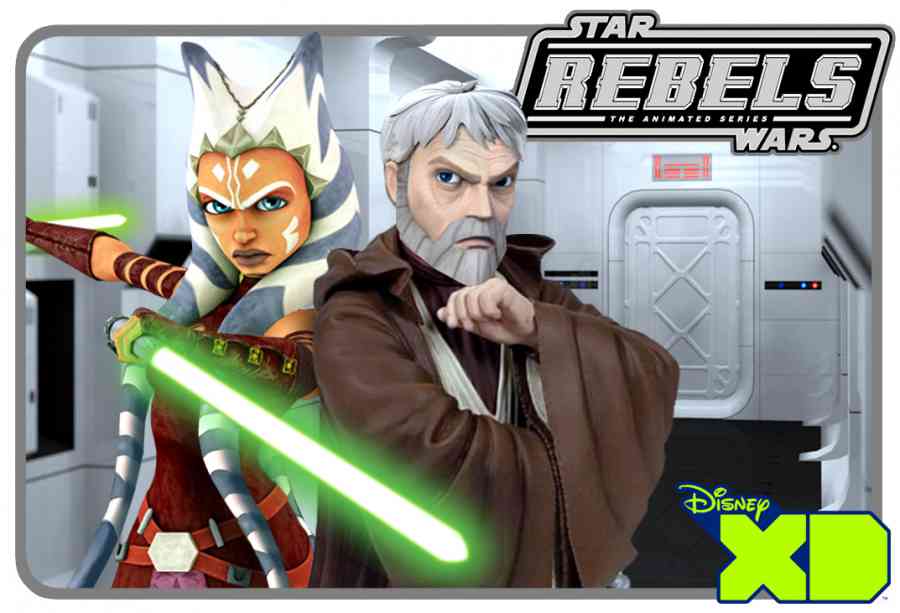
                At a basic level, the reason for continued resonance of the series among fans is that fact that the characters they grew to love as the series progressed have stayed with them: the series was cancelled just when audiences had grown used to the new characters and begun to enjoy watching them develop. Time with these characters had been cut short and as such the audience felt more attached to them once the show had gone. The smallest glance at fan forums, websites and YouTube reveals a wealth of stories, theories, art and videos inspired by the characters of the series that the audiences came to love. An entire section of YouTube became home to a community who created LEGO stop-motion movies (ranging from thirty second shorts to twenty minute epics) set within the Clone Wars timeline, whilst the digital art website Deviantart was flooded with fan art depicting new and pre-existing Clone Wars stories. Even minor characters or those who actually died during the progression of the series’ such as clone trooper Echo have emerged as fan favourites (see appendix 3, figure 1). Even when the new series Rebels was announced, fans created art that placed key Clone Wars characters such as Ahsoka Tano and Obi-Wan Kenobi into the art style and time period of the upcoming show (see figure 2) before even a single episode was released. Barely a day goes by on the Star Wars sub-reddit without a user querying what happened to characters like Ahsoka, Rex or Darth Maul (whose story was only half resolved by an official comic book in the months following the cancellation³³) after their final episodes had aired. Because those characters didn’t appear in the next instalment of the saga (Episode III), audiences were left to speculate or generate theories based on small snippets of information in an official video from Lucasfilm and Dave Filoni released in September 2014³⁴. The final stories of the series will be released in the coming months in novel and comic book form, but after that, the Clone Wars era has finally come to an end. It seems clear that those who expressed so much dismay and upset over the end of the series are doing so because it marks the end of an era in the Star Wars universe: the era of the prequel trilogy is finally over, with the television audience now satisfied by Rebels, the comic book readers by the new stories coming from Marvel, and all of the above soon to be sated by the release of Star Wars Episode VII: The Force Awakens.

                To summarise, then: though lambasted and criticised from its earliest stages for its less than inventive animation, alignment with the prequel trilogy and disliked characters, Star Wars: The Clone Wars managed to create a swift turnaround in audience attitudes. During the height of its third season, the makers of the show made great strides to enhance the lacklustre animation, take a darker tone, and tell stories that harkened back to the much-loved Star Wars live-action films. The further development of key characters (even those who faced so much of the initial resentment) was the turning point for many sceptics, and left behind an enormous community whose appreciation for the series (expressed through forum posts, homemade films and a wealth of art) was built to last even through the cancellation. For them, the show is not just another Saturday morning kid’s serial, but a much-loved set of stories, characters and locations that have been welcomed into the larger Star Wars canon.
Appendices
Appendix 1:


Figure 1: An excerpt from an interview Genndy Tartakosky gave to The Huffington Post¹

Figure 2: The first teaser poster for the series²


Figure 3: Initial fan reactions to the first poster and teaser from TheForce.net forums³

Figure 4: A timeline of the Star Wars novels, seventeen of which take place in the Clone Wars era⁴


Figure 5: Remaining worry over the general response to the theatrical announcement


Figure 6: Even the lowest-rated episodes of 2011/12’s Season 4 reached a 7 out of 10 approval rating on various sites from critics, audiences and fans alike.¹⁴ ¹⁵
1.
2. 
3. 
 
Figure 7: Fan responses to a survey on r/starwars asking for their opinions on the series both initially, by the end, and what changed for them.
Appendix 2:

Figure 1: The planet Christophsis, a re-used environment from the theatrical release that appeared in several stories over seasons one and two²⁷

Figure 2: The planet Mortis, constantly in flux between the dark and the light²⁸

Figure 3: The Citadel, a prison set on an unstable volcanic planet²⁹

Appendix 3: 

Figure 1: A fan-made design of clone trooper Echo, a minor character who met his end in season three of the series³¹
Figure 2: A piece of fan art depicting Ahsoka and Obi-Wan as they might appear in the new animated show Star Wars: Rebels³²


Bibliography: 

1. The Huffington Post, Genndy Tartakovsky ‘Hotel Transylvania’ Director, On The Disappearance of His Version Of ‘Star Wars: Clone Wars’, Mike Ryan, September 14th 2012. http://www.huffingtonpost.com/2012/09/14/genndy-tartakovsky-hotel-transylvania_n_1884046.html (Accessed 22/11/2014)


3. The Force.Net, Jedi Council Forums, ‘Official ‘The Clone Wars’ Series Discussion Thread (Spoilers Allowed). http://boards.theforce.net/threads/official-the-clone-wars-series-discussion-thread-spoilers-allowed.20757653/ (Accessed 22/11/2014)

4. Star Wars Expanded Universe Timeline, May 2011. http://static.comicvine.com/uploads/original/9/93477/3824952-7016453078-Star-.jpg (Accessed 22/11/2014)

5. Variety, ‘Animated Star Wars to hit theaters’, Diane Garrett, February 11th 2008. http://variety.com/2008/digital/news/animated-star-wars-to-hit-theaters-1117980757/ (Accessed (22/11/2014)

6. The Force.Net, Jedi Council Forums, ‘Official ‘The Clone Wars’ Series Discussion Thread (Spoilers Allowed). http://boards.theforce.net/threads/official-the-clone-wars-series-discussion-thread-spoilers-allowed.20757653/ (Accessed 22/11/2014)

7. Rotten Tomatoes, Star Wars: The Clone Wars. http://www.rottentomatoes.com/m/clone_wars/ (Accessed 24/11/2014)

8. Internet Movie Database, Star Wars: The Clone Wars (2008). http://www.imdb.com/title/tt1185834/ (Accessed 24/11/2014)

9. YouTube, Mark Kermode Reviews Star Wars: The Clone Wars, Uploaded December 30th 2009, originally broadcast August 15th 2008. https://www.youtube.com/watch?v=YbWlyoYQIjE (Accessed 24/11/2014)

10. Roger Ebert, Star Wars: The Clone Wars Movie Review (2008), August 14th 2008. http://www.rogerebert.com/reviews/star-wars-the-clone-wars-2008 (Accessed 24/11/2014)

11. ForceCast.net, Clone Wars Roundtable – The Movie, August 22nd 2008. http://forcecast.net/story/clonewarsroundtable/FC_Clone_Wars_Roundtable_The_Movie_124118.asp (Accessed 24/11/2014)

12. IGN.com, Star Wars: The Clone Wars – Season 1 – Review, Eric Goldman, March 30th 2009. http://uk.ign.com/articles/2009/03/30/star-wars-the-clone-wars-season-1-review (Accessed 24/11/2014)

13. YouTube, How George Lucas Stole the Clone Wars, Uploaded December 23rd 2008. http://www.youtube.com/watch?v=bJohWIoG-XI (Accessed 25/11/2014)

14. IGN.com, Star Wars: The Clone Wars: Season 4 – TV, Eric Goldman, September 23rd and September 30th 2011. http://uk.ign.com/tv/star-wars-the-clone-wars/4 (Accessed 25/11/2014)

15. Internet Movie Database, Star wars: The Clone wars (TV Series 2008-2014), various user and critic reviews, September 23rd and September 30th 2011. http://www.imdb.com/title/tt0458290/episodes?season=4 (Accessed 25/11/2014)

16. YouTube, Star Wars The Clone Wars Season 5 CVI Trailer, Uploaded August 25th 2012. http://www.youtube.com/watch?v=iV_XeMjEqIc (Accessed 25/11/2014)

17. BBC News, Disney Buys Star Wars maker Lucasfilm from George Lucas, October 31st 2012. http://www.bbc.co.uk/news/business-20146942 (Accessed 26/11/2014)

18. BBC News, Star Wars 3D release postponed, January 29th 2013 http://www.bbc.co.uk/news/entertainment-arts-21243143 (Accessed 26/11/2014)

19. Starwars.com, A New Direction for Lucasfilm Animation, March 11th 2013 http://www.starwars.com/news/a-new-direction-for-lucasfilm-animation (Accessed 26/11/2014)

20. Save The Clone Wars – Homepage, March 14th 2013 http://www.savetheclonewars.com/ (Accessed 26/11/2014)

21. Shotglass Digital – Save The Clone Wars, March 11th 2013 http://www.shotglassdigital.com/release/save-the-clone-wars/ (Accessed 26/11/2014)

22. YouTube, Star Wars: The Clone Wars – The Lost Missions: Trailer, February 24th 2014 https://www.youtube.com/watch?v=dT6gZdTUKQo (Accessed 27/11/2014)

23. Facebook, Star Wars: The Clone Wars https://www.facebook.com/StarWarsTheCloneWars (Accessed 27/11/2014)

24. Starwars.com, New Animated Series Star Wars Rebels Coming Fall 2014, May 20th 2013 http://www.starwars.com/news/new-animated-series-star-wars-rebels-coming-fall-2014 (Accessed 27/11/2014)

25. Starwars.com, The Clone Wars Season 3 Trailer, November 2011, http://www.starwars.com/video/the-clone-wars-season-3-trailer (Accessed 30/11/2014) 

26. YouTube, Star Wars: The Clone Wars: Season 3: New Character Models, November 18th 2010 https://www.youtube.com/watch?v=LT9LwclXPfo (Accessed 30/11/2014)

27. Wookieepedia, Star Wars: The Clone Wars, Season 2, Episode 16 ‘Cat and Mouse’, Screenshot, http://img4.wikia.nocookie.net/__cb20120929022403/starwars/images/e/ec/Confederacy_invades_Christophsis.png (Accessed 30/11/2014)

28. Wookieepedia, Star Wars: The Clone Wars, Season 3, Episode 15 ‘Overlords’, Screenshot, http://img1.wikia.nocookie.net/__cb20130524215606/starwars/images/4/43/MortisSurface.png (Accessed 30/11/2014)

29. Wookieepedia, Star Wars: The Clone Wars, Season 3, Episode 18 ‘The Citadel’, promotional image, http://img2.wikia.nocookie.net/__cb20130527011947/starwars/images/f/f2/TheCitadel-TC.png (Accessed 30/11/2014) 

30. Reddit.com, Star Wars – A long time ago in a galaxy far far away… http://www.reddit.com/r/starwars (Accessed 01/12/2014)

31. Deviantart.com, Clone Wars Season 7 – Echo LIVES (Variations), Brian Snook, November 9th 2014 http://brian-snook.deviantart.com/art/Clone-Wars-Season-7-Echo-LIVES-Variations-476605663 (Accessed 01/12/2014)

32. Starwars7news.com, Obi-Wan Kenobi Is In Star wars Rebels, DanDino8100, May 3rd 2014 http://www.starwars7news.com/wp-content/uploads/2014/05/rebels_wallpaper__ben_kenobi_and_ahsoka__by_engelha5t-d691sg531.jpg (Accessed 01/12/2014)

33. Newsarama.com, STAR WARS: THE CLONE WARS Final Darth Maul Story Releasing – in Comics!, Chris Arrant, January 7th 2014 http://www.newsarama.com/19979-star-wars-the-clone-wars-finale-debuts-in-comics.html (Accessed 01/12/2014)

34. Starwars.com, The Clone Wars Legacy, September 26th 2014 http://www.starwars.com/tv-shows/the-clone-wars-legacy (Accessed 01/12/2014)