Chris At The Pictures: film review
Showing posts with label film review. Show all posts

Wednesday, 26 September 2018

'Mile 22' - Review

9/26/2018 07:29:00 pm 0
'Mile 22' - Review

★ ☆ ☆ ☆ ☆


Director Peter Berg’s trademark patriotism mutates into the jingoism we all feared lay beneath the surface in this relentlessly nasty film. Mark Wahlberg (in his and Berg’s fourth joint op) stars as Jimmy Silver, a US overwatch soldier tasked with escorting top-priority informant, Li Noor (The Raid star Iko Uwais), out of hostile territory. 

This is the sort of machismo-fuelled bulletfest that seems to fly in the face of everything the Berg/Wahlberg duo have rallied against in their previous efforts. Whether the raw and upsetting nihilism of Lone Survivor, the fallout of corporate neglect in Deepwater Horizon, or the devastation of ordinary lives in Patriot's Day the pair have always dealt with violence and heroism. The downfall of Mile 22 is its oblivious conflation of the two. 

First-time scribes Graham Roland and Lee Carpenter fumble every possible opportunity for emotional resonance, clearly hoping that bravado alone will save them having to write anything resembling a character. Wahlberg is an instantly irritating screen presence here; a rubber band-fiddling pottymouth whose bad behaviour is excused by various, non-specified mental disorders. The film posits him as a good man caught in horrific circumstances. Don’t be fooled: Silver is unsympathetic and risible from the word go. We’re supposed to be cheering him on, but the only applause you’d hear within a million miles of this film is if the audience was asked - likely at gunpoint - to clap every time there’s a cut. 

The editing (choppy or sloppy, it’s hard to tell) is about as graceful as a dozen blows to the head, and renders Uwais’ signature talent for balletic martial artistry totally mute. Everything from car chases to firefights to boardroom debriefings blend into one unintelligible mass of hurled insults, cruel splatter and American flags. It’s impossible to tell what’s going on, where it’s all happening, why you’re supposed to care and, crucially, when it’s all going to stop.

Thursday, 26 July 2018

'Mission: Impossible - Fallout' - Review

7/26/2018 12:04:00 am 0
'Mission: Impossible - Fallout' - Review

★ ★ ★ ★ ½


One doesn’t often clamour to declare a franchise’s sixth instalment its finest hour - unless you happened to be me in the immediate aftermath of Revenge of the Sith - and yet, here we are. Mission: Impossible - Fallout leaves no nail unchewed in its quest to outdo every previous instalment (nay, every action movie released in the last decade) with minimal digital trickery and maximum physical impact.

The plot (largely surplus to the requirement of whichever death wish Tom Cruise fancied living out during that day’s filming) finds Ethan Hunt and company (Cruise, Simon Pegg, Ving Rhames and Rebecca Ferguson) in pursuit of stolen nuclear material. Given Ethan’s propensity for going rogue, he’s lumped with the CIA’s favourite blunt instrument, August Walker (Henry Cavill).

With both the CIA and a shady organisation known as The Syndicate on their tail, how do they intend to do all this? “I’ll figure it out” is the general mantra adopted by Hunt, his put-upon comrades, and director Christopher McQuarrie. And figured it out, he has. Every set piece - whether it’s a motorcycle chase into oncoming traffic in Paris, a rooftop pursuit in London, or an actual HALO jump performed thirty thousand feet in the air - surges with unbelievable adrenaline, each more thrilling than the last. Even in a standard cinema, the IMAX footage (including said skydive) shines brightest of all, the lack of stuntmen in Cruise’s stead laid beautifully bare.

Cruise - who broke his ankle in a comparatively minor stunt, leaping between rooftops (just another day at the office!) - continues to display levels of physical aptitude suited to a man half his age, but his portrayal of Hunt still stands even when removed from the sheer spectacle. With a history such as his, our favourite IMF operative is an understandably twitchy presence who smiles little and frets often, fueled by the desire to prevent nightmares of his lost love, Julia (Michelle Monaghan), from becoming reality.

Cavill, by contrast, is statuesque and supplied with a resolute workman’s grin. Justice League died so his moustache could live, and it proved a necessary sacrifice. Ditching the clean-shaven boy scout look serves him well in a role that seems tailor-made for his physical prowess and roughshod charisma, not least during a furious bathroom showdown that calls to mind the most chest-shattering moments of Gareth Evans’ The Raid 2.

Whilst images crunch the bones, pulses are pounded by Lorne Balfe’s score, which hits the ground running from the opening logos and barely pauses for breath. It’s not packed with memorable cues (the Lalo Schifrin original theme is given some fancy reworks), but Balfe should be commended for his ability to deliver music to match the mayhem.

As is standard practice for the franchise, this entry suffers from a convoluted plot, and works best when it sheds the scheming and puts pedal to metal. McQuarrie and Cruise know that in a post-Mad Max: Fury Road landscape, simplicity is key. With an action sequence involving a fleet of trucks, cars, explosions and flamethrowing guitarists now embedded in the moviegoing consciousness, there’s no further you can go (besides maybe filming the entire thing in outer space). It’s time to go back to basics, and maybe the greatest victory of Fallout is achieving the highest possible stakes with the simplest image: a man clinging to a rope. Your mission, should you choose to accept it, is to survive the final thirty minutes without gripping onto your seat, stuffing your knuckles into your mouth or simply swearing out-loud in disbelief: impossible? I’ll say.

Tuesday, 15 May 2018

'Breaking In' - Review

5/15/2018 10:51:00 am 0
'Breaking In' - Review

 ½   

This disappointingly pedestrian thriller from director James McTeigue (V for Vendetta, Sense8) takes itself and its straight-to-video trappings far too seriously to be enjoyable. Gabrielle Union stars as Shaun, a mother whose father has recently passed, leaving her his souped-up country house. She takes her two children for an overnight stay to arrange the sale of the house, when four men break in to steal her father’s stash of cash. They take her children hostage and she’s forced to thwart the state-of-the-art security measures to get them back.


I’m more than on board with the film’s feminist credentials, but the plot is so derivative and the dialogue so poor that it’s impossible to feel at all absorbed or entertained. The violence has no edge, and even the script feels doctored for a pre-watershed TV premiere (a villain actually says “Fricking” in a moment of rage). Union is the only likable screen presence, in the midst of classically precocious child actors and the assortment of muscly bores she’s pitted against. Billy Burke as the figurehead of the intruders looks contagiously bored, to the extent that yours truly actually found himself having a brief nap somewhere during the second act of the metronomic plot. I assume it was around the time Shaun tried to break in, then had to run away again, then snuck back to the house, then was forced to flee, then zzzzzZZZZZZZ

Tuesday, 20 March 2018

'Tomb Raider' - Review

3/20/2018 10:26:00 pm 0
'Tomb Raider' - Review

★ ★ ★ ★ ☆

Declaring Roar Uthaug’s Tomb Raider “the best video game movie yet” sounds like damning with faint praise, but there’s nothing half-hearted about this genuinely exciting action adventure starring Alicia Vikander. We begin with some less-than-promising expository narration from Lara’s presumed-dead father, Richard, played by Dominic West (a lucky escape considering that back in the days of the Angelina Jolie movies, he would have likely been the villain-of-the-week). Our titular heroine, refusing to accept her father’s death and take command of the vast inheritance awaiting her at Croft Manor, is living as a bicycle courier with a reckless streak and no direction. When her advisor, Ana, (Kristin Scott Thomas) finally persuades Lara to open her father’s will, she finds a Japanese puzzle box containing a clue to Richard’s whereabouts, and sets off to find him.

This and a contractual obligation of a coda are the only scenes that drag, but once Lara arrives in Japan, the film and its heroine hit the ground running and barely give up the pace from there. Soon she and her guide, Lu (Daniel Wu, armed with a roguish grin), are cast adrift on the shores of the mysterious island detailed in her father’s diary. They’re in a deadly race with Walton Goggins’ deliciously named corporate operative, Mathias Vogel, to find the tomb of a legendary genocidal queen.

Despite the fact we all know the studios involved will try their darnedest to wring a franchise out of this, there’s never a moment where Lara doesn’t feel an inch from death. Vikander brings a vulnerability to the eyes of the icon without diminishing her character’s agency or competence. It’s a performance that would be astounding for any mainstream action film, let alone this particularly cursed genre. Working in tandem with Vikander’s squared shoulders is a reliance on tactile sets and bone-crunching sound design really sells the grit and grime: what a thrill it is to see a blockbuster where the star appears to be in real danger!

While Vikander and her stunt work have the physical side more than covered, the emotional ground is less confidently broadcast. The screenplay takes little time to explore Lara’s feelings of abandonment but at least attempts to resolve them towards the climax. Most of the passion comes from Tom Holkenborg’s thrilling score, which truly comes into its own during a final temple run that attempts (and largely succeeds!) to ape an Indiana Jones set piece for the digital generation. For what is Indy solving “Jehovah begins with an ‘i’”, if not the kind of puzzle a player would be confronted with in a Tomb Raider game? Spielberg’s adventures were a clear influence on the original games, and those reference points have bled through to the rebooted series from 2013 (the story of which informs Uthaug’s film).

As those games were made with a concentrated effort to be more cinematic and narrative-driven, Tomb Raider’s transition from console to cinema feels less forced than previous video game adaptations, which often fall apart due to a lack of narrative (Street Fighter) or too much (the increasingly convoluted Resident Evil series). Like Duncan Jones’ Warcraft made use of the contemporary digital moviemaking landscape to bring its fantastical world to life, Tomb Raider plays to the strengths of the updated source material by balancing Lara’s personal struggle with the exhilarating derring-do we’ve come to expect. If all involved play their cards right with the inevitable sequel, adventure may soon have a new name.

Friday, 16 March 2018

'Annihilation' - Review

3/16/2018 09:04:00 pm 1
'Annihilation' - Review

★ ★ ★ ½ ☆


Alex Garland’s sophomore film as writer-director, based on the book by Jeff VanderMeer, is a sci-fi oddity packed with questions and imagery which overwhelm and outshine its strong cast. Natalie Portman is Lena, a biologist sent to investigate a strange occurrence known as the Shimmer when her husband Kane (Oscar Isaac) returns after going missing on his own expedition, wracked with strange symptoms. Lena is joined by four other scientists (Jennifer Jason Leigh, Tessa Thompson, Gina Rodriguez and Tuva Novotny) to venture past the Shimmer’s dripping rainbow barrier and into the unknown.

To have a major science fiction film headed up by five women is a wonderful prospect, but in the end their characters are secondary to the visuals and ideas. Portman, Thompson, Isaac and Jason Leigh have the most fleshed-out roles of the bunch, but the nature of their occupations and the unravelling plot means they have little room to display more than quiet disconnect and pure fear. Anyone who’s accused Christopher Nolan of being clinical will soon be admiring his more sentimental qualities after spending two hours in the company of biologists, psychologists and hazmat-suited observers armed with clipboards.

Now for the sadly unavoidable digression, given that yours truly is reviewing this film from the UK: Annihilation doesn’t belong on the straight-to-streaming pile. Its grandiose imagery and even larger ideas belong in a cinema, where an audience is paying directly (thereby showing more tangible support for cerebral sci-fi than a lone viewing statistic), breathing in the visuals from a pristine projection source and, most importantly, not tabbing out every five minutes to check Facebook. Whatever the objective flaws and merits of Netflix’ current sci-fi releases like AnnihilationThe Cloverfield Paradox and Mute (the less said about Bright, the better), they’re shot with the big screen in mind. I can’t for one minute imagine Alex Garland or Duncan Jones conversing on-set with their director of photography about how best to shoot a sequence for optimal impact on a cropped desktop window. 
The best I could do to replicate a theatrical experience for Annihilation was a 23-inch monitor, turning all the lights off, putting on a decent pair of headphones with the volume up and praying my internet connection held long enough to retain maximum resolution. The latter proved the most unreliable element, meaning Rob Hardy’s eerie cinematography resembled something closer to Annihilation: The ZX Spectrum Experience. Drops in bitrate still failed to break the spell of a frightening, spine-chilling score from genius composers Geoff Barrow and Ben Salisbury, returning from Ex Machina.

A few other elements from Garland’s previous directorial outing cling to the surface of Annihilation as it leaps from straight science fiction to bizarre, exploratory philosophy: there’s a lot of photography through glass (cell windows, the warped reflections of a glass of water), large gaps of ambiguous silence between dialogue and a frugal use of CGI. What digital imagery there is flits from astonishing to awkward. Where the VFX budget has been spent really shows, and the more questionable effects weirdly make the film feel more suited to its home platform doom.

As with Ex Machina’s tests, this film is fragmented into stages, each infused with a recurring close-up of dividing cells, an image echoed in the scientists’ continuing discoveries. Much as one cell becomes another, brief physical evidence (plants that have formed themselves into the shape of human bodies, skeletons arranged in the sand) spawns more mental imagery that is harder to shake, itself upstaged by succeeding sequences that teeter on the edge between dream and nightmare. A vignette in an abandoned swimming pool refused to leave the inside of my eyelids for several days.

Garland keeps this adherence to ‘less is more’ to a fault. So much of the screenplay revels in withholding information from the audience, and it’s difficult to decipher whether he’s leaving these questions unanswered or merely open to interpretations. This means Annihilation could be read as any number of things: for yours truly, it’s a fable about leaving the unknown alone, but you can also see commentaries on gender, mankind’s destruction of the environment, and what it means to be human. It’s a film of big ideas, and that’s something no amount of relegation to small screens can diminish.

Wednesday, 14 March 2018

'Gringo' - Review

3/14/2018 07:37:00 pm 0
'Gringo' - Review

★ ★ ☆ ☆ ☆

Laughs are sparse and the plot’s a farce in this occasionally funny but largely overstuffed caper from Nash Edgerton. David Oyelowo stars as Harold Soyinka, a hapless corporate underdog whose attempt to get back at his obnoxious boss, Richard (Joel Edgerton), by faking his own kidnapping by the Mexican cartel goes wrong.

A simple and perfectly workable setup (disgruntled employee hatches ridiculous plan) soon becomes an odyssey involving not only the cartels but a botched drug deal, a young couple caught in the middle (Harry Treadaway and Amanda Seyfried), a corrupt boss, adultery back home, and corporate espionage. For a labyrinthine spy thriller: great. In terms of keeping a self-billed comedy afloat: very unhelpful.

Almost as unhelpful is the film’s depiction and utilisation of Mexico and it’s culture. It’s all Day of the Dead celebrations, shady bars, drug running and the aforementioned cartels, or simply a foundation for useful - and highly misleading - marketing materials (the poster is plastered with various flowered skulls and similar paraphernalia). The image painted by said posters and the snappy trailer sets the audience up for a laugh-a-minute romp, but in fact the laughter comes dotted across vast deserts of joyless meandering. The one good piece of slapstick (Sharlto Copley’s bearded spy being knocked into a roly-poly by a car) is in the trailer, and the remaining violence is too efficiently brutal, too truly nasty to be in any way amusing. 

And, stuck helplessly in the middle of everything, is Oyelowo. That he’s been given the lead role in a mainstream American comedy should be cause for celebration (even more so when he gets to use his native Nigerian accent), but it’s a piece of casting that puts his powers to little use. His unshakable aura of intelligence betrays any attempt to portray Harold sincerely, but his natural charisma stays the course during all-too-brief scenes of character-building between the clueless stooge and Seyfried’s beaming holidaymaker.

The film is completely stolen from under all of them by Charlize Theron as Edgerton’s number two, a shy and sultry businesswoman with a penchant for loose shirts and cutting insults. Think Cruella de
Vil with a pixie cut. Her quest to toss aside the many useless men makes for some entertaining payoff once the countless convoluted threads come together, but it’s too little too late. 

Thursday, 11 May 2017

'Sleepless' - Review

5/11/2017 12:18:00 pm
'Sleepless' - Review


★ ★ ½ ☆ 


The second of this month’s films with an ill-advised and easily mocked title is this middle-of-the-road thriller remake starring Jamie Foxx. Based upon the moderately acclaimed Nuit Blanche¸ Sleepless sees deep cover cop Vincent Downs (Foxx) scouring a Las Vegas hotel in search of his kidnapped son after a drugs theft goes awry. The highly-coveted hoard sees Downs caught between two criminal big shots (Dermot Mulroney and Scoot McNairy) and pursued by plucky internal affairs officer Bryant (Michelle Monaghan).

Foxx gives a very toothy performance here; lots of spitting, gritting and grimacing. Far from the adrenaline-fuelled fear of losing his son, Foxx appears to be in desperate need of root canal. None of that can take away from the fact that we’ve seen him give far better performances in similar fare (and similar roles, come to that), and this inherent goodwill is what ignites the merest semblance of interest in Downs’ story.

Said narrative is bookended efficiently enough (the opening sequence and final showdown are uncomplicated and tightly constructed), but everything in-between is dragged down by more subplots than is good for any thriller. Corruption, double-crosses, underlying father-son troubles; it’s all here. One imagines the filmmakers have pretentions towards something in the vein of Denis Villeneuve’s Sicario, having given the film a faux-Johan Johansson score and a female lead on the tail of corruption, but both fall flat. The music is overbearing in the extreme, and though we’re undeniably more interested in what Monaghan’s getting up to, her character is written laughably thin.

Equally two-dimensional but substantially more fun is McNairy and his array of ball-themed threats. In his quest to appear scary, his slimy baddie employs golf, baseball, human testicles and an oversized grenade launcher that releases huge clouds of white…well, you get the idea.


The other performances aren’t exactly bad, they’re just sort of…there. A single exception is made for Gabrielle Union as Downs’ estranged wife, who is resoundingly poor. Still, the cinematography’s not half bad, while an unnecessary sequel setup raises a titter over an eye-roll. The whole thing seemed to go down rather well with an audience seeking a breather between space-bound superheroes and boss babies.

Wednesday, 3 May 2017

'Guardians of the Galaxy Vol. 2' - Review

5/03/2017 09:16:00 pm
'Guardians of the Galaxy Vol. 2' - Review

★ ★ ★  


“All you do is shout at each other!” – the frustrated words of cyborg assassin Nebula (Karen Gillan) ring loud and true regarding Marvel’s dizzying and thunderous return to the stars. Following an incursion with a giant tentacle monster and gold-faced aliens, the Guardians of the Galaxy find themselves split in two. Peter Quill (Chris Pratt), Gamora (Zoe Saldana) and Drax (Dave Bautista) head off into the unknown on the trail of the living planet, Ego (Kurt Russell), while Rocket (Bradley Cooper) and Groot (now Borrowers-scale and voiced by a squeaky Vin Diesel) are left to fend for themselves against hordes of space pirates.

To call anything that comes from the Disney-Marvel slate “risky” seems a bit much, but I at least confess my admiration for an audacious opening set piece, which places the action itself in the background and distracts us with a three-minute dance number as the titles play out. My enjoyment even stretched to the use of ‘Mr Blue Sky’, a song which I freely admit detesting, largely thanks to its association with many awful British summer time TV adverts.

Accidentally going along with things that shouldn’t work is an experience that defined my time spent in the company of James Gunn’s new film. Whether snorting at Drax’ cacophony of trouser humour or wryly noting the onslaught of 80’s pop culture references (is there really an audience crossover between Marvel and Cheers?), I had a great time with this movie, make no mistake…even if said movie itself is far, far from great. Despite its bum-numbing length, largely inconsequential roster of side characters and one moment where it turns into Man of Steel (and not in a good way), Guardians 2 is infectiously fun. The cast are engaging, the music – both the new Awesome Mix and Tyler Bates’ score – is glorious and hearty, and it leaves the audience awash with smiles.

Only occasionally does the smile falter. Constant bickering between the bunch gets a bit much, hence my sympathies with Nebula as the Guardians’ prisoner. Pratt’s delivery is the main offender, bouncing back between soft aural honey and wide-eyed barking, with Cooper’s shrieking raccoon a close second. Mercifully, they’re usually cut off mid-rant by Bautista’s pin-precise comedic timing or a relatable glower from Saldana. Even the extensively-marketed baby Groot gags take a good while to start wearing thin, stuffed to the brim as the film is.

Like a sports car stuck in traffic, the movie wants to whip-pan from scene to scene, but is reined in by sequences that take an age to pass. There’s so much going on visually and referentially (gags about Mary Poppins, Pac-Man and an allusion to Hitchcock’s North by Northwest, to name but a few), crammed into a narrative that hops from one side of the universe to the other like there’s a hedgehog in its seat.
Here, Guardians 2 goes for the whole Empire Strikes Back deal (the gang are separated after an early conflict and familial ties are revealed), but with a modicum of the depth and none of the darkness. But that’s fine: in a film with the aesthetic of a Haribo factory on fire, anything too challenging or tonally murky would set the atmosphere askance.

In terms of the wider cinematic universe this is little more than a jaunty side-step from endless avenging; the filmic equivalent of a village fireworks display. It goes on longer than anyone really needs it to, but you stay the course and suffer the repetitive whizz-bangs because there’s free candy floss, your best mates have turned up and you’re all howling with laughter because the vicar just took a Catherine wheel to the crotch.

Tuesday, 18 April 2017

'Fast & Furious 8' - Review

4/18/2017 04:57:00 pm
'Fast & Furious 8' - Review

★ ★ ★ ½ 

Fast & Furious 8 or, as I like to call it, Physics? Never heard of it!, opens with Dominic Toretto (Vin Diesel) racing a flaming car backwards down the busy streets of Cuba, and only becomes more bonkers from there. After this brief display of disregard for civilian life, Dom turns this callous attitude on his own family, betraying Hobbs (Dwayne Johnson), his wife Letty (Michelle Rodriguez) and the rest of the crew for reasons unknown. He’s allied with Cipher (Charlize Theron in dreadlocks that she just about gets away with), a God-like hacker who – despite her ability to unseat entire nations with the flick of a switch – needs Dom for one last job. His heartbroken team have no choice but to join forces with a young upshot agent played by Scott Eastwood (a desperate and failed attempt to fill the seat left by Paul Waker) and old enemy Deckard Shaw (Jason Statham) to bring their fallen leader to justice.

Yes, it’s all got a bit dark this time around. Or as dark as a film where Statham calls Johnson a wanker from behind bars can be, anyhow.  It’s the cars and calamity you’ve paid to see, and the film’s zealous delivery of conflagration and testosterone ensures you’re never distracted by the corny dialogue or questionable performances. For all the developments in digital technology the saga has grown into, the tools to make Vin Diesel emote anywhere in the realms between wry smile and concrete slab have not yet been invented.

Still, you’re not there to admire the cast's acting ability any more than they’re turning up to win Oscars: they’re here for the ride, and so are we. Want to see a six-way game of tug-of-war played with sports cars? They’ve got it. Fancy the sight of Tyrese Gibson ice-surfing on the severed door of a Lamborghini? Thought so. Ever wondered what happens when half of New York’s traffic piles down a single street? I’ll get the popcorn, shall I?

Everyone slides into their roles with the ease of slipping on well-worn shoes and the one-liners bounce around as harmlessly as their owner’s cars seem to do (although Gibson’s constant back-and-forth with the closest person/object/explosion is beginning to grate). Of course, it all starts to fall apart once anyone starts talking for longer than it takes for several showrooms worth of cars to blow up, but I’m willing to forgive Chris Morgan’s script purely because it gifts us the sight and sound of Dame Helen Mirren shouting “Devil’s bumhole”.

The exotic locales and apparently uncontested damage to property is highly reminiscent of the James Bond series and – while it’s more Die Another Day than Casino RoyaleFast & Furious is well on the way to overtaking the British spy franchise in terms of instalments, box office heft and pure brainless enjoyment. Its complete self-awareness, total aversion to any façade of prestige and willingness to embrace the modern blockbuster landscape is a winning formula.  I’ve even been moderately enthused by the series’ strive for diversity, but it needs to drop the needless ogling of women’s backsides before I embrace it wholeheartedly.

It’s honestly astonishing to see just how far a franchise that began as Point Break with street-racing has become. The original film’s grimy aesthetic and plucky band of believable characters now seems ludicrously understated compared to Fast 8, which involves set pieces where around 100 cars drop from the sky and Diesel attempts to outwit a heat-seeking missile. At this point I’m tempted to slam the brakes and take a moment to wonder how much further they can possibly go with this, but we’ve all been here before and know the answer: a lot. Fast & Furious (Deep Space) 9, anyone?

Friday, 14 April 2017

'Life' - Review

4/14/2017 04:08:00 pm
'Life' - Review

★ ★ ★  

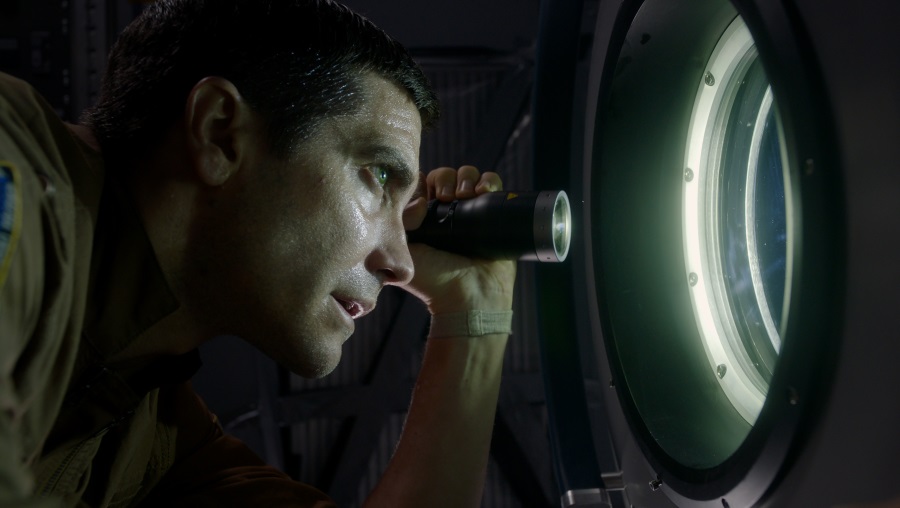
Jake Gyllenhaal returns to B-movie cinema in this weightless but efficiently gruesome space creepie. A team of astronauts and scientists on the International Space Station are thrilled when a probe dispatched to Mars returns laden with samples, one of which could demonstrate proof of life on the red planet. One such sample contains a miniscule but motionless organism. Being characters in a creature feature, they inevitably decide to inject it with nutrients, poke it with an electrical prod, and generally fiddle about in a way that can only lead to much yelling and crunching.

With the creature loose on the station, the film becomes an episodic series of chase sequences intercut with light musings on the nature of life, as the various inhabitants of the ISS (Gyllenhaal, Ryan Reynolds, Rebecca Ferguson et al) attempt to prevent ‘Calvin’ from reaching Earth.

With the basic premise and top-of-the-line visual effects taken into consideration, yes, it’s little more than Alien and Gravity blended together…but the resulting milkshake goes down well with a large popcorn. Gyllenhaal brings his A-game, even to what may seem a step down from his recent string of varied, comparatively arthouse roles, and Ferguson continues to build on a promise of stardom. Reynolds is rather less impressive, but for plot reasons as opposed to lack of ability. Hiroyuki Sanada (as in Sunshine, playing an awestruck astronaut who can’t catch a break) never gives a bad performance, and is suitably intense.

In short, they’re all good company when Calvin gets bored of them all moping about the Challenger disaster (a huge misstep in an otherwise amiable script) and decides to start separating various limbs and vital organs from their bodies. The creature is an effectively creepy amalgamation of several we’ve seen before and the gore is visceral and plentiful: picture the grisliest bits of Prometheus and you’re in the right ball park.


I really want to talk about the ending – because it’s the one part of the film that draws out anything more than a plaintive “Yeugh!” or shrill gasp – but all I can say without dropping spoilers is that you’ll never find a more jarring use of Norman Greenbaum’s Spirit in the Sky. It’s like tacking Peter Genesis’ Carpet Crawlers onto the epilogue of The Fly. Again, I’m referring to another piece of sci-fi because there’s barely a microbe of original thought present in Life. But that's not a slight: it’s schlocky and slimy and all kinds of stupid… and I had a ball with it.

Wednesday, 12 April 2017

'Ghost in the Shell' - Review

4/12/2017 12:12:00 pm
'Ghost in the Shell' - Review

★ ★ ☆  ☆

“Ramona flowers?” – Two words that entered my mind during Rupert Sanders’ remake of Ghost in the Shell and refused to go away, destroying any remaining chance it had of being taken seriously. Scarlett Johansson’s perfectly arranged bangs and dyed tips echoed the look of Scott Pilgrim Vs. The World’s manic pixie dream girl so irritably that every accusation levelled at the films whitewashing came flooding to the forefront.
First a manga comic, then a critically revered anime, Ghost in the Shell is a story predominantly focused on philosophical themes of humanity, identity and artificiality. Its heroine, Major (played here by Johansson), is a human brain encased in a cyborg body, honed and exploited by a tech corporation in near-future Japan to take down dangerous criminals. In this version, Major begins to question her identity when repressed memories emerge, coinciding with her attempts to apprehend criminal mastermind Kuze (Michael Pitt).
There is no reason whatsoever that a direct live action remake of Mamoru Oshii’s film couldn’t work: it could surpass the odd barrier that some audiences have with anime and possibly make room for more recent developments in the philosophical debate concerning our ever-evolving relationship with technology. To its small credit, this new version does make extraordinary use of contemporary digital animation, recreating the futuristic landscape with aplomb. Cinematographer Jess Hall should be applauded for some truly stellar work, as should composer Clint Mansell…but both deserve to have their work attached to a far better film.
Anyone who’s seen the 1995 animation will be left exasperated by the film’s spoon-feeding approach, and new audiences will gain little they cannot find in other, far worthier films. Screenwriters Jamie Moss, William Wheeler and Ehren Kruger shy away from doing anything that might remotely challenge an audience with the fervour of a vampire shunning daylight. What philosophical statements the film does exude are unoriginal at best, and issued with the grace and volume of a foghorn at worst. “What we do is what defines us”, Major blankly mutters to camera, simultaneously stealing the central thesis of Batman Begins and condemning the film by its own mouth as shallow and second-rate.
Not content with merely turning a treatise on what it means to be human into just another “asset out of containment” thriller, Ghost in the Shell also turns iconic characters into replaceable archetypes. Besides the obvious crime of casting a white woman in a decidedly Asian role, conscripting Johansson as another physically perfect but morally dubious killing machine is a thoroughly uninspired move, and it shows. Pilou Asbæk does what he can as Major’s sidekick, Batou, but is often lost in the scenery. Takeshi Kitano (the one Asian actor in the main cast) brings his usual gravitas despite an underwritten role, but Juliette Binoche (playing the Doctor behind Majors mechanical enhancements) looks plain bored.
In all fairness, I think I’d have given up trying long before her when presented with such a predictable script. Empty platitudes aside, it’s just a bit insulting to have everything laid out so blindingly: for some reason, Batou’s cybernetic eyes have a backstory, and the telepathic communication between augmented humans are directly referred to as “thought-comms”. Those odd, unexplained elements that helped the original stand out have been muted by the heavy-handed exposition one would expect from a prequel, not an outright remake.

The action sequences carry some swirling neon elegance and the overall construction is solid (its vision of the future possibly outstripping the as-yet unreleased Blade Runner 2049), but there’s just no escaping Ghost in the Shell’s unforgivable whitewashing and sheer intellectual bankruptcy. 

Friday, 24 March 2017

'Power Rangers' - Review

3/24/2017 09:15:00 pm
'Power Rangers' - Review

 ☆ ☆ ☆ ☆

Dean Israelite's Power Rangers reboot begins like something from Warhammer 40,000: bruised and bloodied space marines crawl through the mud of an Earth wreathed in cataclysm, fire and debris raining all around. Suddenly, I'm excited. Fast-forward a minute later, and we're midway through a comedy sequence involving a delinquent jock (picture an off-brand Zac Efron) and accidental bovine masturbation. As a bull's penis dangled forlornly in front of the camera, excitement was replaced by a desperate yearning for the preening, harmless self-referential comedy of a Marvel film, even a jolt of nostalgia for the Christ-complex sincerity of something like Batman V Superman. Everything that Power Rangers gets so badly wrong about its own property can be summed up by sickening comedy and misplaced seriousness.

Every sin committed stems from the misguided mindset of someone who believes that a franchise primarily concerned with camp, fruit gum-aesthetic abandon would be best revitalised with beastiality jokes, a subplot about slut-shaming and a running gag concerning the anal insertion of crayons.

Much like Josh Trank's Chronicle, the story focuses on a group of disparate teens (all variously interchangeable angst machines given the vaguest sheen of progressive diversity – I’ll get to that in a moment) find an underground chamber that gifts them superpowers. Unlike Chronicle, the drawback to these abilities isn't mental degradation, but eye-searingly unattractive armour that crowns the wearer a Power Ranger.

Our wards in this join-the-dots origins story are a surprisingly diverse central circle: only one of the five is a straight white male (though, inevitably, he's the leader), another is autistic and one of the two women carries a suggestion of homosexuality. And that's the key word: suggestion. The diversity is underplayed, even negligible, with the non-white characters forced into roles that range from clichéd to problematic to outright eye-rolling. I'd probably have been able to stand the group as a whole if they didn't broadcast every single emotion with the conviction and depth of a Hot Topic t-shirt. During a low point, in which the team's illusion of heroism is shattered, the Pink Ranger (who chops off her hair because she's, like, rebellious, see?) sulks in a tank top emblazoned with 'It Was All A Dream'. I wish.

They're led to heroics by colour-coded crystals buried in the ground eons ago by Zordon (Bryan Cranston), a pin art-faced ex-Ranger whose consciousness is sealed in a wall. Bill Hader gets the thankless task of voicing Alpha 5, a dwarfish CG robot with the grating disposition of Roger Rabbit. Both deliver exposition so focus-grouped you can practically hear 'registered trademark' after every noun.

Elizabeth Banks (silently screaming a plea for help from beneath the makeup) plays Rita Repulsa, a galactic sorceress intent on destroying Earth using the Zeo Crystal, a magical McGuffin buried beneath (and I promise I'm not making this up) a famous texture-branded doughnut cafe. We're not talking James Bond and his contractual swig of Heineken here: the product placement is obnoxious to the point of distraction. If you're prone to bouts of second-hand embarrassment and insist on seeing this film, bail before the climax. The brand name is muttered, shrieked and shouted by half a dozen characters, the villainess herself taking a break during the final confrontation for a quick nibble, napkins and all.

Predictably, it's a more entertaining sight than the bust-up itself, which resembles a toddler smacking two action figures together in a sandpit. This movie exists primarily to sell said toys and fails even in that regard, because the suits, robots and creatures are unspeakably poor. Having worked in a toy shop recently, I thought my early exposure would be adequate preparation, but on-screen the awfulness is horrendously magnified. When they show up to save the day, I remain surprised (and dismayed) that their arrival isn't greeted with a swift military strike in place of the intended exultation.

"It's Morphin' time!" exclaims the Red Ranger. Yes, precisely, I thought. Time to morph into my cinema seat, perhaps. Or the floor. Or a discarded popcorn bucket. Or my cup-holder. I’ll take anything, anything that will erase my ability to comprehend another moment of this.

'Beauty and the Beast' - Review

3/24/2017 12:04:00 am
'Beauty and the Beast' - Review

★ ★ ★ ½ 

Emma Watson and Dan Stevens lead an all-star cast in this live-action remake of Disney’s 1991 animated classic. A smart and impetuous young woman named Belle (Watson) takes her father’s place in the abandoned castle of a hideous beast (Stevens), once a handsome prince punished for his selfishness. Trapped within the confines of the crumbling ruin, Belle befriends the transfigured house staff, slowly coming to discover there’s more to her monstrous captor than meets the eye. Meanwhile the caddish, swashbuckling Gaston (Luke Evans, firing magnificently on all cylinders), along with his infatuated sidekick, LeFou (Josh Gad), schemes to kill the beast and make Belle his wife.

Watson is a stunning Belle. That’s about all I can muster, really. I'd like to think my critical faculties extend beyond inserting several heart-eye emojis, but when Watson first appears it’s as if everything else (crisp faux-period detail, glittering landscapes, even Kevin Kline as Belle’s tender father) leap away at warp factor 9. Watson’s well-read inventor is a tad more outspoken and empowered than previous iterations of the story, and no less in control of the frame, the music, or the romance (and, to the huge relief of Potter fans, her eyebrows).

The photorealistic renderings of our favourite characters are intricately designed, but come off more than a little creepy (Madame Garderobe and her void-like maw, especially…yikes!), even when given such joyous sparkle by Hollywood’s finest: Ewan McGregor as Lumière, the talking candlestick, Ian McKellen as the finest incarnation of Cogsworth, the grumpy clock, and Emma Thompson, who gives reassuring life to Mrs. Potts, the cockney teapot.

It seems odd that such an otherwise tangible and lavishly designed yarn should have frayed digital edges: the Beast in particular feels very much an artificial insertion. Dan Stevens has an astonishing set of pipes on him, but the grumbling voice distortion and lack of physical heft somewhat squash his natural broiling charm. Still, he delivers the same heavy-pawed comedy-catharsis combo we expect; certainly enough to forgive any less-than special effects.

CGI is also used so extensively during the many musical numbers (‘Be Our Guest’ is the biggest offence) to compensate for the colour and flair of the original you wonder why they didn’t remake it into a 3D animation, rather than live action. Likewise, the grand ballroom sequence is a little flat-footed. Lacking the fluid, ground-breaking elements of its animated counterpart and opting instead for a whirling digital lightshow, director Bill Condon’s desire to enthral youngsters of a new generation could mean anti-climax for long-time fans.


Maybe this is a sign that the ‘tale as old as time’ has finally been drained of all invention? Perhaps, but those simply after a good time at the movies won’t be deterred by such a sweet, funny and soulful retelling. The songs, story and characters are pretty much invincible at this point, and to see them all brought to life again by some of cinema’s brightest stars is undeniable fun. Like the recent revivals of Cinderella and The Jungle Book, it shines with the high-tech glimmer of modern filmmaking and attempts to develop some new material: nothing much is lost, but there’s really nothing there that wasn’t there before. 

Wednesday, 22 March 2017

'Get Out' - Review

3/22/2017 11:45:00 pm
'Get Out' - Review

★ ★ ★ ★ 

Jordan Peele’s directorial debut isn’t titled I’m not racist, I have black friends: The Movie, but it may as well be. The film sees photographer Chris (Daniel Kaluuya) visiting the affluent family of his girlfriend, Rose (Allison Williams), unsure as to how they’ll react to the news that he is, in fact, black. Against the urging of his best friend, Rod (LilRel Howery, who delivers a landslide of the film’s comedic joys), Chris puts on a brave face and makes the trip. Upon arrival, the cringeworthy greeting from Rose’s parents (Bradley Whitford and Catherine Keener) establishes an atmosphere of awkwardness that could so easily be dismissed as over-friendliness, but amounts to something far more sinister.

From the instant we’re introduced to the Armitage household, with its two black servants and immaculate displays of courtesy, Peele slashes the veneer to allow scalding satire to bleed through. There are comments on cultural appropriation (Roses’s father, Dean, proudly shows off his myriad of multicultural objects that now amount to little more than mantelpiece trinkets), the usually glossed -over smugness of liberal racism (Dean’s over-emphatic oath that he would have voted for Obama for a third term, given the chance) and the fetishising of black bodies. Rose’s extended family gawk at, poke and fawn over Chris’ physical form. “Is it better?” one of the women asks, slipping Rose a knowing look, while a genial uncle declares “Fair skin is out – black is back in fashion!”

No, these aren’t your usual cackling, toothless hicks who readily admit to their backward views with glee; wine takes the place of moonshine, slack-jawed grimaces swapped for painted smiles. In fact, they’d probably rush to tell you how much they “simply loved Get Out. Even at the most jaw-dropping, unutterable moment of discriminatory revelation, Stephen Root’s blind art dealer decries any inherent racism, before immediately explaining his motivation in a way that can only label him so.

I’m hesitant to co-opt a review about a film primarily concerned with racism and cultural satire to gush about its genre trappings, but considering the rut that studio horror has dropped into recently, we’d best appreciate what Peele has gifted us here. When was the last time a multiplex horror drew on something like Invasion of the Body Snatchers for more than cheap nods to horror nerds? There are contemporary comparisons to make, too: an early scene projects the suffocating depths of Under the Skin through the most famous visual cue from Trainspotting. Oh, and it’s got actual cinematography, not just a greyscale frame left empty in preparation for jump scares!


Cattle-prod frights do appear, but incorporated into a general aura of skin-prickling unease that only intensifies as Chris discovers what lies beneath. And, God, is it a thrill. The steadily-rising dread delivers on every promise the critical hype machine could possibly spit at you, from a supremely unnerving cold open to a conclusion that’ll leave nail marks in your palms for weeks. There are so many moments worth gushing over, but my aversion to spoilers and usual failure to adequately explain a plot means I won’t do that here. All you really need to know is that it’s smart, sharp, scary and everyone in it is sublime (with particular emphasis on Kaluuya, Williams and Keener). How many more great films can 2017 throw at us before we’re exhausted? One more, it seems.

Friday, 17 March 2017

'Kong: Skull Island' - Review

3/17/2017 09:47:00 am
'Kong: Skull Island' - Review

★ ★ ★ ½ 

We wave a cheerful goodbye to awards season and prepare for the imminent onslaught of summer blockbuster season with this, the latest incarnation of King Kong and the second in Warner Bros. monsters shared universe. If even half of the franchise properties headed our way in the coming months are as amiable as this fantastically enjoyable romp, we have little to fear.

Kong: Skull Island leaps a few decades past the usual 1930’s escapades and lands just as the Vietnam War is coming to an end, and so that conflict becomes the metaphor at the heart of the film. A band of US soldiers led by war-starved Colonel Packard (Samuel L. Jackson) and a constantly-sleeveless SAS tracker (Tom Hiddleston) are tasked with protecting a scientific expedition to a hitherto unexplored island in the Pacific. Brie Larson tags along as magazine photographer Mason Weaver (a decent attempt to knock Mark Wahlberg’s Cade Yeager in Transformers from the top spot of dumbest action movie names).

You’ll notice I just sort of stuck Larson on the end there as a footnote but believe me, that’s more appraisal than the film gives her. She’s mostly there to provide (admittedly very convincing) horrified stares and awe-inspired gawping. And, for most of the running time, we’re firmly with her. To use a phrase I promised never to use; this movie is a visual feast. Cinematographer Larry Fong – so usually stuck with adhering to the iron-grey sensibilities of Zack Snyder – makes full use of an eye-piercing colour palette here, creating a myriad of iconic shots that you just want to bathe in. Kong’s silhouette framed against a burning sunset, napalm explosions reflected in a grinning pilot’s aviators and a dozen others that I daren’t spoil ensure this film is at least a stylistic match for Gareth Edwards' Godzilla.

While the first of Warner/Legendary’s series was about the myth and mystery, Skull Island is all about the monsters. Almost no time is wasted on shipping our intrepid cast to the island, where they’re immediately set upon not only by the giant ape, but also by skull-faced lizards, enormous spiders, tree-like carapaces and all manner of creepy crawlies. The enormous success these creatures have on drawing the eye is commendable, not least because they distract from the risible dialogue (poor John Goodman’s professor is dealt a bad hand in expedition exposition from the start).

Luckily, clunky lines are often overridden by thunderous sound design or the music. Henry Jackman’s score plays much like his Captain America: Civil War album on shuffle, but it works fine. His part usually plays second fiddle to the jukebox collection of 60s/70s hits, just in case you forgot the whole thing was a metaphor for Vietnam for two seconds.


The military forces ill-prepared to face a jungle-bound enemy, extensive use of napalm, a sophisticated and resourceful indigenous populace and more (Hiddleston’s character is literally called Conrad, for goodness sake) create an analogy so heavy-handed they may as well have called the movie Viet Kong. But Kong: Skull Island is a film that thrives on lack of subtlety, on creatures and camp and its British hero slicing up giant lizards with a samurai sword. It’s one Wilhelm scream away from a classic.

Monday, 13 March 2017

'Moonlight' - Review

3/13/2017 10:11:00 pm
'Moonlight' - Review

★ ★ ★ ★ 

Moonlight begins with a statement by song: Boris Gardiner’s Every N****r is a Star. The star in this movie’s galaxy is Chiron (Alex Hibbert/Ashton Sanders/Trevante Rhodes), a young black man struggling with his sexuality. Based on a drama school project by playwright Tarell Alvin McCraney, the film takes the form of three distinct acts that track Chiron’s journey from childhood, through adolescence and into adulthood. These segments in turn are constructed of vignettes so delicate and tender you daren’t breathe, lest they shatter.

Flat-out racism and refusal to engage with diverse narratives aside, I cannot understand the mind-set of critics and audiences who declare nothing to connect with here. Whether it’s the question of how we choose to identify versus the labels placed on us by others, how masculinity takes many different forms, the interlinking between sexuality and expression, or even subtle notes on depression and anxiety,Moonlight offers so much to discuss with barely a word spoken. Mahershala Ali (long may he reign) provides the major mouthpiece as Juan; a drug dealer who dispenses wisdom to a young Chiron (nicknamed Little). It’s through Juan’s calm intonation and the prolonged silences of pain by each incarnation of Chiron (incidentally, all three leads are perfect) that gives the film such a profound voice despite a deference to showing, not telling.

Every single moment of exquisite heartache is elevated by James Laxton’s cinematography. The colours meld and blur and burn, a kaleidoscope of cool blues and searing purple that are incredible even when removed from the context of a film that gifts us so many indelible images. Director Barry Jenkins has shown me things that cinema has never offered before: a romantic jukebox denouement reserved for two men, a complete lack of white speaking parts, and the sight of a muscled black man crying that isn’t played for comedic effect, even remotely.

This complete contrast with any film I’ve ever seen before is probably my favourite thing about a film full of astonishing elements. I have a terrible habit of referring to other films an awful lot, but Moonlight is so different that I have almost no frame of reference, and I can’t understate how exciting that is. The one allusion I could find was a comparison with this year’s A Monster Calls, which I said empowered every lonely child to “admit their quietest truth at thunderous volume”. Moonlight is the flipside; expressing the loudest components of self-expression and character as a mere whisper.

I’m not about to say I had a ball with it, because that wouldn’t be entirely true: I think one could argue that some of the narrative might fall into place a little too neatly. I’m tempted to say that’s not necessarily a bad thing – given how the minorities represented are so rarely given any kind of narrative justice – but I am aware that saying so might come across as patronising.

While its general themes are infinitely successful, its specificity is still occasionally difficult for someone so far from its frame of reference…but I don’t consider that an issue. For those who do understand these experiences, who have had their background, sexuality and racial identity used as the basis for prejudice, Moonlight is going to be unspeakably important. The specific periphery of Jenkins’ film is what makes it so special, what makes it feel like a story where, for the briefest instant, the outside world may as well not exist; a welcome escape indeed.

Tuesday, 7 March 2017

'T2 Trainspotting' - Review

3/07/2017 10:54:00 pm
'T2 Trainspotting' - Review

★ ★ ★ ½ 

I’m not one of those people who grew up with Trainspotting. Heck, when it was first released I was barely older than the baby crawling around Mother Superior’s skag den. It does, however, hold a very special place in my heart. In the brief period between my GCSEs ending and the summer holidays beginning, I had a lot of free time and – not being a particularly sociable type – started to watch my way through the family DVD shelves. Obviously, I was a few years too young to be watching most of them but, if anything, that big red 18 certificate (and my love for the Star Wars prequels) had me keenly reaching for this Ewan McGregor film covered in laudatory quotes.

Films weren’t the same after that. Trainspotting was scummy, outrageously rude and utterly frank when it came to drugs, sex and growing up…and I’d never seen anything like it. So it’s fair to say that I had a different set of expectations for a sequel than those returning after two decades of appreciation, and I think this disconnect explains why T2 Trainspotting didn’t completely gel for me in the way it did for my parents and clearly thousands of others.

One thing it does get properly right is the characters. Surprisingly, they’re all still alive. Unsurprisingly, they remain various flavours of selfish, pitiful and psychotic. Sick Boy (Johnny Lee Miller) runs a pub but has a share in blackmail, cannabis and coke addiction on the side. Spud (Ewen Bremner) curls up every night in a hollow flat, miles away from his partner and son, his final smile from the previous film betrayed by an immediate return to heroin. Meanwhile, Begbie (Robert Carlyle) has made his escape from prison and plots his revenge against Renton (McGregor), who’s returned to his old haunts after twenty years in Amsterdam.

McGregor gets top billing, as expected, but his role is arguably secondary this time around. Having spent so long outside of his former friends’ world, Renton is now a sightseer. So the focus gradually shifts to the one sympathetic character left in the frame: Spud. Bremner further cements his place as one of his generation’s finest actors with a performance that retains every weird idiosyncrasy that made the character so endearing in the first place, but is tinged with Spud’s yearning to have his story heard above the macho posturing of his fellows. McGregor, Miller and Carlyle return to their roles, but Bremner advances his with an emotional maturity that Renton, Sick Boy and Begbie have only reached physically.

The entire film almost feels like a low-key realisation that maybe all the stuff you did when you were younger wasn’t such a good idea after all. The boisterous tone of the ’96 original is gone, replaced with a surprisingly frank bitterness and regret. Anthony Dod Mantle’s cinematography is as vibrant as ever (I still maintain he’s the only man on earth who could make a Transformers movie look good), but the canted angles and hedonistic zooms are few and far between. Even the soundtrack is supremely lacking in nostalgia until the last possible moment, choosing not to wallow in old hits or bankable Top 40 tracks (see Fifty Shades Darker or even, to some extent, Boyle’s own The Beach). There’s a thematic and technical handshake taking place, an agreement to turn it down from eleven.

And that’s what didn’t sit well with me. I’m not about to dismiss a film for including subtext, but what Boyle’s original worked best when it wasn’t really about anything. It was a sprawling, chaotic beast that provoked vomit and laughter in equal measure and marked a change in the landscape of British cinema. Maybe I’m too in love with that anarchic spirit, too enveloped in telling the older generations to stick it where the sun doesn’t shine, too busy choosing Facebook, Twitter, Instagram and everything else Renton despises to fully understand the existential bile of middle-aged regret.


However, I am also enough of a Danny Boyle fan to know when he’s doing it right (incidentally, you all need to watch Trance again), and there’s still heaps to enjoy here. The dialogue is excoriating, the emotional moments pack a punch and though the final moments are a shade predictable, they tick the box in a very comforting, homely way.