Chris At The Pictures: sequel
Showing posts with label sequel. Show all posts

Sunday, 16 December 2018

BUMBLEBEE - Review

12/16/2018 09:17:00 pm 1
BUMBLEBEE - Review
Hailee Steinfeld in BUMBLEBEE (Paramount Pictures (c), photo by Enrique Chediak)
★ ★ ★ ½ ☆

Well, here’s a Christmas miracle: after a decade of increasingly puerile cruelty, the Bay/Spielberg Transformers franchise finds a heart. Hailee Steinfeld leads this 80s-set prequel as Charlie, a budding mechanic who discovers the titular robot in a junkyard. Disguised as a rusty Volkswagen Beetle, ‘Bee’ is on the run from a war on his home planet, Cyberton, and tasked by resistance leader, Optimus Prime, with finding the freedom-fighting Autobots a new home. 

Though placed chronologically before Michael Bay’s own efforts, this serves as a soft reboot/retelling of the 2007 original, with Steinfeld taking up the Shia LaBoeuf role (albeit with a total absence of masturbation jokes). Charlie is a far more sympathetic character, however, and allowed more motivation than Sam Witwicky’s simple quest to get laid. A once promising diver, she’s retired to the garage, obsessed with a broken corvette that she and her recently-deceased father used to cherish. 

Steinfeld brings lovable wide-eyed wonder to Charlie, providing not only this franchise’s first fully-rounded character, but one which young audiences can admire and sympathise with (her mother fusses needlessly, her stepfather is embarrassing, her brother steals their affections, and so on). When she sees Bee metamorphose from motor to mech for the first time, her closely-guarded sadness begins to transform (sorry) into something much closer to hope. One immediately feels echoes of E.T. and The Iron Giant which continue to emerge as the two form a delightful double act.

Christina Hodson sneaks more than one fish-out-of-water cliché into the screenplay, but that crucial presence of genuine pathos sets this prequel light years beyond what we’ve come to expect. The scenes of Bee attempting to navigate the family living room or learning to hide in plain sight are gems of physical comedy, and all based in the burgeoning emotional bond between teen and titan. Even John Cena (carving a great slice of ham in the undemanding role of ‘generic special forces man’) is gifted a neat moment of empathy. 

Perhaps more surprising still are the scenes of robo-rough-and-tumble. Director Travis Knight - whose last film was the wonderful animation Kubo and the Two Strings - knows how to make proper use of space in an action sequence, electing to pull the camera back and slow down the editing pace. A hectic opening skirmish on the robot homeworld - a landscape not short on spikes, girders, and other untidy metalwork - is still more tangible than anything glimpsed in the series thus far (a relief to those fearing the scrap metal orgies of episodes past). Our combatants have also been reduced in number by a factor of ten, and redesigned to more closely resemble the iconic action figures.

Painted in bright, primary colours, their retreat to the crash-bang-wallop of child’s play is symbolic of what this franchise should have been from the start. The heroes are heroic, the villains are villainous, the music is a joyful 80s mixtape, and at no point does Optimus Prime turn into a murderous zealot. Rejoice!

Thursday, 26 July 2018

'Mission: Impossible - Fallout' - Review

7/26/2018 12:04:00 am 0
'Mission: Impossible - Fallout' - Review

★ ★ ★ ★ ½


One doesn’t often clamour to declare a franchise’s sixth instalment its finest hour - unless you happened to be me in the immediate aftermath of Revenge of the Sith - and yet, here we are. Mission: Impossible - Fallout leaves no nail unchewed in its quest to outdo every previous instalment (nay, every action movie released in the last decade) with minimal digital trickery and maximum physical impact.

The plot (largely surplus to the requirement of whichever death wish Tom Cruise fancied living out during that day’s filming) finds Ethan Hunt and company (Cruise, Simon Pegg, Ving Rhames and Rebecca Ferguson) in pursuit of stolen nuclear material. Given Ethan’s propensity for going rogue, he’s lumped with the CIA’s favourite blunt instrument, August Walker (Henry Cavill).

With both the CIA and a shady organisation known as The Syndicate on their tail, how do they intend to do all this? “I’ll figure it out” is the general mantra adopted by Hunt, his put-upon comrades, and director Christopher McQuarrie. And figured it out, he has. Every set piece - whether it’s a motorcycle chase into oncoming traffic in Paris, a rooftop pursuit in London, or an actual HALO jump performed thirty thousand feet in the air - surges with unbelievable adrenaline, each more thrilling than the last. Even in a standard cinema, the IMAX footage (including said skydive) shines brightest of all, the lack of stuntmen in Cruise’s stead laid beautifully bare.

Cruise - who broke his ankle in a comparatively minor stunt, leaping between rooftops (just another day at the office!) - continues to display levels of physical aptitude suited to a man half his age, but his portrayal of Hunt still stands even when removed from the sheer spectacle. With a history such as his, our favourite IMF operative is an understandably twitchy presence who smiles little and frets often, fueled by the desire to prevent nightmares of his lost love, Julia (Michelle Monaghan), from becoming reality.

Cavill, by contrast, is statuesque and supplied with a resolute workman’s grin. Justice League died so his moustache could live, and it proved a necessary sacrifice. Ditching the clean-shaven boy scout look serves him well in a role that seems tailor-made for his physical prowess and roughshod charisma, not least during a furious bathroom showdown that calls to mind the most chest-shattering moments of Gareth Evans’ The Raid 2.

Whilst images crunch the bones, pulses are pounded by Lorne Balfe’s score, which hits the ground running from the opening logos and barely pauses for breath. It’s not packed with memorable cues (the Lalo Schifrin original theme is given some fancy reworks), but Balfe should be commended for his ability to deliver music to match the mayhem.

As is standard practice for the franchise, this entry suffers from a convoluted plot, and works best when it sheds the scheming and puts pedal to metal. McQuarrie and Cruise know that in a post-Mad Max: Fury Road landscape, simplicity is key. With an action sequence involving a fleet of trucks, cars, explosions and flamethrowing guitarists now embedded in the moviegoing consciousness, there’s no further you can go (besides maybe filming the entire thing in outer space). It’s time to go back to basics, and maybe the greatest victory of Fallout is achieving the highest possible stakes with the simplest image: a man clinging to a rope. Your mission, should you choose to accept it, is to survive the final thirty minutes without gripping onto your seat, stuffing your knuckles into your mouth or simply swearing out-loud in disbelief: impossible? I’ll say.

Sunday, 22 July 2018

'Mamma Mia! Here We Go Again' - Review

7/22/2018 11:50:00 am 0
'Mamma Mia! Here We Go Again' - Review

★ ★ ★ ★ ☆

This prequel, sequel and so much more than equal to 2008’s surprise smash hit plays to every strength of its ludicrous premise, star-studded cast and indestructible jukebox soundtrack. Amanda Seyfried returns as Sophie, no longer planning the wedding of her dreams but instead a celebration for her recently passed mother and former Dancing Queen, Donna (Meryl Streep). The narrative flits between Sophie’s attempts to do right by her mother, her longing for distant Man After Midnight, Sky (Dominic Cooper) and the past flings of the young Donna (Lily James).

One might argue that having a predisposition to ABBA might make you a tad biased towards Here We Go Again (as the proud inheritor of a signature edition CD of their greatest hits, I plead guilty), but I’d argue that anyone with a beating heart would feel the same. It doesn’t matter how reluctant you feel going in, how utterly illogical the timeframes, nor how much your ears bleed from Pierce Brosnan’s crooning; the instant Seyfried lets loose the first strains of ‘Thank You For The Music’, the battle is all but lost.

The first Mamma Mia is a fun film. The second is a great one. It’s funnier (a single line from Christine Baranski damn near slew me), better-looking, genuinely well-acted and has emotion simply bursting from every pore. James is a total dream in the lead role, and her supporting cast take up the challenge with fizzing aplomb. The three younger incarnations of Sam, Harry and Bill (Brosnan, Colin Firth and Stellan SkarsgÃ¥rd hand the stage to Jeremy Irvine, Hugh Skinner and Josh Dylan) are all suitably dashing. Gold stars are awarded to supporting turns from Cher (in a late appearance as Sophie’s grandmother) and Omid Djalili (playing a perfectly po-faced passport officer).

The songs are still largely crowbarred in, but this time around it’s a knowing, satisfying kind of shoehorn delivered by a script that knows exactly what you came for. Besides a smattering or reprisals, the chosen playlist is rife with a selection of underplayed classics (‘Angeleyes’ was a particular hit with my tear ducts) and pushes the boundaries of credulity beyond breaking point: the circumstances surrounding a performance of ‘Fernando’ are so incredulous that you’ll positively (if not literally) shriek with joy. And joy is the dish of the day in this smorgasbord of cheese, cheers and Cher, making Here We Go Again the surest hit of this summer: boy, is it gonna make money, money, money.

Tuesday, 3 July 2018

'Sicario 2: Soldado' - Review

7/03/2018 02:33:00 pm 0
'Sicario 2: Soldado' - Review

★ ★ ☆ ☆ ☆

Picking up where 2015’s grim tale of murky morals on the Mexican border left off, this sequel finds itself squeezing every political pressure point within reach. Josh Brolin returns as CIA operative Matt Graver, tasked with initiating open warfare between the Mexican cartels to dissuade the smuggling of terrorists across the border. He again enlists the mysterious Alejandro (Benicio Del Toro), this time to kidnap a crime lord’s daughter (Isabela Moner) and thereby escalate the unrest: they're going to build a war and make Mexico pay for it.

With the triple-threat of helmsman Denis Villeneuve, cinematographer Roger Deakins and star Emily Blunt now absent, this descent into destruction loses all direction and grace, becoming - ironically - a rather blunt instrument. I didn’t think Sicario had a heart in the first place, but without Blunt’s Kate Macer as the moral anchor, Soldado becomes a one-way ticket to rock bottom for all parties involved. “Rules of engagement, sir?” asks a squadmate of Graver’s as they prepare for a stand-off. “Fuck it all”, comes the response.

Nowhere is the shrugging off of anything less dour than a Nietzschean tract more apparent than this moment, Graver having already dismissed POTUS as “cowardly” for not wanting to cause the destabilisation of a neighbouring country. Taylor Sheridan returns as screenwriter, and makes it his mission to push all the MAGA era buttons he can before someone pries his fingers from the typewriter. The film opens with Mexican immigrants swarming towards the border, ISIS suicide bombers concealed within their ranks. An entire subplot is dedicated to the training of a young Mexican trafficker (Elijah Rodriguez). Disturbingly realistic dramatisations of atrocities committed on American soil are delivered in clear detail while later images of Mexican children and parents boarding separate buses are casually, even callously dismissed before we move to more masculine brooding.

Sheridan still has problems writing women, too: Kate Macer may have been our way into Sicario, but her feminine traits were unsubtly coded as simply daring to have ideals in the first place, used only as a contrast to the more pragmatic Graver and the morally suspect Alejandro. In Soldado, the only women with substantial speaking roles are Catherine Keener as a hawk-like overseer, and Moner, who's (still magnetic) turn as political prisoner becomes little more than a device to draw out development for Alejandro and plot exposition from everyone else. Del Toro is a gripping presence, as one would expect, but Brolin - bereft of any challenger - simply stomps about with his chin forward.

Director Stefano Sollima (Suburra) is no stranger to underworld unrest, and his teaming up with d.o.p. Dariusz Wolski (Alien: Covenant) makes for some appropriately forbidding imagery. Everything’s either blistering desert sunlight or spotlit shadows, both colour-timed to whichever shade of grey fits the current philosophical mood. Soldado’s nihilism, however (largely displayed in explosive but uninvolving action scenes), becomes wearing all too soon. An epilogue that further hammers home this franchise’s Gospel of Matthew, “violence begets more violence” message offers no solution to its central conflict, nor to the real-life horrors it purports to represent.

Wednesday, 6 June 2018

'Jurassic World: Fallen Kingdom' - Review

6/06/2018 10:42:00 pm 0
'Jurassic World: Fallen Kingdom' - Review

★ ★ ☆ ☆ ☆

The park has gone and so has all direction and imagination in this interminable continuation of the Jurassic Park franchise. With neither the depth of Spielberg’s first adventure, the scare factor of his under-appreciated sequel, nor the nostalgic charm of 2015’s Jurassic World (the less said of Jurassic Park III, the better), this entry settles for retreading old ground. With the facility at Isla Nublar in ruins (again), a shady businessman plans to airlift the dinosaurs back to the mainland (again) in order that they may be exploited for military purposes (again), and also to spite his more aged and more peace-loving mentor (again).

As for our heroes, Claire (Bryce Dallas Howard) is now a stringent dinosaur-rights activist, and she begrudgingly recruits Owen (Chris Pratt) to assist in saving the remaining dinosaurs from Isla Nublar’s suddenly active volcano. That is, before the doomed creatures are plucked from deliverance by Rafe Spall as the aforementioned suit, armed with a smile as untrustworthy as your average social media privacy policy.

Director J.A. Byona and cinematographer Óscar Faura do their best to bring some semblance of awe to proceedings, but returning screenwriters Colin Trevorrow and Derek Connolly’s script suffocates the Spanish duo’s usual flair for likeable characters and haunting imagery. There are some glimpses of the young Richard Dreyfuss in Pratt’s portrayal of Owen, but not enough to prevent him slipping into Star Lord-lite. Howard goes all in on the running (appropriately booted this time around) and screaming, and is easily the most watchable human presence. A new sidekick played by Justice Smith is immediately annoying, and his disappearance from the middle act would be a relief, were it not another indicator of the feckless screenplay losing track of who’s where and why.

“Why?” is a question I found myself asking a lot during this film. Mostly “Why aren’t I just at home watching Jurassic Park?”. The re-heated narrative structure, knock-off set pieces (we’re treated to re-runs of the museum showdown and The Lost World’s downtown dinos), plus a perfunctory appearance from Jeff Goldblum continuously serve to remind us of movies we’d rather be watching. And it’s never scary. Not once. My entire generation can attest to the nightmares of poor Eddie being bisected by the T-Rex pair in The Lost World, and the most this softened rehash can muster is ‘occasional bloody moments’. A largely dialogue-free prologue featuring some truly stunning imagery of monsters in the moonlight is the closest we come to genuine thrills, which is more than can be said for the genetically-enhanced ‘Indoraptor’, introduced by Toby Jones doing his best Donald Trump impression.

This creature is another of the screenplay’s walking clunkers: it’s sold to us as the fusion between Jurassic World’s Indominus Rex and a Velociraptor. A key plot point of the previous film was that the multi-breed Indominus was part-Raptor, and could therefore weaponise Owen’s pack against him. Did they just add more? Extra raptor with your half-raptor, sir? The Indominus - while not particularly chilling - served as a neat analogy for Hollywood’s misunderstanding that bigger equals better. The Indoraptor’s purpose seems to be to remind us that...er...rich people can be greedy and stupid? I don’t need the film to tell me that: that it exists at all is proof enough.

Thursday, 17 May 2018

'Deadpool 2' - Review

5/17/2018 09:15:00 pm 1
'Deadpool 2' - Review


★ ★ ½ ☆ 


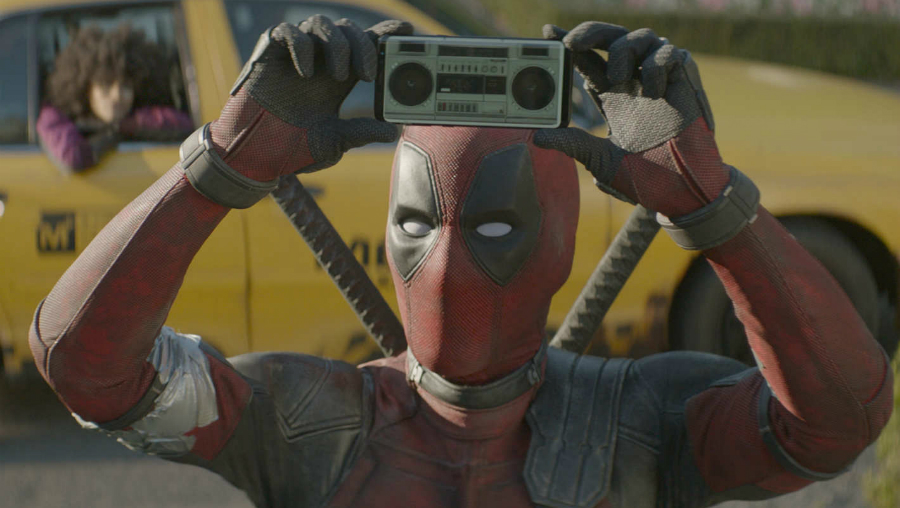
Leftover goodwill from 2016’s surprise smash hit doesn’t go the distance in this formulaic and overcranked sequel, which sees Ryan Reynolds slip back into the red onesie. Wade Wilson/Deadpool is mired in a depressive downturn after his wife, Vanessa (Morena Baccarin, who somehow has even less to do this time around), is murdered. His attempts to make amends for his mistakes by joining the X-Men are swiftly shot down when his a botched mission lands him in jail beside Russell (Julian Dennison), a teenage mutant with a highly combustible nature. They’re soon on the run from Josh Brolin’s Cable, a time-travelling cyborg with little patience for the titular twerp’s smart mouth.


Sadly, it’s an attribute with which I entirely sympathise. I was never the world’s biggest fan of the first film, but was found myself won over - almost reluctantly - by its irreverence towards the wider superhero movie landscape. Plus, the years spent in development hell and a need for justice after Fox’s criminal representation of Deadpool in X-Men Origins: Wolverine gave it a strangely underdog status. Now, removed from it’s lowly spot on the studio ladder and armed with a budget more in-keeping with your average blockbuster, the fourth-wall breaks, extreme violence and juvenile humour seem far less subversive than before.


There are still plenty of jokes that land (I missed the second big laugh of the film as my eyes were still watering from a sharp inhalation of drink at the opening visual gag), but if you’re not one for dick jokes or endless pop culture references, you’re in a for a rough ride. A grotesque and potentially brilliant Basic Instinct nod is ruined by a character saying out-loud “Basic Instinct!”.


There’s also a streak of self-fellating hypocrisy to some of the comedy which didn’t sit well with me. One aside sees The Merc With The Mouth mockingly refer to Deadpool creator Rob Liefield’s inability to draw feet, yet the artist receives a ‘special thanks to’ credit. Also, for the plentiful supply of jokes aimed at white men getting away with sexual assault, accused abuser T.J. Miller returns as Weasel. The producers claimed “We’re in the final editing” when the accusations emerged, but in an age where Ridley Scott can re-shoot half a movie in the wake of such allegations, that sort of excuse won’t fly.


David Leitch (John Wick, Atomic Blonde) replaces Tim Miller behind the camera this time, and his snappy, brutal approach to combat feels too...much. Action in a Deadpool film should be light and wacky, but the prison break sequence involving Cable and a horde of armoured guards is the wrong kind of bone-crunching. The creaky visual effects have been given a massive overhaul, but a smattering of the set pieces still remain dutifully small of scale, or openly reject the opportunity for mass carnage (see a hilariously anticlimactic skydiving sequence).


But for all its mockery of everything from shared universes to rival comic giant, DC, Deadpool 2 inexorably stumbles in the same potholes as those it purports to subvert. The villain is a grimdark bore. There’s an overblown vehicle chase. Emotional beats fall flat or are immediately interrupted by snark. And, of course, there’s a Stan Lee cameo.


And yet, Reynold’s clear affection for the character and crusade to please the comic fans for better or worse is undeniably admirable. He’s enjoying himself, and he wants you to share that joy. It’s great that Julian Dennison has landed such a spotlight so soon after his breakthrough appearance in Hunt for the Wilderpeople. It’s great that Negasonic Teenage Warhead (Brianna Hilderbrand) gets to have a girlfriend. It’s great that Zazie Beetz’ Domino (a new ally blessed with a superhuman lucky streak) gets to be a confident action heroine with visible, unmocked armpit hair. There are so many small victories against the usual pitfalls of major comic book fodder, but Deadpool 2’s adherence to a plethora of similar tropes and a suffocatingly smug sense of humour threaten to turn them pyrrhic. “Maximum effort”? Not quite.

Sunday, 25 March 2018

'Pacific Rim: Uprising' - Review

3/25/2018 09:31:00 pm 0
'Pacific Rim: Uprising' - Review

★ ★ ☆ ☆ ☆

In a move designed seemingly to please only the signatories of internet polls, this drift-incompatible sequel to 2013’s monster mash has double the action but half the charm. The Kaiju threat has returned, and now Jake Pentecost (John Boyega), son of the late great Stacker (Idris Elba) must begrudgingly rejoin the Pan Pacific Defence Corp and assist old drift partner, Lambert (Scott Eastwood), in training a breed of new recruits to pilot the giant mechanoid Jaegers against the aliens.

Guillermo Del Toro’s fling with giant-sized filmmaking did a lot of things (bring smiles to lovers of Godzilla movies, prove you could make a movie about robots punching each other an enjoyable experience, and allow Ron Perlman a fine slice of ham), but ‘demand a sequel’ wasn’t one of them. It was a flight of fancy; a chance for the Mexican director to take a break from horror and pay his respects to long-gone titans of entertainment like Ray Harryhausen and Toho. When Del Toro spoke about the Jaegers, he carried a gleeful geeky grin as he waxed lyrical about their fusion of World War 2-era aesthetic and futuristic tech. He sweated the small stuff and ensured the giant mechs had personality, or as much personality a honking, creaking mass of metal and gears can have. When one arrived on screen, a sense of perspective and scale was maintained by low-angle shots and thundering sound design. Now, the revamped Gypsy Danger is slimmed-down, polished to a mirror shine, and wields a lightsaber-esque sword; little more than a Lancaster Bomber turned Megazord.

That awe-inspiring sense of scale is abandoned almost entirely here. Save for a few quick shots of giant feet threatening to crush faceless civilians, most of the combat is shot as though the robots are the characters. Entire city blocks are demolished with all the impact of collapsing card castles, and there’s no moment to equal - let alone top - the moment from Del Toro’s original where Gypsy Danger wields a cargo liner like a baseball bat and wallops a Kaiju in the face. Dan Mindel’s (Star Trek, Star Wars: The Force Awakens) grainy cinematography works wonders with the in-cockpit action and physical props, but reduces the Jaegers themselves to little more than weightless action figures. 

That’s in the moments his images survive the atrocious editing, anyhow: this is a film not so much cut together as hacked and shunted into something vaguely resembling a coherent whole. It takes an awful lot for a film to dump the vacuum of charisma that is Charlie Hunnam and somehow get worse, but Uprising is just that: a lot. The narrative moves at a ridiculous pace, squashing at least three hours and change worth of plot, subplot, character building and sequel setup into less than two. We barely have time to get acquainted with our new batch of Jaeger pilots before moving on to more of Charlie Day’s gurning, then whip-panning back to Boyega and Eastwood sweating at each other. 

Boyega, mountain of engagement that he is, almost singlehandedly ropes everything together with bravado and some expertly-timed delivery, but is overwhelmed by the film’s insistence on pushing past him to the next scene. Eastwood is there purely to grin “Hell yeah” every once in a while, and Day has all the personality squashed out of him. Newcomer Cailee Spaeny (playing a Rey-like scavenger who cobbles together her own miniature Jaeger) has just about enough room to make an impression, but falls victim to the film’s preference for breaking over building.

No-one’s going to hold up the original as a bastion of great characters: Hunnam’s Raleigh Beckett and Rinko Kikuchi’s Mako Mori (the former is absent without explanation, the latter appears for little more than a motivational cameo) were thumbnail archetypes, but they were deliberately and almost brilliantly so. You didn’t leave the cinema struggling to remember their names, unlike the cast of  Uprising, who are barely permitted three sentences before another plot thread has them carted off-screen.

That’s not to say there isn’t the ghost of a good time banging around inside the shell: Burn Gorman returns as the cantankerous Doctor Gottlieb, and is having a great deal of fun stuttering through the scenery he’s chewing, A brief moment of quiet that pits John Boyega against the contents of an ice cream-filled freezer while Eastwood looks on is pure deadpan joy. Humour on the whole is rather broad here, comprised of scale-game gags involving the Jaegers and some oddly dated internet references (including an appearance from Eduard Khil’s “I Am Very Glad, as I'm Finally Returning Back Home”). The very instant the BBFC warning for ‘rude gesture’ appears, you’re counting down the minutes until inevitable payoff.


Yet by the time even that promise is sealed, too many others have been broken. Everyone involved from director Steven S. DeKnight to Boyega (who shares a production credit) talks loud and proud about honouring the original, but the (and I can’t relive I’m typing this) legacy of Pacific Rim is not so much respected as ransacked. Del Toro’s enjoyable homage to the monster movies that fuelled his imagination as a child is now soiled by needless expansion, and I can’t for one moment imagine he’s truly happy with the dead weight which will forever drag down his blockbusting indulgence. Pacific Rim didn’t need a plot, and Uprising’s ruthless determination to create one betrays its true form as an empty machine in search of a soul. 

Friday, 29 September 2017

'Flatliners' - Review

9/29/2017 09:39:00 pm 0
'Flatliners' - Review

★ ½ ☆ ☆ ☆

In a revelation as inevitable as the “dead on arrival” gags accompanying its reviews, this sequel to Joel Schumacher’s 1990 thriller is as pointless as it is sterile. Five medical students become obsessed with triggering their own near-deaths in attempts to capture evidence of the afterlife. After initial highs and cognitive awakenings, the group find themselves hunted by the ghosts of their individual pasts.

The post-flatline powers exhibit themselves in trust fund hunk Jamie (James Norton) as increased proficiency in medical practices, whilst in the three lead women (Ellen Page, Nina Dobrev and Kiersey Clemons) as a sudden desire to get into Jamie and Ray's (Diego Luna) pants. Though they each have their own unique traumas to shape the apparitions, increasingly tiresome jump-scares and dark corridors morph them all into interchangeable quivering wrecks by the end. Courtney (Page) at least has some of her character fleshed out (the opening sequence clues us into the revelation she withholds from her peers, so they’ll indulge her experiment), but it’s all for nothing come the final act.

Luna plays the token sceptic, and is immediately engaging to the point that he almost pulls the whole enterprise together, though his hairstyle (perhaps in unspoken homage to the original’s fabulous array of wild wigs) is a choice almost as poor as his recent decision to work with Woody Allen.

A more befuddling decision is made by the filmmakers to include Kiefer Sutherland, reprising his role from the original as the students’ mentor. Again, it’s all for naught: never does he factor into their decision to explore flatlining, investigate them, or even deliver a knowing sermon. It’s the screenwriters showing they care enough to draw Sutherland back, but not quite enough to give him anything to do, nor to provide any other tangible connections to the first film, narratively or visually. Religious imagery and reveries make way for insipid sob stories, and the smoky streets and dark architecture are swapped out for crisp surfaces and vapid digital backdrops.

All this heavy comparison might fool you into thinking I hold the first Flatliners in high esteem. For the record; I don’t. Any interesting concepts are rapidly overridden by hammy performances and Schumacher’s total reliance on imagery over intelligence. This new iteration can barely pretend to offer the former, exhibiting drama as slack as its characters, living or dead.

Thursday, 20 July 2017

'War for the Planet of the Apes' - Review

7/20/2017 05:09:00 pm
'War for the Planet of the Apes' - Review
 
★ ★ ★ ★ ☆

Matt Reeves’ concluding chapter to one of the finest series of the decade is a work of such staunch drama and allegory that a more apt title might be The Passion of the Apes. The film begins fifteen years after the first outbreak of the simian flu that all-but wiped out humanity and enhanced the intelligence of Earth’s ape population. What remains of mankind has become radicalised against their evolutionary superiors, whilst Caesar (the ever-incomparable Andy Serkis) still fights to retain peace for his kind. After an early encounter by a zealous Colonel (Woody Harrelson) the apes flee their hiding spot for pastures new. A vengeful Caesar, accompanied by the conscientious orangutan, Maurice, and a mute human girl they find along the way, heads for a final confrontation with the military.

For a title prefixed by War, there’s not a great deal of fighting in the film. The movie is bookended by an out-of-control ambush and sequences of snowbound devastation, but the central conflict is a psychological and ideological one. As the series has gained traction and trust with the audience, the spectacle has become muted, with the drama and (not always subtle) political-historical allusions taking centre stage. Even the script (which must reach less than a hundred lines in total) is hushed, with the apes communicating in sign language and Caesar having very little to say to his human foes. Any exposition is tucked into the opening titles, and it’s the haggard Harrelson that does most of the shouting. “So emotional!” an exclamation he screams at Caesar, and one that we echo upon leaving the cinema.

That this approach works for a modern audience at all speaks volumes about the previous films (Rupert Wyatt’s hearty Rise and Reeves’ own Dawn) and their ability to make an audience invest in a cast of not only animals, but entirely digital confections inhabiting a world also containing real humans. Caesar and the apes are not CG action figures placed at the forefront for mere fantastical thrills: they’re characters. As admirable as the efforts of Duncan Jones’ much under-appreciated Warcraft were in trying to forge a connection between us and the non-human Orcs, I never found myself thinking “I’d better not have to watch Durotan die with my own two eyes, I swear to god”. In War, this exact sentiment emerged constantly with regards to Maurice, Caesar and even Bad Ape, a new character played with impeccable energy and comic timing by Steve Zahn.

I know everyone's already made the comment about Serkis’ lack of awards to the point where it’s harder to find people who don’t think he deserves some kind of official recognition, but seriously, this is getting silly now. There are moments in War where Caesar’s face is so flawlessly rendered, so bristling with scars, matted hair and dried blood (and so close to the camera), one can practically feel his breath. There’s no pointy-pointy 3D (though the film is available in stereoscopic format), just years of painstaking technological development and an actor of such strength that his ferocity and anguish shine through layer-upon-layer of pixel power.

Caesar’s pain and regret are mainstays of the film (if you haven’t gathered thus far, this isn’t a bombastic romp of an action movie), and their resolution may feel a tad clichéd to some. It’s an easily forgivable misstep given everything else War has given us (empathetic characters, stunning visuals, jaw-dropping visual effects, considered pacing, emotional investment). Oh, and that stuff I said in my Spider-Man: Homecoming review about Michael Giacchino’s apparent fatigue of late? Forget it. His score for War contains maybe the most staggering cue he’s ever composed. 

The closing moments do tread a thin line between appropriate and predictable, but do so with grace and maturity, presenting a glorious finale that provides a bang (like Rise) and whimper (like Dawn) combo that, in the same magnificent instant, call to mind David Attenborough and David Lean. 

Monday, 15 May 2017

'Alien: Covenant' - Review

5/15/2017 01:08:00 pm
'Alien: Covenant' - Review

★ ★ ★  

Ridley Scott loses the plot somewhat in this bold and barmy return to the Alien franchise. Ten years on from the disappearance of the Prometheus, a colonization ship intercepts a transmission from the missing crew. Acting Captain Oram (Billy Crudup) makes a beeline for its point of origin, against the express wishes of terraforming commander Daniels (Katherine Waterston). Upon landing, the colonists encounter a long-derelict spacecraft, a deadly pathogen and a single living soul: the android, David (Michael Fassbender), last apparent survivor of the Prometheus mission.

A far cry from the doomed optimism of Prometheus, the tone here is one of heavy portent. The colours are a grey wash, smiles are rarely cracked, and the narrative plunges a downward spiral to oblivion. Covenant has the chutzpah to pick up from its 2012 predecessor in narrative form, but the inclusion of Alien in the title and marketing shackles it to the franchise, and not always for the best.

It’s a viscous, bulging sac of visionary ideas struggling to burst forth from a largely uninspired narrative. Stop me if you’ve heard this one: shipmates woken early, a distress signal found, one wrecked spaceship, several minutes of screaming  (and a partridge in a pear tree). After the lukewarm, and even hostile, response to Prometheus, it feels like Scott had to make certain concessions before Fox gave the reins back, hence why every horrific moment or action pulse-pounder feels like an ‘in your own words’ answer to an Alien trivia exam (Jerry Goldsmith’s original music cues are brandished too, with the slyest of grins).

However, Scott still gets his own way: the viscera is unabashed and grotesque (H.R. Giger would be proud), the special effects and visuals are slick, and there’s a generous helping of weirdness the likes of which we haven’t seen since Blade Runner. His opus is referred to throughout, in small dialogue notes (“That’s the spirit!”) and the many exchanges between David and the colonists’ own doppelganger robot, Walter. Doctor Tyrell’s “More human than human” echoed endlessly in my head as the two examined, probed and prodded each other. Fassbender proves his mastery once more by giving both roles distinct idiosyncrasies and literally creating sexual tension with himself.

Not all of it works. The literature-heavy screenplay and po-faced discussions about the nature of artificial intelligence grate just occasionally, with some audience members giggling outright. The same derision was also aimed at the human characters’ casual approach to alien eggs and dark rooms, a staple of the franchise now wearing thin. I didn’t care one jot about the colonists, either. I have a sneaking suspicion we’re not really supposed to, but if that’s the case, why are there so many of them? Waterston and Crudup proved more than capable exceptions to my apathy (the former especially), but they’re side-lined in favour of everything else rolling about in this great tumble-drier of a film.


It’s predictable and overstuffed; a rush to connect this set of prequels with the original films that simultaneously takes too long to get going and sprints to the finish line, stomping inconsistencies into the ground in its wake. And yet, I’d argue Covenant is worth the sore feet. Scott remains an interesting case of authorship in Hollywood, and his dedication to religious themes and future prediction is as unshaken as ever… if only he could only find a way to balance them better with the xenomorph zealotry we all know and love.

Wednesday, 3 May 2017

'Guardians of the Galaxy Vol. 2' - Review

5/03/2017 09:16:00 pm
'Guardians of the Galaxy Vol. 2' - Review

★ ★ ★  


“All you do is shout at each other!” – the frustrated words of cyborg assassin Nebula (Karen Gillan) ring loud and true regarding Marvel’s dizzying and thunderous return to the stars. Following an incursion with a giant tentacle monster and gold-faced aliens, the Guardians of the Galaxy find themselves split in two. Peter Quill (Chris Pratt), Gamora (Zoe Saldana) and Drax (Dave Bautista) head off into the unknown on the trail of the living planet, Ego (Kurt Russell), while Rocket (Bradley Cooper) and Groot (now Borrowers-scale and voiced by a squeaky Vin Diesel) are left to fend for themselves against hordes of space pirates.

To call anything that comes from the Disney-Marvel slate “risky” seems a bit much, but I at least confess my admiration for an audacious opening set piece, which places the action itself in the background and distracts us with a three-minute dance number as the titles play out. My enjoyment even stretched to the use of ‘Mr Blue Sky’, a song which I freely admit detesting, largely thanks to its association with many awful British summer time TV adverts.

Accidentally going along with things that shouldn’t work is an experience that defined my time spent in the company of James Gunn’s new film. Whether snorting at Drax’ cacophony of trouser humour or wryly noting the onslaught of 80’s pop culture references (is there really an audience crossover between Marvel and Cheers?), I had a great time with this movie, make no mistake…even if said movie itself is far, far from great. Despite its bum-numbing length, largely inconsequential roster of side characters and one moment where it turns into Man of Steel (and not in a good way), Guardians 2 is infectiously fun. The cast are engaging, the music – both the new Awesome Mix and Tyler Bates’ score – is glorious and hearty, and it leaves the audience awash with smiles.

Only occasionally does the smile falter. Constant bickering between the bunch gets a bit much, hence my sympathies with Nebula as the Guardians’ prisoner. Pratt’s delivery is the main offender, bouncing back between soft aural honey and wide-eyed barking, with Cooper’s shrieking raccoon a close second. Mercifully, they’re usually cut off mid-rant by Bautista’s pin-precise comedic timing or a relatable glower from Saldana. Even the extensively-marketed baby Groot gags take a good while to start wearing thin, stuffed to the brim as the film is.

Like a sports car stuck in traffic, the movie wants to whip-pan from scene to scene, but is reined in by sequences that take an age to pass. There’s so much going on visually and referentially (gags about Mary Poppins, Pac-Man and an allusion to Hitchcock’s North by Northwest, to name but a few), crammed into a narrative that hops from one side of the universe to the other like there’s a hedgehog in its seat.
Here, Guardians 2 goes for the whole Empire Strikes Back deal (the gang are separated after an early conflict and familial ties are revealed), but with a modicum of the depth and none of the darkness. But that’s fine: in a film with the aesthetic of a Haribo factory on fire, anything too challenging or tonally murky would set the atmosphere askance.

In terms of the wider cinematic universe this is little more than a jaunty side-step from endless avenging; the filmic equivalent of a village fireworks display. It goes on longer than anyone really needs it to, but you stay the course and suffer the repetitive whizz-bangs because there’s free candy floss, your best mates have turned up and you’re all howling with laughter because the vicar just took a Catherine wheel to the crotch.

Tuesday, 7 March 2017

'T2 Trainspotting' - Review

3/07/2017 10:54:00 pm
'T2 Trainspotting' - Review

★ ★ ★ ½ 

I’m not one of those people who grew up with Trainspotting. Heck, when it was first released I was barely older than the baby crawling around Mother Superior’s skag den. It does, however, hold a very special place in my heart. In the brief period between my GCSEs ending and the summer holidays beginning, I had a lot of free time and – not being a particularly sociable type – started to watch my way through the family DVD shelves. Obviously, I was a few years too young to be watching most of them but, if anything, that big red 18 certificate (and my love for the Star Wars prequels) had me keenly reaching for this Ewan McGregor film covered in laudatory quotes.

Films weren’t the same after that. Trainspotting was scummy, outrageously rude and utterly frank when it came to drugs, sex and growing up…and I’d never seen anything like it. So it’s fair to say that I had a different set of expectations for a sequel than those returning after two decades of appreciation, and I think this disconnect explains why T2 Trainspotting didn’t completely gel for me in the way it did for my parents and clearly thousands of others.

One thing it does get properly right is the characters. Surprisingly, they’re all still alive. Unsurprisingly, they remain various flavours of selfish, pitiful and psychotic. Sick Boy (Johnny Lee Miller) runs a pub but has a share in blackmail, cannabis and coke addiction on the side. Spud (Ewen Bremner) curls up every night in a hollow flat, miles away from his partner and son, his final smile from the previous film betrayed by an immediate return to heroin. Meanwhile, Begbie (Robert Carlyle) has made his escape from prison and plots his revenge against Renton (McGregor), who’s returned to his old haunts after twenty years in Amsterdam.

McGregor gets top billing, as expected, but his role is arguably secondary this time around. Having spent so long outside of his former friends’ world, Renton is now a sightseer. So the focus gradually shifts to the one sympathetic character left in the frame: Spud. Bremner further cements his place as one of his generation’s finest actors with a performance that retains every weird idiosyncrasy that made the character so endearing in the first place, but is tinged with Spud’s yearning to have his story heard above the macho posturing of his fellows. McGregor, Miller and Carlyle return to their roles, but Bremner advances his with an emotional maturity that Renton, Sick Boy and Begbie have only reached physically.

The entire film almost feels like a low-key realisation that maybe all the stuff you did when you were younger wasn’t such a good idea after all. The boisterous tone of the ’96 original is gone, replaced with a surprisingly frank bitterness and regret. Anthony Dod Mantle’s cinematography is as vibrant as ever (I still maintain he’s the only man on earth who could make a Transformers movie look good), but the canted angles and hedonistic zooms are few and far between. Even the soundtrack is supremely lacking in nostalgia until the last possible moment, choosing not to wallow in old hits or bankable Top 40 tracks (see Fifty Shades Darker or even, to some extent, Boyle’s own The Beach). There’s a thematic and technical handshake taking place, an agreement to turn it down from eleven.

And that’s what didn’t sit well with me. I’m not about to dismiss a film for including subtext, but what Boyle’s original worked best when it wasn’t really about anything. It was a sprawling, chaotic beast that provoked vomit and laughter in equal measure and marked a change in the landscape of British cinema. Maybe I’m too in love with that anarchic spirit, too enveloped in telling the older generations to stick it where the sun doesn’t shine, too busy choosing Facebook, Twitter, Instagram and everything else Renton despises to fully understand the existential bile of middle-aged regret.


However, I am also enough of a Danny Boyle fan to know when he’s doing it right (incidentally, you all need to watch Trance again), and there’s still heaps to enjoy here. The dialogue is excoriating, the emotional moments pack a punch and though the final moments are a shade predictable, they tick the box in a very comforting, homely way. 

Saturday, 18 February 2017

'John Wick: Chapter 2' - Review

2/18/2017 12:36:00 am
'John Wick: Chapter 2' - Review

★ ★ ★ ★ 

For just one moment in John Wick: Chapter 2, Keanu Reeves looks old. Years of internet memes have tried to convince us that the Point Break star has barely aged a jot in almost two decades, but a tiny instant of greying vulnerability is what sells the story to come and prevents the Keanaissance from becoming a Keanuisance. Ex master assassin, John Wick, sits wearily on the edge of his bed, replaying the same video of his deceased wife from the first film, convinced that he’s finally escaped the clutches of self-destruction. But then an incendiary grenade lands in his living room, and any chance of retirement is quickly vaporised. A higher-up in the assassin’s organisation (Riccardo Scamarcio on perfectly slimy form) delivers a fight-or-flight ultimatum, and Wick is resigned to step back into hell, perhaps for good.

Every bit of behind-the-scenes reasoning for this film appears to be “Because it’s cool!”, whether it’s an extended gunfight in a swirling hall of mirrors, Laurence Fishburne as the head of a homeless spy network or Wick bracing his rifle against an injured opponent’s chest so he can reload. But I think it’s clear that director Chad Stahelski is far more practical than that. His roots in stunt co-ordination lend the film a formal construction that is conservative but never cold, a blend of efficient narrative and burning neon visuals. The result can only come from someone who understands gunplay, understands choreography, and – most importantly – understands what’s so entertaining about both.

The opening shot makes an unabashed reference to Buster Keaton and the wonderful physicality and comedy of silent cinema, and these qualities are revisited time and again as the film progresses. A punch-up between Wick and rival hitman Cassian (a fantastically brusque Common) leads to much tumbling down concrete steps, at once thuddingly felt and smirk-inducing. A later sequence sees the trademark display of firearm accuracy give way to two duellists taking po-faced pot-shots at each other to the complete ignorance of the crowd between them. The dialogue, too, is still played with a knowing straight face, and writer Derek Kolstad retains those lovely "Oh sh*t" moments when a baddie finds out who’s coming for them. Plus, if you thought Q from the James Bond movies would be far more entertaining as a grinning gun fetishist, this movie’s got you covered.

Understandably, the brutality of Wick’s descent back into the underworld has drawn many comparisons to the head-crunching action of Gareth Evans’ The Raid and its sequel. A valid connection to make, though there is a marked difference: if the Raid movies are a ballet, the John Wick series is a disco. They’re perhaps less refined and more accessible, but easily every bit as eye-wateringly magnetic. And what a bankable DJ Keanu Reeves is. It’s so hard to believe the force of nature who begins the movie punching goons with his car is the same piece of balsa wood who bored us to death in The Matrix sequels. I'm convinced the real Keanu was cryogenically frozen by a clone for 15 years and now he's out, taking revenge on bad movies by starring in The Neon Demon and John Wick but forcing the duplicate to take things like Knock Knock.


It’s just so good to see him back playing an actual character, rather than the plaything of Eli Roth’s gross misjudgement or a mouthpiece for the Wachowski’s philosophical mumbo-jumbo. I actually found myself asking questions in the midst of full-blown firefights. Why is John so swift to re-enter the fray? Is he addicted? It is a reflex action? Can he ever truly retire? Did he just stab that man in his Mr. Happy? These are all very similar to questions we’ve been asking since the first film (and we may have to wait a couple of years for some answers), but they’re no less engaging. There are attempts to expand the mythology of the world (admirable but unsuccessful, as they upset the pacing), but John Wick: Chapter 2 works best when totally focused on its anti-hero; asking us to pity him as he frees someone’s stomach from their midsection with an expertly-placed shotgun blast.