Chris At The Pictures: marvel
Showing posts with label marvel. Show all posts

Thursday, 17 May 2018

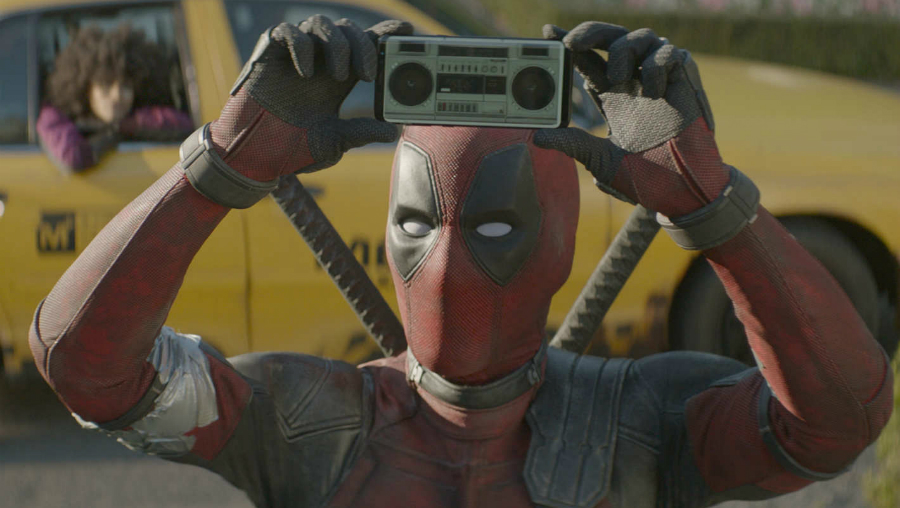
'Deadpool 2' - Review

5/17/2018 09:15:00 pm 1
'Deadpool 2' - Review


★ ★ ½ ☆ 


Leftover goodwill from 2016’s surprise smash hit doesn’t go the distance in this formulaic and overcranked sequel, which sees Ryan Reynolds slip back into the red onesie. Wade Wilson/Deadpool is mired in a depressive downturn after his wife, Vanessa (Morena Baccarin, who somehow has even less to do this time around), is murdered. His attempts to make amends for his mistakes by joining the X-Men are swiftly shot down when his a botched mission lands him in jail beside Russell (Julian Dennison), a teenage mutant with a highly combustible nature. They’re soon on the run from Josh Brolin’s Cable, a time-travelling cyborg with little patience for the titular twerp’s smart mouth.


Sadly, it’s an attribute with which I entirely sympathise. I was never the world’s biggest fan of the first film, but was found myself won over - almost reluctantly - by its irreverence towards the wider superhero movie landscape. Plus, the years spent in development hell and a need for justice after Fox’s criminal representation of Deadpool in X-Men Origins: Wolverine gave it a strangely underdog status. Now, removed from it’s lowly spot on the studio ladder and armed with a budget more in-keeping with your average blockbuster, the fourth-wall breaks, extreme violence and juvenile humour seem far less subversive than before.


There are still plenty of jokes that land (I missed the second big laugh of the film as my eyes were still watering from a sharp inhalation of drink at the opening visual gag), but if you’re not one for dick jokes or endless pop culture references, you’re in a for a rough ride. A grotesque and potentially brilliant Basic Instinct nod is ruined by a character saying out-loud “Basic Instinct!”.


There’s also a streak of self-fellating hypocrisy to some of the comedy which didn’t sit well with me. One aside sees The Merc With The Mouth mockingly refer to Deadpool creator Rob Liefield’s inability to draw feet, yet the artist receives a ‘special thanks to’ credit. Also, for the plentiful supply of jokes aimed at white men getting away with sexual assault, accused abuser T.J. Miller returns as Weasel. The producers claimed “We’re in the final editing” when the accusations emerged, but in an age where Ridley Scott can re-shoot half a movie in the wake of such allegations, that sort of excuse won’t fly.


David Leitch (John Wick, Atomic Blonde) replaces Tim Miller behind the camera this time, and his snappy, brutal approach to combat feels too...much. Action in a Deadpool film should be light and wacky, but the prison break sequence involving Cable and a horde of armoured guards is the wrong kind of bone-crunching. The creaky visual effects have been given a massive overhaul, but a smattering of the set pieces still remain dutifully small of scale, or openly reject the opportunity for mass carnage (see a hilariously anticlimactic skydiving sequence).


But for all its mockery of everything from shared universes to rival comic giant, DC, Deadpool 2 inexorably stumbles in the same potholes as those it purports to subvert. The villain is a grimdark bore. There’s an overblown vehicle chase. Emotional beats fall flat or are immediately interrupted by snark. And, of course, there’s a Stan Lee cameo.


And yet, Reynold’s clear affection for the character and crusade to please the comic fans for better or worse is undeniably admirable. He’s enjoying himself, and he wants you to share that joy. It’s great that Julian Dennison has landed such a spotlight so soon after his breakthrough appearance in Hunt for the Wilderpeople. It’s great that Negasonic Teenage Warhead (Brianna Hilderbrand) gets to have a girlfriend. It’s great that Zazie Beetz’ Domino (a new ally blessed with a superhuman lucky streak) gets to be a confident action heroine with visible, unmocked armpit hair. There are so many small victories against the usual pitfalls of major comic book fodder, but Deadpool 2’s adherence to a plethora of similar tropes and a suffocatingly smug sense of humour threaten to turn them pyrrhic. “Maximum effort”? Not quite.

Wednesday, 3 May 2017

'Guardians of the Galaxy Vol. 2' - Review

5/03/2017 09:16:00 pm
'Guardians of the Galaxy Vol. 2' - Review

★ ★ ★  


“All you do is shout at each other!” – the frustrated words of cyborg assassin Nebula (Karen Gillan) ring loud and true regarding Marvel’s dizzying and thunderous return to the stars. Following an incursion with a giant tentacle monster and gold-faced aliens, the Guardians of the Galaxy find themselves split in two. Peter Quill (Chris Pratt), Gamora (Zoe Saldana) and Drax (Dave Bautista) head off into the unknown on the trail of the living planet, Ego (Kurt Russell), while Rocket (Bradley Cooper) and Groot (now Borrowers-scale and voiced by a squeaky Vin Diesel) are left to fend for themselves against hordes of space pirates.

To call anything that comes from the Disney-Marvel slate “risky” seems a bit much, but I at least confess my admiration for an audacious opening set piece, which places the action itself in the background and distracts us with a three-minute dance number as the titles play out. My enjoyment even stretched to the use of ‘Mr Blue Sky’, a song which I freely admit detesting, largely thanks to its association with many awful British summer time TV adverts.

Accidentally going along with things that shouldn’t work is an experience that defined my time spent in the company of James Gunn’s new film. Whether snorting at Drax’ cacophony of trouser humour or wryly noting the onslaught of 80’s pop culture references (is there really an audience crossover between Marvel and Cheers?), I had a great time with this movie, make no mistake…even if said movie itself is far, far from great. Despite its bum-numbing length, largely inconsequential roster of side characters and one moment where it turns into Man of Steel (and not in a good way), Guardians 2 is infectiously fun. The cast are engaging, the music – both the new Awesome Mix and Tyler Bates’ score – is glorious and hearty, and it leaves the audience awash with smiles.

Only occasionally does the smile falter. Constant bickering between the bunch gets a bit much, hence my sympathies with Nebula as the Guardians’ prisoner. Pratt’s delivery is the main offender, bouncing back between soft aural honey and wide-eyed barking, with Cooper’s shrieking raccoon a close second. Mercifully, they’re usually cut off mid-rant by Bautista’s pin-precise comedic timing or a relatable glower from Saldana. Even the extensively-marketed baby Groot gags take a good while to start wearing thin, stuffed to the brim as the film is.

Like a sports car stuck in traffic, the movie wants to whip-pan from scene to scene, but is reined in by sequences that take an age to pass. There’s so much going on visually and referentially (gags about Mary Poppins, Pac-Man and an allusion to Hitchcock’s North by Northwest, to name but a few), crammed into a narrative that hops from one side of the universe to the other like there’s a hedgehog in its seat.
Here, Guardians 2 goes for the whole Empire Strikes Back deal (the gang are separated after an early conflict and familial ties are revealed), but with a modicum of the depth and none of the darkness. But that’s fine: in a film with the aesthetic of a Haribo factory on fire, anything too challenging or tonally murky would set the atmosphere askance.

In terms of the wider cinematic universe this is little more than a jaunty side-step from endless avenging; the filmic equivalent of a village fireworks display. It goes on longer than anyone really needs it to, but you stay the course and suffer the repetitive whizz-bangs because there’s free candy floss, your best mates have turned up and you’re all howling with laughter because the vicar just took a Catherine wheel to the crotch.

Wednesday, 2 November 2016

'Doctor Strange' - Review

11/02/2016 01:32:00 pm
'Doctor Strange' - Review

★ ★ ★ ½ 

The best moment in Marvel’s latest cinematic universe building block comes when an egotistical white man gets punched. For a series that replicates this beat time and again (see any movie featuring Tony Stark, Scott Lang, Thor, or their respective villains), it’s no mean feat to make the act feel special again.

In the case of Doctor Strange, said wallop arrives when Stephen Strange (Benedict Cumberbatch, playing a neurosurgeon who loses the use of his hands in a car accident) haughtily discards the very idea of spiritual healing. Tired of Strange’s close-mindedness, The Ancient One (Tilda Swinton) delivers a hefty thwack to his chest, whereupon his astral form is catapulted from its physical body, before being hurtled across the dimensions. It’s a brilliant juncture that rewards threefold: as deftly-executed punchline for the scene, an epiphany for the reluctant hero, and an eye-widening joyride for the audience, demonstrating the psychedelic visuals to come.

By this point in the movie, we’ve briefly dipped our toes into the special effects during a brawl between Swinton’s guru and Mads Mikkelsen as grimacing zealot Kaecilius, but Strange’s first encounter with the mirror dimension is a headfirst dive into kaleidoscopic abandon. Entire solar systems fold in on themselves, human faces contort and replicate infinitely, and when the sequence comes back to Earth with a bump, we’re left gasping for more just as much as the dumbfounded Strange.

The Ancient One informs us that these effects are confined strictly to the mirror dimension, with no effect on our reality. So when this maelstrom of magic returns for later action set pieces, the key question is “Why should we care?” The city-levelling CGI clouds witnessed in at least half a dozen other Marvel films may have become repetitive, but at least we understood there was a human cost. Here, the finale deliberately creates a similar setup – broiling clouds of digital distortion included – but subverts our expectations by immediately making the climax all about the characters – more specifically their brains, not brawn. Plus, it’s the closest a Hollywood production has ever come to resembling a YouTube Poop (parody content where videos are warped, repeated, reversed, or otherwise altered for comedic or entertainment effect), and I make this comparison as a massive compliment to the creative minds at play.

This isn’t to uphold the mind-bending visuals as the only, nor even the largest source of comedy. The script is witty enough that our suspension of disbelief can survive numerous silly names (Dormammu, Mordo, etc) and a whole heap of mystical jargon, while Cumberbatch, Swinton, Chiwetel Ejiofor and co all pick up the Marvel mix of serious and snarky very well. Cumberbatch in particular manages to avoid accusations of overexposure by playing a character that actually gets to emote for once. The cold disinterest of Sherlock or the calculated shyness of Alan Turing are involving facades, but not particularly sympathetic. Strange is a barking, whimpering misanthrope who learns to have a laugh every now and again at himself, rather than others. He also gets ten kinds of stuffing knocked out of him by the Cape of Levitation in his efforts to be worthy, which is endlessly amusing (putting in my early bid for it to win Best Supporting Actor).

Pitfalls appear every once in a while: Rachel McAdams does very well in a reverse-but-not-really love interest role, until the narrative sees fit to drop her from the final act. It’s also a shade too long (but then, what superhero film couldn’t do with losing a good ten minutes of exposition?), and it uses none of its time to give Scott Derrickson any chance to develop a signature directorial style. His previous horror works (Sinister, The Exorcism of Emily Rose, Deliver Us From Evil to name a few) bear little idiosyncrasy, so perhaps this is Marvel taking a chance on a ‘clean slate’ as it were, removed from the pop-culture infusion of the Russo Brothers, or the vintage aesthetic of Joe Johnston.


For all the usual MCU potholes it sometimes stumbles into, Doctor Strange is smart, funny, inventive, and hugely enjoyable. It’s the first of the series since Iron Man to feel like a genuine standalone; a story that can be enjoyed by newcomers as much as die-hard fans. The latter will stay seated for end credits stings regardless, but the Michael Giacchino score makes waiting less of a chore and more of a toe-tapping cooldown for everyone else.

Wednesday, 18 May 2016

'X-Men: Apocalypse' - Review

5/18/2016 06:26:00 pm 0
'X-Men: Apocalypse' - Review

 ★ ★  ☆

Bryan Singer’s finale to the second X-Men trilogy is nominally set in 1983, but begins millennia before: ancient, all-powerful being En Sabah Nur transfers his consciousness into a new body (Oscar Isaac in a loincloth, wahey!), but is encased beneath the pyramids by his enemies. Centuries later, a cult re-awakens him as Apocalypse, whereupon he takes four of the most powerful mutants under his wing: the newly-bereaved Eric Lensherr/Magneto (Michael Fassbender), Storm, Psylocke and Angel (Alexandra Shipp, Olivia Munn and Eastenders breakout Ben Hardy, respectively). Determined to prevent oncoming cataclysm, Charles Xavier (James McAvoy) and the redeemed Mystique (Jennifer Lawrence) are joined by the younger iterations of classic heroes Jean Grey (Sophie Turner), Cyclops (Tye Sheridan) and Nightcrawler (Kodi Smit-McPhee). 

Matthew Vaughn’s First Class was a cheery romp, whilst Days of Future Past took itself a little more seriously in an effort to repair the damage done by more turgid entries. Tonally, Apocalypse meanders awkwardly in-between the two. Chucklesome back-and-forth between Charles and old flame Moira (Rose Byrne) is followed soon after by Eric’s return to the scene of his parent’s death in Auschwitz, before we’re back for more zippy escapades with Evan Peters’ Quicksilver (stealing the film out from under his cohorts once more).

Tonal differences aside, both preceding films at least kept focus on a single overarching narrative, but Apocalypse is far too long and overstuffed when it needn’t be, Singer and co. often sacrificing coherence in the main plot for a plethora of fan service and eighties references. At one point the younger mutants exit a screening of Return of the Jedi, voicing their certainty that the third instalments of famous trilogies are a consistent let-down (a jibe intended for The Last Stand, but which hits a little closer to home by the end). When the period aesthetic is better integrated into key sequences, there’s a genuine thrill: Angel is christened by Apocalypse to the sound of Metallica’s The Four Horseman, and Eurythmics provide the backing track to Quicksilver’s moment in the sun.

With the baton firmly passed onto the new generation, the fresh-faced versions of previously-performed characters are more than up to snuff: Turner arguably makes a far more believably tortured Jean than Famke Janssen, whilst Sheridan and Smit-McPhee provide accessible, lively impressions of original trilogy actors. This affably bright trio is what ultimately helps Apocalypse rise above the glowering humdrum of the similarly baggy Batman v Superman. 

Oscar Isaac’s snake-tongued line delivery as Apocalypse lands on the amiable side of camp (fitting comfortably with the naff Duran Duran costumes), but does little to stifle concerns that – due to excessive make-up – it could be anyone in that armour. Singer’s committal to serving up the vast array of characters is also blighted by a constant, almost incestuous referral to the series’ tourist spots (we spend close to twenty minutes in a location explored by at least three previous films).

Whilst the finale is thematically much more interested in character development, the effects overload surrounding it could be swapped with any number of sky-tumbling climaxes from a dozen comic book movies and still yield the same result. The audaciousness of the Auschwitz sequence and some weird mind-game antics recall the unique desire to be different that we all remember from X-Men and X2. Such idiosyncrasy needs to be kept in mind, lest the series fall in line with the smash-n-dash super-heroics that Civil War so deftly avoided. 

Regardless, I think this is a superhero franchise more deserving of forgiveness than I’m perhaps letting on. Maybe it’s because the series has survived the entire MCU, outlived two attempts at Spider-Man and bounced back after several near-death experiences at the hands of Brett Ratner and Fox, or that I’m just very easily swayed by John Ottman’s pulse-pounding main theme. Stretched, stuffed, CGI warts and all, this remains a decent entry in the franchise and has finally given us what the noughties failed to deliver: a consistently enjoyable X-Men trilogy.

Friday, 17 July 2015

'Ant-Man' - Review

7/17/2015 08:46:00 pm
'Ant-Man' - Review


★ ★ ½ ☆ 

Early positive buzz for Marvel’s latest offering raised high hopes that Ant-Man would be this year’s Guardians of the Galaxy: a diamond in the rough, a unique and unexpected gem that used wit and charm to become a surprise hit. This seemed a lot to expect of a film with such a troubled history: Shaun of the Dead and Hot Fuzz writer/director Edgar Wright had been working on the project for years when ‘creative differences’ with Marvel led to his departure and a new script co-written by leading man Paul Rudd was cobbled together using both old and new material. But let’s face it; no-one expected a film featuring a talking tree and a gun-loving raccoon to be a hit, so how hard could it be for Ant-Man to land a similar blow?

Answer: very. Ant-Man is the first Marvel film to be enveloped by the law of diminishing returns; a chink in the otherwise mostly unblemished armour. In fact, if it weren’t for certain unique stylistic choices cropping up every once in a while, the film would just be another run-of-the-mill action movie rolling off the Hollywood production line.

The plot itself follows con-man Scott Lang (Rudd), estranged from his daughter and down-on-his-luck after finishing his parole. Lang is hired by tech-savvy entrepreneur Hank Pym (Michael Douglas) to steal a revolutionary but weaponised suit with the ability to shrink in scale from greedy company chairman Darren Cross (Corey Stoll). Aided by Pym’s daughter Hope (Evangeline Lily) and a super-suit of his own, Lang sets out to perform the most daring heist in history and become a hero to his daughter in the process.

What audiences usually expect of Marvel is interesting and enjoyable comic book characters brought to life: sure, the action might be a bit lacklustre in places (see Age of Ultron and Thor: The Dark World), but the writing is often engrossing enough for us to overlook this and simply enjoy spending time with our heroes. Ant-Man has the opposite problem: the character development might take up a large portion of the film even when it feels rushed and throwaway, whilst the zip-zang-boom action sequences are handled with expert finesse. The constant switching scales is a unique and immersive way to break the usual linear flow (read: man punches man until one falls over) of bombastic brawls and – were I a bigger fan of the film in general – I would even stretch to seeing how they looked in 3D.

But it’s not enough to just throw some spectacle in our faces and expect the applause to follow unless we care enough about the people involved. Paul Rudd is perfectly reliable and delivers the punchlines with his usual panache, but Stoll’s villain is the boring, embittered cliché we’ve all seen hundreds of times before. Michael Douglas (like Stanely Tucci and Robert Redford in their respective Captain America appearances) offers a degree of exterior experience to the character scenes, but Evangeline Lily is served very poorly with minimal dialogue and an arc that requires her to stand around frowning for 90% of the picture, though Michael Peña as the comic relief lightens the tone whenever he’s given room to breathe.

In fact, the humour in general is more reliable than the wobbly narrative structure, especially during the small-scale sequences (for those worried that the Thomas the Tank Engine gag was spoiled in the trailer, you ain’t seen nothing yet). The self-deprecating humour and flashy editing – plus a small set-piece lifted almost shot-for-shot from the original demo reel – demonstrate glimpses of Edgar Wright’s vision fighting to escape, but – much like the titular hero – they’ve been shrunk to ant-size.

Thursday, 27 March 2014

'Captain America: The Winter Soldier' - Review

3/27/2014 12:04:00 pm
'Captain America: The Winter Soldier' - Review

There’s a moment in Avengers Assemble where Tony Stark/Iron Man and Steve Rogers/Captain America are arguing, and Stark says ‘It’s not really my style.’, to which Rogers replies snidely ‘…and you’re all about style, aren’t you?’. In a way, this one line encapsulates the difference between the different strands of the Marvel cinematic universe. After the high-octane thrill rides that were Iron Man 3 and Thor: The Dark World brought the style, Captain America: The Winter Soldier brings the substance.

The latest instalment in the Marvel franchise follows Steve Rogers (Chris Evans) in the months following Avengers Assemble, adjusting to life in the 21st century and helping S.H.I.E.L.D, led by Nick Fury (Samuel L. Jackson) track down and eliminate threats, with the help of an elite commando unit led by Black Widow (Scarlett Johansson). Upon returning from a successful mission with some key enemy information, the tables are turned and a nefarious unit within S.H.I.E.L.D make it their mission to track down Captain America, who goes undercover with Black Widow to discover the truth.


Whilst the two previous films felt more like action-adventure romps, The Winter Soldier feels more like a cold-war espionage era thriller that just happens to have a couple of great big special effects sequences in it. Whilst Iron Man 3 – which I really liked – felt somewhat all over the place in terms of pacing, this feels much more coherent and sticks to a much tighter narrative structure, which works very well. Even when the plot twists do make themselves known – and I can assure you that you won’t expect them – the story remains coherent and ordered. Much like the first hour or so of Avengers, this film takes it’s time to give proper, fleshed-out character development, in such a way that even the audience who just turned up to see things explode won’t find it dull. It’s all offset with the reliable Marvel humour and a visual style that is cleaned to a mirror-shine, the fantastic digital cinematography really bringing out the colour in the costumes and the polished surfaces of the S.H.I.E.L.D headquarters.

The leads all give very fine performances; Evans retains his role of trying to keep things morally straight, Johansson continues her alluringly deadly facade but conflicted under the surface. Samuel L. Jackson is always reliably grumpy as Fury and new-comer to the franchise Robert Redford is very good as a morally suspect S.H.I.E.L.D executive. When the action sequences do turn up, they’re a well-balanced mix of in-camera effects and CGI, the hand-to-hand fights packing a real punch in terms of visuals and thumping sound effects, and the great big computer-generated effects still carry enough weight to be believable. 

The only issues with the film are that it stretches the mark in terms of running time, and doesn’t have the fun-factor that felt much more prevalent in the former Marvel films, plus it has little to contribute to the Marvel cinematic universe as a whole (save for a very brief post-credits scene). Captain America: The Winter Soldier is still a worthy addition to the canon, making its mark with an intriguing story, well-developed characters and some extremely well put together action sequences. Roll on, Avengers 2.

4 Stars